Two Guards at 'Alligator Alcatraz' Were Charged With Battering a Detainee. The Incident Was in January
Court records filed September 5 name Andre Junior Seenaraine and Stephen Jordan Trejos. The Everglades detention camp they worked at has been closed since July.
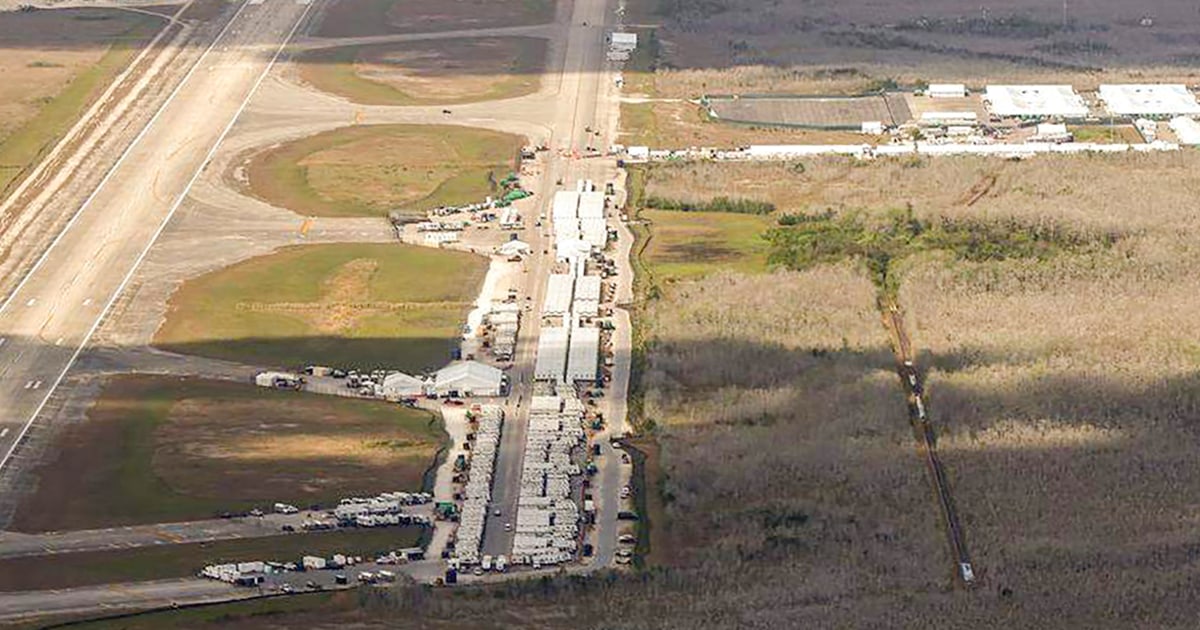
Two guards who worked at the Florida immigration detention camp known as "Alligator Alcatraz" have been charged with battery against a detainee, according to court records that surfaced on September 5.
The guards are named in the records as Andre Junior Seenaraine and Stephen Jordan Trejos. The charge alleges they struck or touched a Hispanic male detainee against his will on or around January 25. The court filings do not describe the encounter in any further detail — no account of what preceded it, what injuries resulted, or how it came to the attention of investigators.
The gap between the alleged incident and the charge is more than seven months, and the facility itself no longer exists as an operating detention center. The camp was built at speed by Florida's state administration at an isolated airstrip in the Everglades and opened in July 2025. The state announced its closure in June 2026 and shut it fully the following month, giving it an operational life of roughly a year. Detainees held there were transferred to facilities in several other states.
Conditions inside the camp were the subject of sustained reporting throughout its short existence. Accounts documented inadequate food safety practices, toilets that did not work, floors that flooded, and severely limited access to lawyers. Immigration advocates argued through the whole period that a temporary structure at a remote airstrip in a subtropical wetland could not meet basic detention standards, and that the isolation itself made oversight nearly impossible.
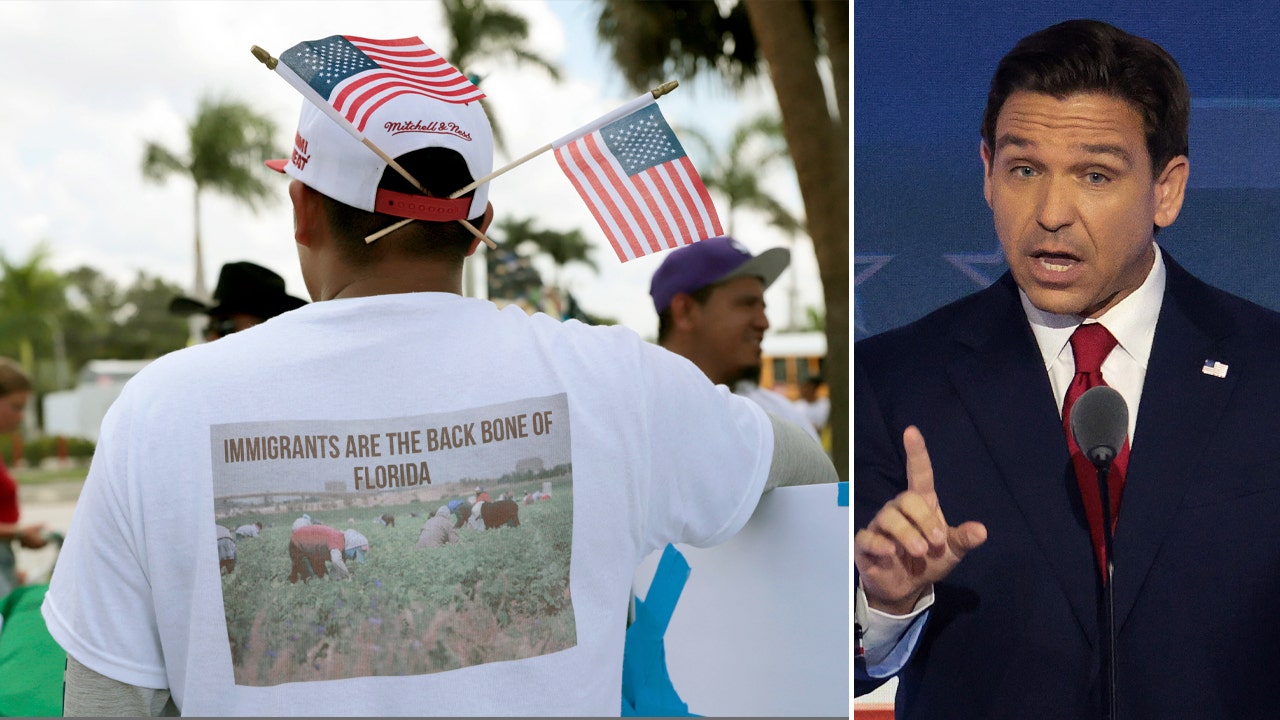
Governor Ron DeSantis, whose administration championed the site as a demonstration of what a state could build without waiting on Washington, offered a brief epitaph when it closed: "It served its purpose for the time."
That purpose was always partly symbolic. The name — attached to the site early and never shed — was the point: a detention camp in alligator country, publicized as a deterrent as much as a facility. The charges filed this week are the first criminal accountability to attach to anyone who worked there, and they arrive after the camp is gone, after the detainees have been dispersed across multiple jurisdictions, and with the underlying record still largely sealed inside a thin set of court documents.
The public record around the case remains thin in ways that matter. The filings that surfaced this week do not specify additional details of the encounter, do not indicate whether the detainee is still in U.S. custody or has since been removed from the country, and do not include any response from either man charged. Nor do they establish how the allegation came to investigators eight months after the fact — whether through an internal complaint, a transfer interview at one of the receiving facilities, or an outside referral.
That timeline is its own commentary on oversight at a site built in weeks and dismantled in one. An allegation dated January 25 produced charges on September 5, by which point the camp had been closed for two months and its population scattered across several states. Any witnesses to the incident were themselves detainees, and detainees in the immigration system are moved, released, or deported on schedules that have nothing to do with a criminal case.