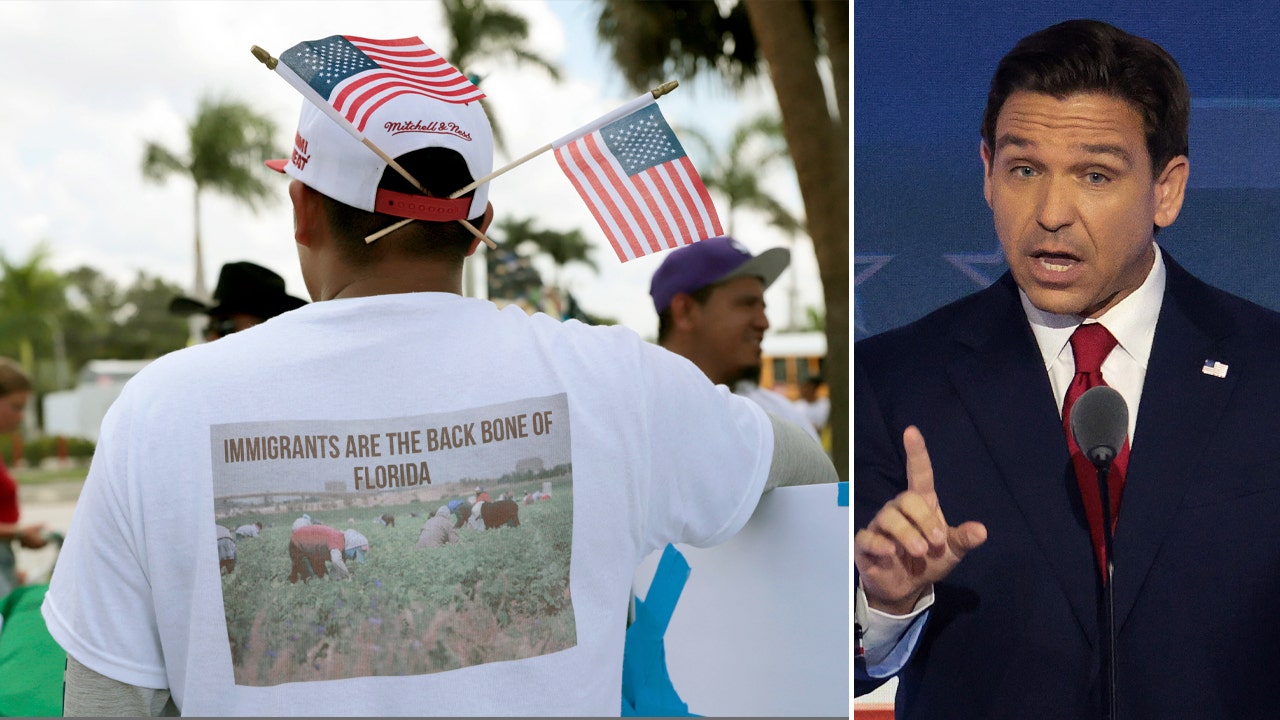
DeSantis Signs Florida Map Engineered to Flip Four Democratic House Seats to Republicans
The redrawn lines, passed days after the Supreme Court's Louisiana v. Callais ruling, dismantle districts held by Reps. Jared Moskowitz, Debbie Wasserman Schultz and Kathy Castor.
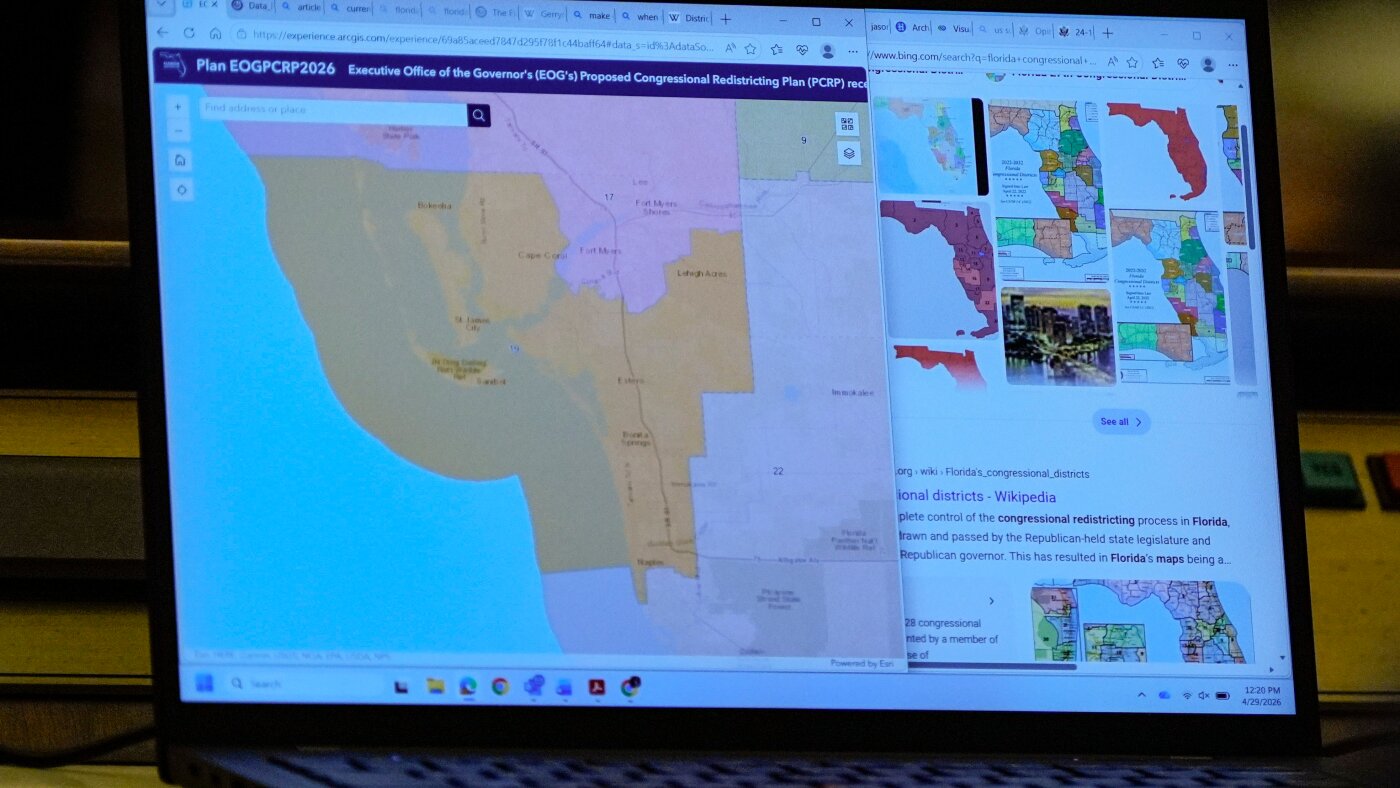
Florida Gov. Ron DeSantis on May 4 signed into law a new congressional map that creates four additional Republican-leaning U.S. House seats and dismantles three of the state's remaining Democratic districts, making Florida the eighth state to complete mid-decade redistricting in the run-up to the 2026 midterms. The map carves the Tampa Bay region into three separate districts, eliminating the area's only Democratic seat held by Rep. Kathy Castor, and breaks apart South Florida districts long represented by Reps. Jared Moskowitz and Debbie Wasserman Schultz. Under the new lines, Florida's congressional delegation would shift from 20 Republican and 8 Democratic seats to 24 Republican and 4 Democratic.
DeSantis announced the signing in a post on X reading simply, "Signed, sealed, delivered," hours after Republican lawmakers in Tallahassee approved the plan on a near party-line vote with limited public testimony. The governor said the new map "ensures that Florida's representation in Washington matches the political realities of our state," pointing to Trump's roughly 13-point victory in Florida in November. Democratic Party Chair Nikki Fried called the bill "a constitutional outrage" and said the state party filed the first of multiple lawsuits later the same day, arguing that the map violates Florida's Fair Districts Amendment, which prohibits drawing lines with the intent to favor a political party or incumbent.
The Florida move came less than a week after the Supreme Court's 6-3 ruling in Louisiana v. Callais on April 29, in which the conservative majority struck down Louisiana's second Black-majority congressional district as an unconstitutional racial gerrymander and substantially narrowed the legal framework that has governed redistricting under Section 2 of the Voting Rights Act since Thornburg v. Gingles in 1986. Writing for the majority, Justice Samuel Alito argued that "the Constitution almost never permits the Federal Government or a State to discriminate on the basis of race." The Brookings Institution estimates the ruling, combined with new maps in Florida, Texas, Ohio, Indiana, Missouri, Kansas and North Carolina, could net Republicans as many as 19 additional House seats next November.
The Orlando area, home to a large Puerto Rican population that has trended Democratic in recent cycles, is split among four districts under the new plan, diluting the community's political weight. The Cook Political Report's most recent rating downgrades all three targeted Democratic seats to "lean Republican" and shifts Florida's overall congressional rating from R+9 to R+13. Sabato's Crystal Ball wrote in an analysis that the map "is more aggressive than anything Texas or Ohio has yet attempted," and warned that some of the new lines could backfire on Republicans if Democratic turnout surges, a phenomenon the analysts dubbed a potential "dummymander."
Civil rights groups including the NAACP Legal Defense Fund and Common Cause said they would seek emergency injunctions in federal court asking judges to block the map for the 2026 cycle while litigation proceeds, but the Supreme Court signaled in Louisiana v. Callais that lower courts should give immediate effect to its narrower reading of Section 2. The League of Women Voters of Florida and Common Cause Florida filed a separate state court challenge Wednesday arguing that the legislature's process — which included only two public hearings, both held during business hours — violated the state constitution's redistricting transparency requirements. A hearing on the state-court complaint is scheduled for May 27 in Leon County.