Florida Just Revoked Every Police License Plate Reader Permit on Its State Highways
Agencies Have 30 Days to Take the Cameras Down.
A one-page memo from the state transportation department cited 'misuse, data privacy concerns, and surveillance schemes.' Jacksonville's sheriff dropped the technology countywide the same week.
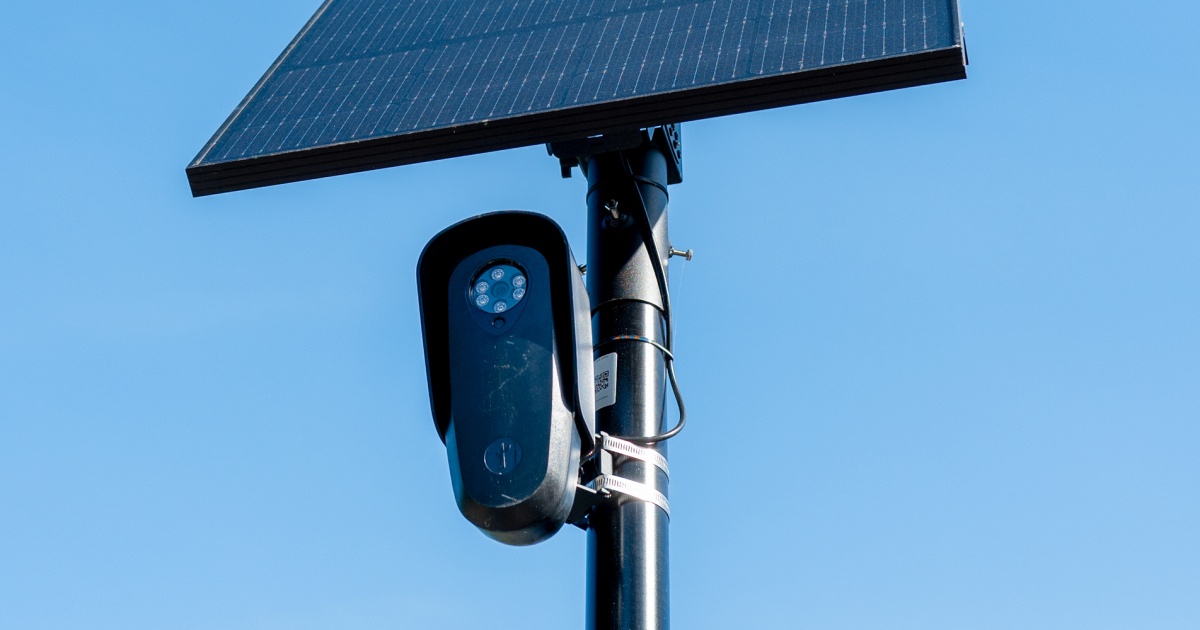
Florida's Department of Transportation has revoked every permit it ever issued letting local police mount automatic license plate readers along state roads, and ordered the cameras that are already up to come down.
The instruction arrived as a one-page memo from Will Watts, the department's chief operating officer, sent Monday to law enforcement agencies across the state. Watts cited a "recent exponential increase" in camera deployments along with "concerning reports of misuse, data privacy concerns, and surveillance schemes" that he wrote merit immediate action "to preserve Floridians' sovereignty and quality of life." Agencies have 30 days to clear the state rights-of-way, the strips of land beside and within state highways.
The order follows a public commitment from Gov. Ron DeSantis, who said last week that roadside surveillance had gone past what he was willing to defend. "We're gonna clear the state right-of-ways," DeSantis said Friday on the Real America's Voice podcast. "These cameras that are out there now — who's to say they're only doing the license plate? Now, they say that. I think it's capturing people in their cars. I think it's capturing way more information than they're letting on. And you've seen the abuse."
Automatic license plate readers photograph every passing vehicle and log the plate, time and location. The technology dates to the 1970s but spread quickly in the past few years as camera hardware got cheap and the software improved. Flock Safety, the dominant vendor, built a national network that lets one agency search footage collected by another, which is precisely the feature that has drawn scrutiny: a local department's camera can end up feeding a search run by an agency in another state with different rules about who may query it and why.
The order's reach is narrower than the headline suggests. It does not touch cameras on private property or on local rights-of-way, and DeSantis said 98% of Florida's surveillance cameras sit in those categories. But several localities have moved on their own. The Jacksonville Sheriff's Office said it would discontinue license plate reader technology throughout Duval County "effective immediately," even while calling the systems "an enormously valuable investigative tool."
Florida is not acting alone. Texas Gov. Greg Abbott ordered a halt to state funding for Flock cameras last week, according to The Texas Tribune, and the technology has surfaced as an issue in midterm campaigns. The Institute for Justice, a Virginia advocacy group that argues the cameras are unconstitutional, counts more than 100 local governments that have canceled or declined to renew reader contracts since the beginning of last year.
For police departments, the immediate question is what happens to the investigative leads that ran through those cameras. Detectives use plate hits to place vehicles near crime scenes and to track stolen cars, and agencies that built workflows around the network now have a month to unwind them on state roads.