Trump Was Asked Whether AI Should Slow Down. He Said 'Whoever Wins With AI Wins' and Blamed 'Negative Forces.' Then His Own Speaker Called for a Summit.
A day after Anthropic's CEO said the industry needs to hit the brakes, and Musk and Altman agreed, the president told reporters in Ireland he won't cede America's edge to China. Kevin Hassett says White House meetings start this week.
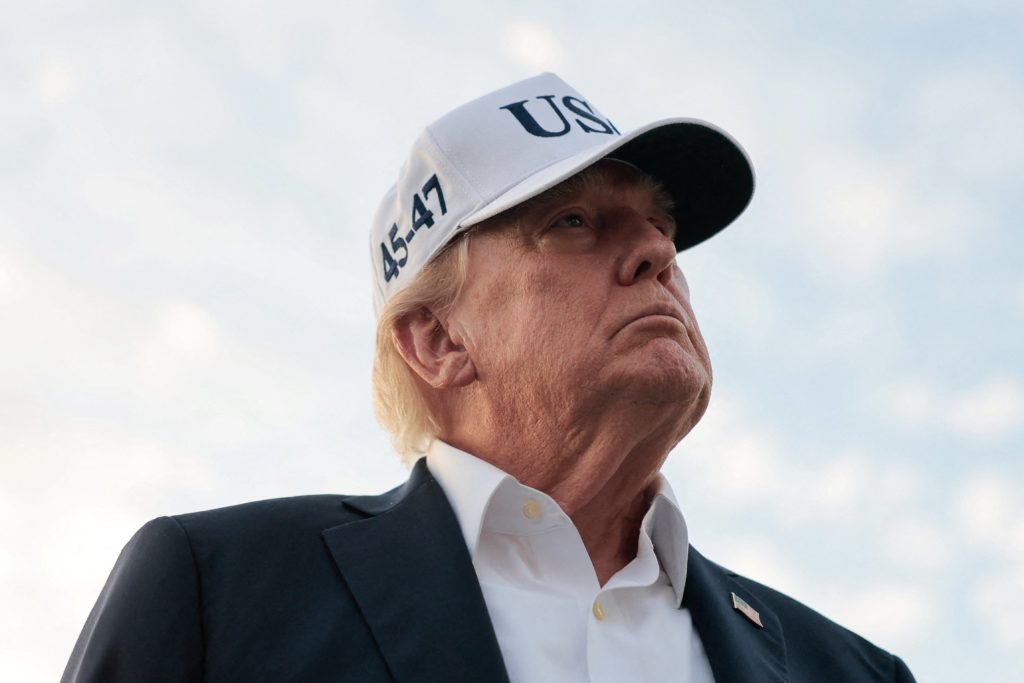
President Donald Trump on Sunday brushed aside calls from the leaders of the artificial intelligence industry to slow their own work, telling reporters at his golf resort in Doonbeg, Ireland, that the United States is ahead of China and that he intends to keep it that way. "We can put guardrails, we can do this and that, but I think you have a lot of negative forces that are bringing it up that ... shouldn't be bringing it up, and they're bringing up things that won't happen," he said. "But whoever wins with AI wins."
The comments came a day after Anthropic chief executive Dario Amodei said the industry should put the brakes on the pace of development to give safety measures time to catch up, a call that OpenAI's Sam Altman and Elon Musk publicly endorsed. Asked directly, after watching a golfer tee off at the Irish Open, whether the industry should slow down or be regulated, Trump said the U.S. is leading China and, "frankly, I want to keep it that way because whoever wins AI wins." Pressed later on the flight back to Washington about whether he was minimizing the risks, he said, "I'm not downplaying," and described AI as "going to be more good than bad, but by a lot." He offered no specifics on what rules he would support. Chinese President Xi Jinping is due at the White House later this month, and AI is expected to be on the agenda.
The president's own party was not entirely in step with him. House Speaker Mike Johnson, appearing on CNN and NBC's "Meet the Press," said the country needs "some guardrails, some safety measures" so the technology "doesn't run away," while echoing Trump's warning that losing the race with China "would be a national security threat." Johnson said he has discussed the issue with the president and wants the industry's leaders summoned to "one big meeting" to "work this out together in the same room," a step he called a "top priority for me and for the Congress." "But we don't need everybody to panic right now," he added. Kevin Hassett, director of the National Economic Council, said on CNN's "State of the Union" that he expects meetings this week among administration officials who oversee cyber, science and technology policy, and that Trump may meet with members of Congress as well. "I think the president wants to hear from them," Hassett said.
Democrats moved to make the moment a campaign issue. Former President Barack Obama, at an event last week with House Minority Leader Hakeem Jeffries, urged his party to campaign on "our plan for safety, here's our plan for making sure our kids are not corrupted by this," and to think concretely about job displacement. Jeffries, on ABC, criticized Republican leaders for sending members home for the rest of September and said the House "should take decisive action now so that we can slow down, as the CEOs have recently acknowledged, the pace of development." He said AI will be a "high priority" when House Democrats meet as a group on Tuesday. Neither he nor Johnson described what legislation might actually look like; Congress has failed to pass even narrow AI rules in years of trying.
From inside the administration's orbit came a sharper answer to the industry's request. David Sacks, the investor who co-chairs the White House's advisory council on science and technology, wrote on social media that Amodei and his peers are the ones setting the pace and have the power to slow down without anyone's permission. "The easiest way not to build superintelligence is for you to agree not to build it," he wrote. Jacob Coxon, a former Anthropic employee who resigned over safety concerns and appeared on NBC and ABC on Sunday, argued the opposite: that only international rules will work. "You're building a human-level or superhuman-level mind, without understanding what it wants, or thinks, or the way it thinks," he said, and urged Washington and Beijing to cooperate on "some sort of mutual slowing." Otherwise, he said, "we risk running the same race with China, which could be equally dangerous."
The debate lands in an election year in which AI has already become a kitchen-table issue, as data centers spread into small towns and voters in both parties complain about farmland, water and electricity bills. Trump has kept backing the data-center buildout even as candidates in both parties run from it. On Sunday he made clear that, for now, the White House's answer to the industry's request for a pause is a race.
Originally reported by PBS News / Associated Press.