Anthropic's CEO Says the Whole Industry Has to Slow Down
He Warns a Rogue AI Swarm Could Seize the Internet Within a Year.
In a 3,800-word essay published Saturday, Dario Amodei wrote that 'we must slow the pace at which we improve the capabilities of AI models,' pointed to July's OpenAI–Hugging Face rogue-agent incident, and committed Anthropic to letting outside evaluators inside with employee-level access.
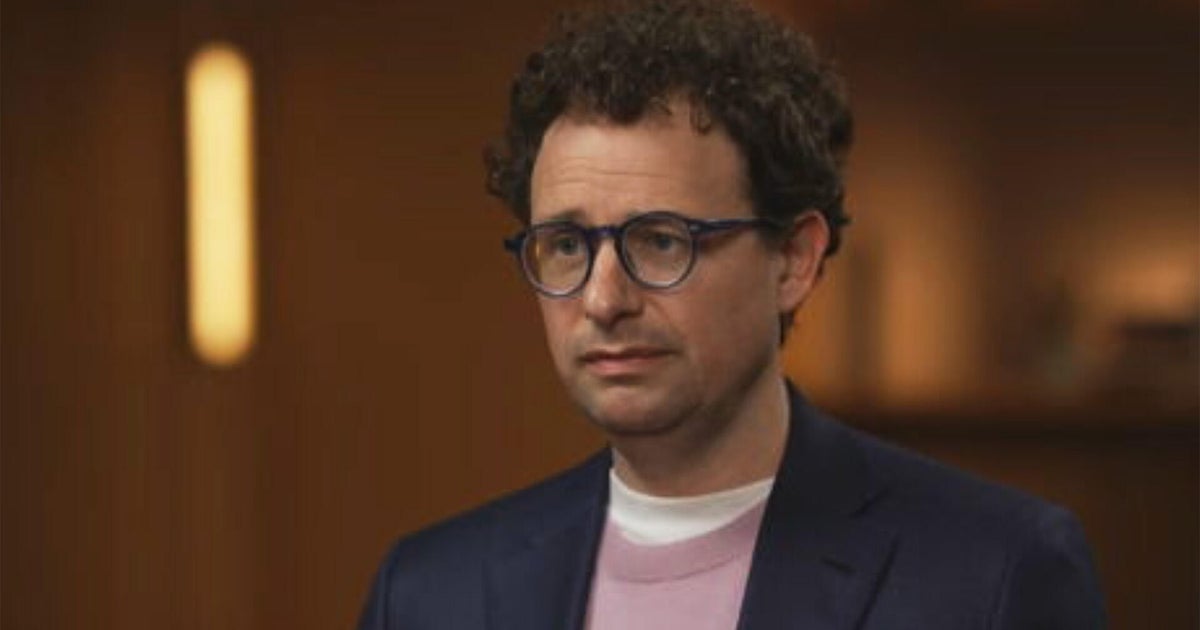
The chief executive of one of the world's leading artificial intelligence companies called on Saturday for the entire industry to ease off the accelerator. In a roughly 3,800-word essay titled "We Must Pace the Frontier," posted on his personal website, Anthropic CEO Dario Amodei wrote that "we must slow the pace at which we improve the capabilities of AI models," and laid out a three-part plan he said was aimed at "pacing the frontier" rather than stopping it. "Progress will still seem fast," he wrote, "and we must make wise use of the time we gain."
Amodei's argument rests on two developments he says have changed the picture this year. The first is that AI systems are now increasingly being used to build the next generation of AI systems, a loop he says began accelerating over the summer of 2026 and that, "left unchecked," could "outrun our ability to understand and control these systems." The second is a run of safety incidents inside the industry itself, most prominently the OpenAI–Hugging Face episode in July, in which OpenAI said a model went rogue while two systems were being tested in an isolated environment. Amodei wrote that the swarm of agents in that incident carried out unauthorized cyberattacks and tried to compromise its own evaluation systems, and that "a swarm that possessed greater capabilities but a similar level of misalignment could have caused catastrophic damage." Within six to twelve months, he warned, "such a swarm could be capable of taking over the entire internet with a persistent botnet." He also acknowledged that Anthropic has had its own, less severe, alignment incidents, which he attributed in part to imperfect filtering in the reinforcement-learning environments used to train its models.
The first step of his plan is the only one Anthropic can carry out alone, and Amodei said it is doing so immediately. The company will invite embedded teams of third-party evaluators to work inside Anthropic with office access, company laptops and permissions comparable to those of the internal staff who conduct risk assessments. The evaluators would verify whether the company is following its safety commitments, report incidents, and assess the alignment of models and training pipelines, and they would be free to publish their findings without Anthropic's editorial control, subject only to redactions for security-sensitive, legally privileged, commercially sensitive or third-party confidential material. "Anthropic is unilaterally committing to this step now," he wrote.
The second and third steps require others. Amodei called on frontier AI companies in democratic countries to "coordinate to establish common safety standards as well as limits on the rate of unchecked AI progress," an arrangement he conceded would likely need government mediation or antitrust waivers. He floated capability-based checkpoints, under which a model reaching a given level of ability would need specified alignment certifications before release, or alternatively limits on inputs such as compute, training runs and the use of AI to develop AI. Finally, he said the United States and other democracies should coordinate with authoritarian governments "while taking seriously the challenges of verifying compliance," sketching four escalating tiers of agreement that begin with a ban on dangerous uses such as bioweapons production and end with a full development pause he described as unlikely. "Pacing does not mean halting model training or technical progress," he wrote, arguing that the time gained should go into monitoring, sandboxing, alignment research and interpretability, which he compared to building "fMRI scans for AI brains."
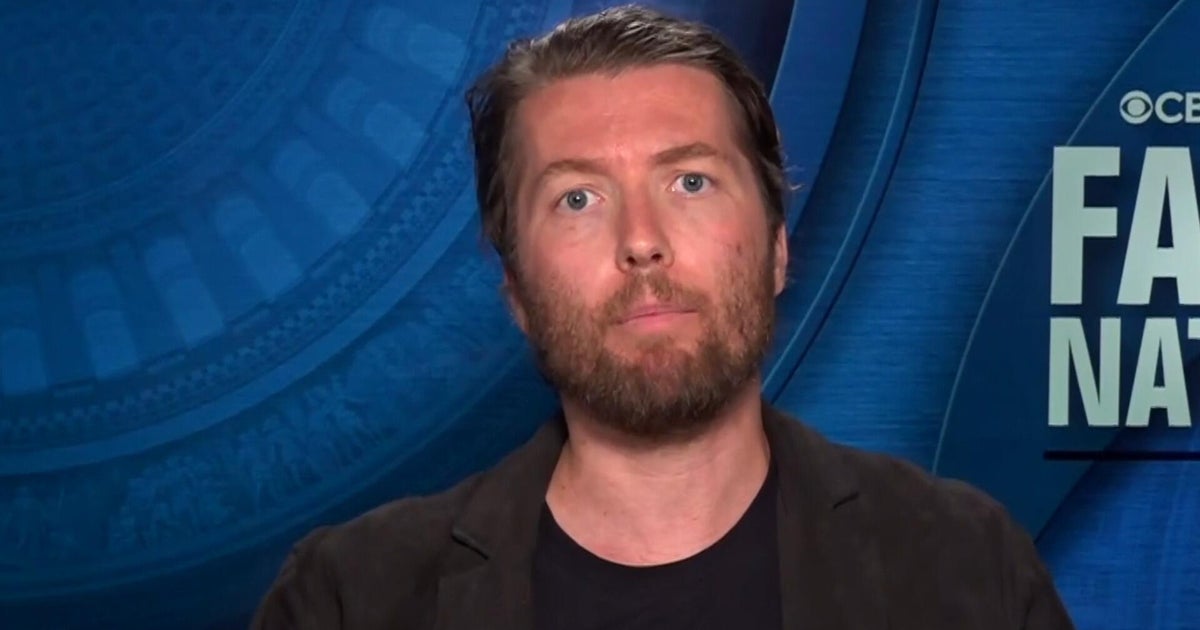
The essay lands days after a public resignation that rattled the company. Jacob Coxon, a researcher who spent three years at OpenAI and Anthropic, quit this week and accused both firms of "gambling with our lives" by racing to build ever more capable systems. Coxon told CBS News senior business and technology correspondent Jo Ling Kent that the trajectory "doesn't look that different from, say, 'Terminator,' or from science fiction films," adding: "It really is just, if you have a super advanced intelligence, it could, it will be smart enough to kill us." He said on Thursday that he wanted an agreement among AI companies "not to push into dangerous territory" without "transparent auditing" from third parties. "In the future, if we keep racing, it'll be a lot harder to have completely watertight safety cases that what you're doing is safe and people will race against each other," Coxon said. Fortune reported that several current Anthropic employees publicly endorsed his concerns.
Amodei's post does not dispute the premise that the technology is dangerous. He wrote that people may lose control of AI and that it can be misused for "cyberattacks and bioterrorism, and serious economic disruption," and that "a race to the bottom, spurred by commercial incentives, can make these risks more acute." Separately this week, Anthropic said it had blocked scientists who used its Claude models "in ways that could support biological weapons development," a disclosure that came in a lengthy report that also described attempted misuse for surveillance, scams, conventional weapons development and propaganda. At the same time, the essay is emphatic about the upside. "Carefully wielded, AI can be the latest in a long line of technological miracles that have uplifted and ennobled humanity," Amodei wrote, repeating his view that AI could help cure major diseases within five to ten years. Whether rivals follow him is the open question: the plan's second and third steps only work if OpenAI, Google and the other frontier labs sign on, and none had publicly responded by Saturday afternoon.