The Taliban Is Driving Around Kabul in $7 Billion of American Hardware. One Humvee Still Has a Packers Decal
Twenty-five years after the September 11 attacks sent U.S. troops into Afghanistan, the group they were sent to remove is back in power — and equipped by the country that spent two decades trying to defeat it. Kabul says the weapons are not up for negotiation.
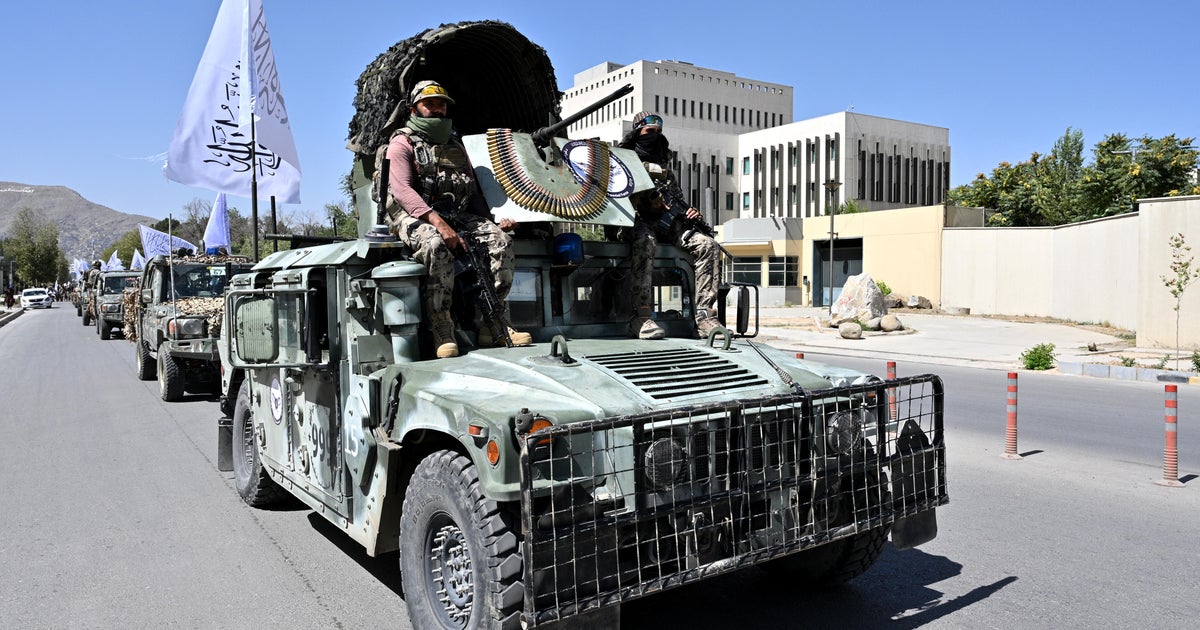
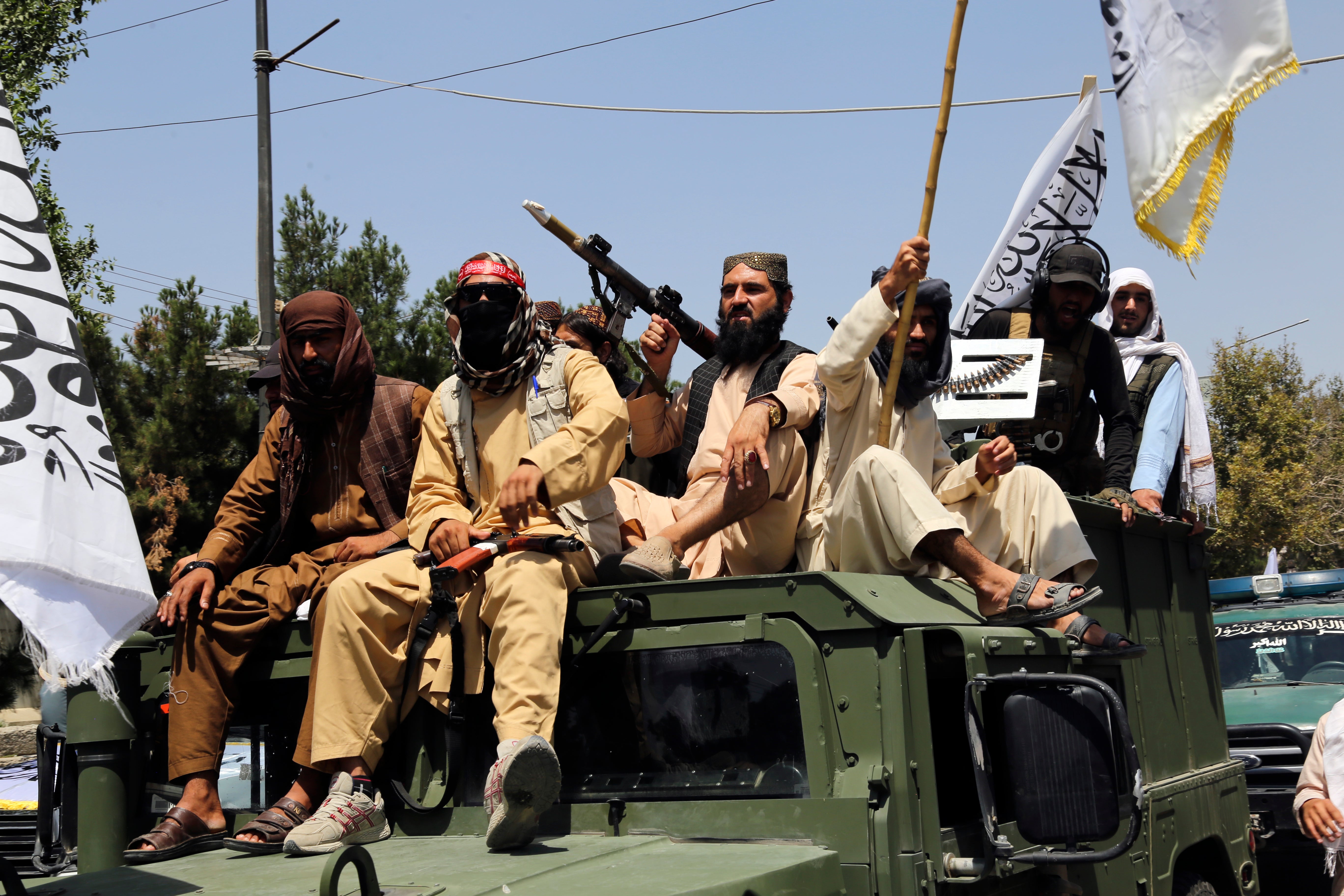
KABUL — The armored trucks rolling through the capital this week were built in the United States, paid for by American taxpayers and handed to an Afghan army that no longer exists. One Humvee photographed by CBS News still carries a faded Green Bay Packers decal left behind by whoever drove it last.
Twenty-five years after the September 11 attacks pulled the United States into the longest war in its history, the men patrolling Kabul in that vehicle are the same movement American troops were sent to remove. Pentagon figures put the value of the hardware and weaponry that fell into Taliban hands at roughly $7 billion when the Afghan National Army collapsed during the 2021 withdrawal. Taliban fighters now wear American tactical gear, carry American rifles and drive American trucks through a city the United States occupied for two decades.
President Trump has repeatedly accused the Biden administration of "totally botching" the pullout and has demanded the equipment be returned. Kabul has no intention of handing it over. "The state of Afghanistan, and we are not in the business of doing transactions and deals on the assets of the state of Afghanistan," Taliban Ministry of Foreign Affairs spokesman Abdul Qahar Balkhi told CBS News senior foreign correspondent Imtiaz Tyab. Pressed on the fact that American taxpayers bought every one of those vehicles, Balkhi answered: "The Americans did a lot of things. Americans killed a lot of people, destroyed the majority of the country."
The war those weapons were meant to win killed more than 2,400 U.S. service members and tens of thousands of Afghan civilians. It cost trillions of dollars, spanned four presidencies and ended with a Taliban flag over the presidential palace within days of the last American plane leaving. Then-President Biden defended the decision in August 2021 by arguing that "American troops cannot and should not be fighting in a war and dying in a war that Afghan forces are not willing to fight for themselves." Five years on, that sentence still frames the entire American argument about how the war ended.
What the Taliban has done with power since then has been harsher than many analysts expected, and in some respects harsher than the group's first period of rule in the 1990s. Edicts have progressively stripped Afghan women and girls of access to secondary school, universities, most paid work and large parts of public life. Aid agencies operating in the country describe a system in which half the population has been formally removed from the economy.
The equipment question is unlikely to be resolved. Much of the hardware has degraded without American maintenance contracts, spare parts or contractors, and the Taliban has shown no willingness to inventory it, let alone surrender it. The trucks will keep circling Kabul until they stop running — a rolling reminder, on the anniversary of the attacks that started all of it, of how the war actually ended.