Scientists Crack 100-Year Mystery Behind Reinforced Rubber's Strength
Massive computer simulations reveal why carbon black makes rubber dramatically stronger, solving puzzle that stumped researchers for decades.

Scientists at the University of South Florida have finally solved a century-old mystery about why adding tiny particles of carbon black makes rubber extraordinarily strong and durable. The breakthrough required massive computer simulations equivalent to 15 years of computing time and revealed that carbon black forces rubber molecules to "fight against itself" when stretched, dramatically boosting the material's performance. The discovery explains the fundamental science behind reinforced rubber, which powers a global tire industry worth approximately $260 billion and appears in everything from aircraft tires to medical devices.
Reinforced rubber has been used for nearly 100 years despite scientists never fully understanding the underlying mechanisms that make it so effective. Professor David Simmons and his research team carried out 1,500 molecular dynamics simulations to identify how microscopic carbon black particles transform soft rubber into a material capable of supporting massive loads. The work reconciled several competing scientific theories that had attempted to explain reinforced rubber's properties, including ideas about particle chain formation, material stiffening, and spatial constraints on rubber molecules.
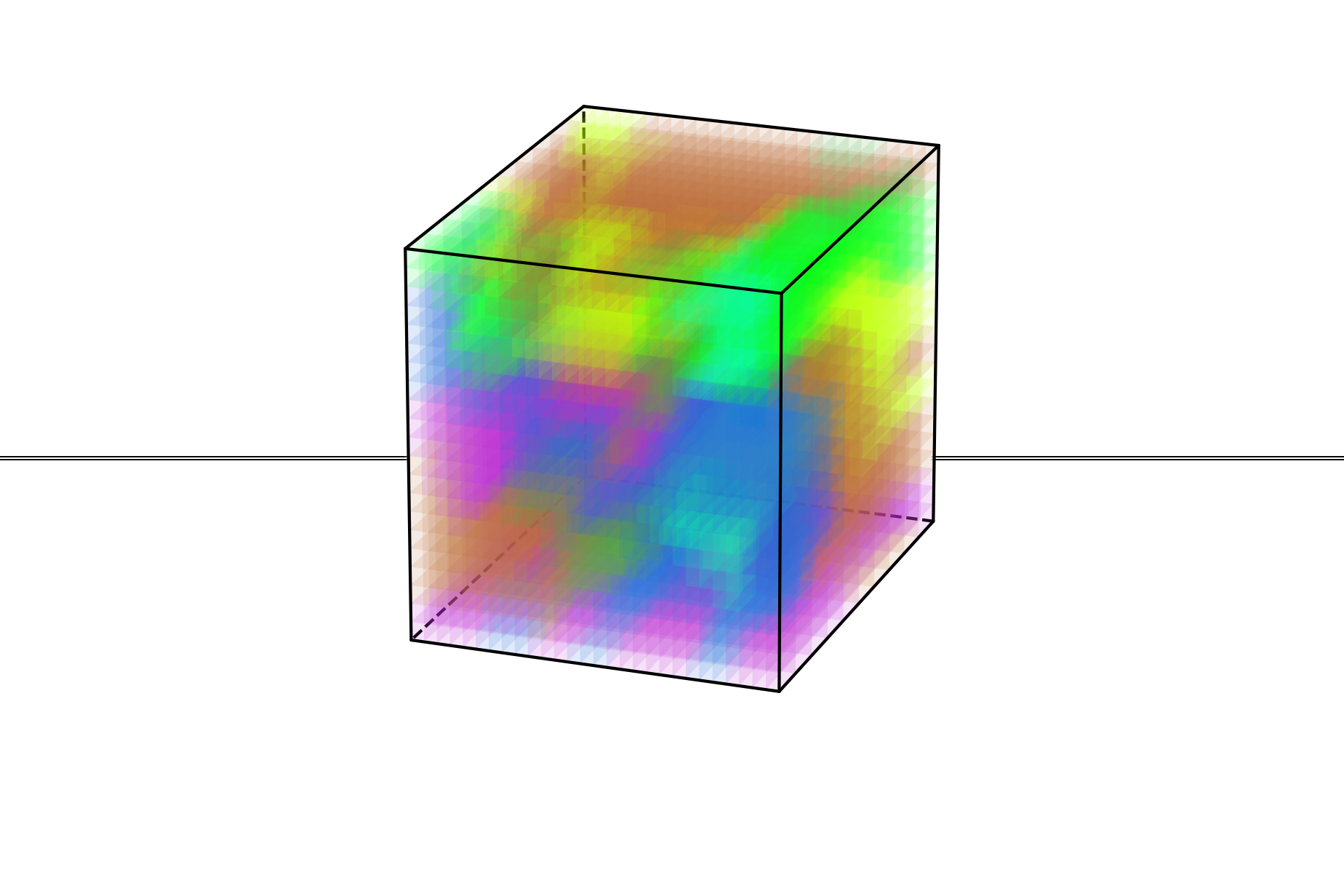
The key insight emerged from advanced computer modeling that accurately represented the shape and distribution of carbon black particles within rubber matrices. Working with postdoctoral scholar Pierre Kawak and doctoral student Harshad Bhapkar, Simmons discovered that the particles create internal stress patterns that fundamentally alter how rubber responds to stretching and deformation. Rather than simply occupying space or forming chains, the carbon black particles force rubber molecules into configurations that resist stretching in ways that significantly exceed the sum of their individual contributions.
The implications of this research extend far beyond academic understanding, as tire manufacturers have relied on trial-and-error approaches to select optimal carbon black formulations for decades. Companies purchase different grades of carbon black without clear scientific guidance about which properties justify higher costs or deliver superior performance. The new findings provide a rational framework for designing reinforced rubber with specific characteristics, potentially leading to more efficient tires, longer-lasting industrial components, and improved medical devices.
Simmons emphasized the practical importance of understanding such a widely used material whose mechanisms had remained mysterious for so long. The research, published in Proceedings of the National Academy of Sciences, represents one of the most computationally intensive studies ever conducted on polymer materials. The team's success in modeling hundreds of thousands of atoms simultaneously opens new possibilities for rational materials design in other polymer systems. Future work will focus on applying these insights to develop next-generation reinforced materials with enhanced performance characteristics for specific applications ranging from automotive tires to aerospace components.