Scientists Solve 100-Year Mystery of Why Rubber Gets So Incredibly Strong
University of South Florida researchers discover carbon black particles force rubber to 'fight against itself' when stretched, explaining the secret behind tire durability.
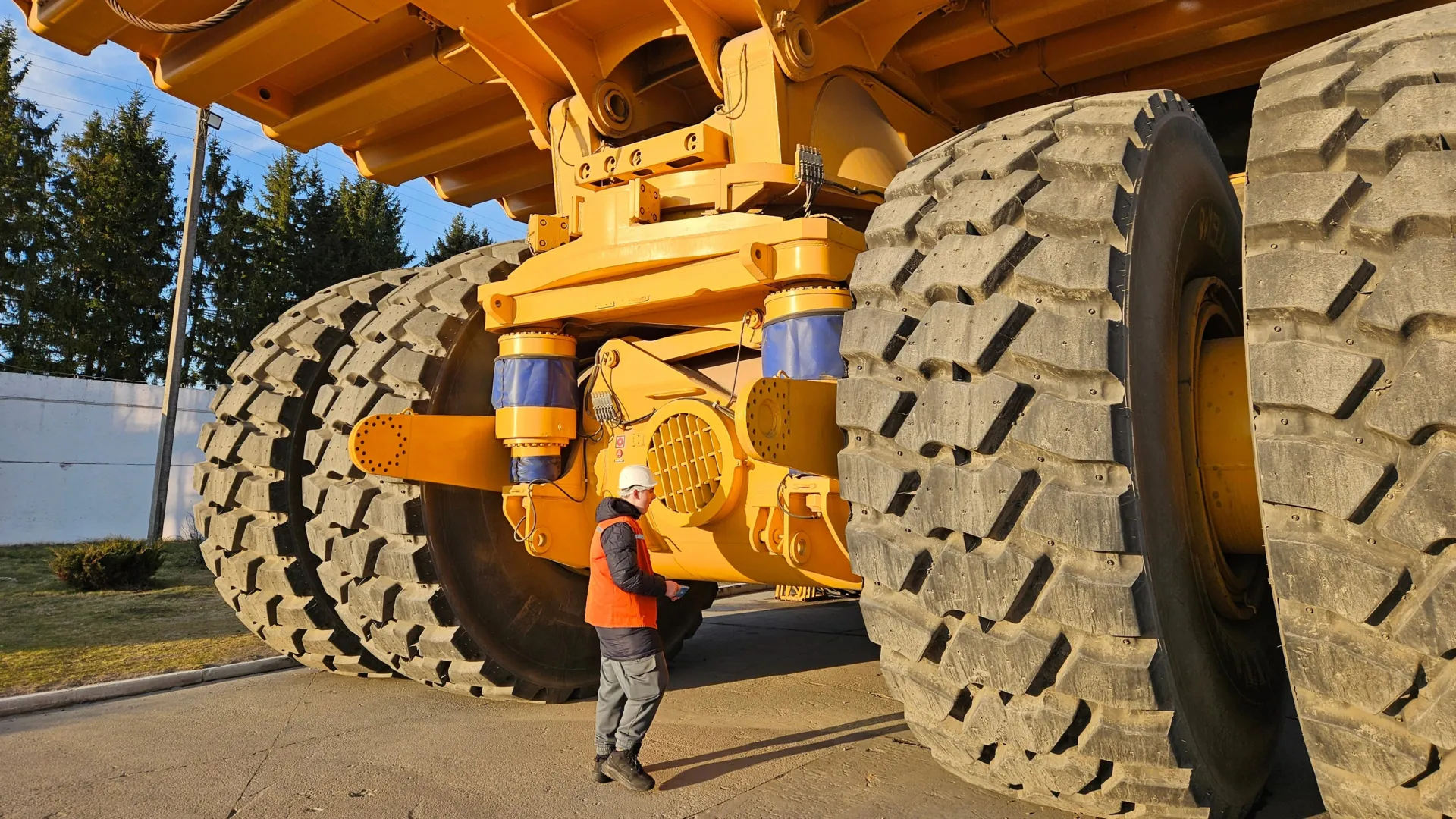
After nearly a century of widespread use in everything from car tires to medical devices, scientists have finally uncovered why adding carbon black particles to rubber makes it extraordinarily strong. Researchers at the University of South Florida used massive computer simulations equivalent to 15 years of computing time to solve the mystery behind reinforced rubber, a material that supports the global tire industry's $260 billion market.
Led by engineering Professor David Simmons, the team conducted 1,500 molecular dynamics simulations to understand how microscopic carbon black particles transform soft rubber into a material capable of supporting massive loads, including fully loaded aircraft. Their findings, published in the Proceedings of the National Academy of Sciences, finally reconciled several competing scientific theories that had attempted to explain the phenomenon.
For decades, scientists proposed various mechanisms to explain reinforced rubber's strength. Some believed the particles formed chain-like structures throughout the material, while others argued they acted like glue to stiffen surrounding areas. Another theory suggested the particles primarily occupied space, forcing the rubber to stretch differently. However, none of these explanations fully accounted for the material's remarkable behavior.
The breakthrough came from improved computer models that more accurately represented the shape and distribution of carbon black particles within rubber. Working alongside postdoctoral scholar Pierre Kawak and doctoral student Harshad Bhapkar, Simmons modeled interactions between hundreds of thousands of atoms to reveal the true mechanism at work.
The research showed that carbon black particles create a unique situation where the rubber material essentially "fights against itself" when stretched, dramatically boosting strength and durability. This discovery could help tire manufacturers optimize their products more effectively rather than relying on the trial-and-error methods they have used for generations to select different grades of carbon black.