Quantum Algorithm Solves 'Impossible' Materials Problem in Record Time
New quantum-inspired approach simulates complex quasicrystals with over 268 million sites, potentially revolutionizing quantum device design and energy-efficient electronics.
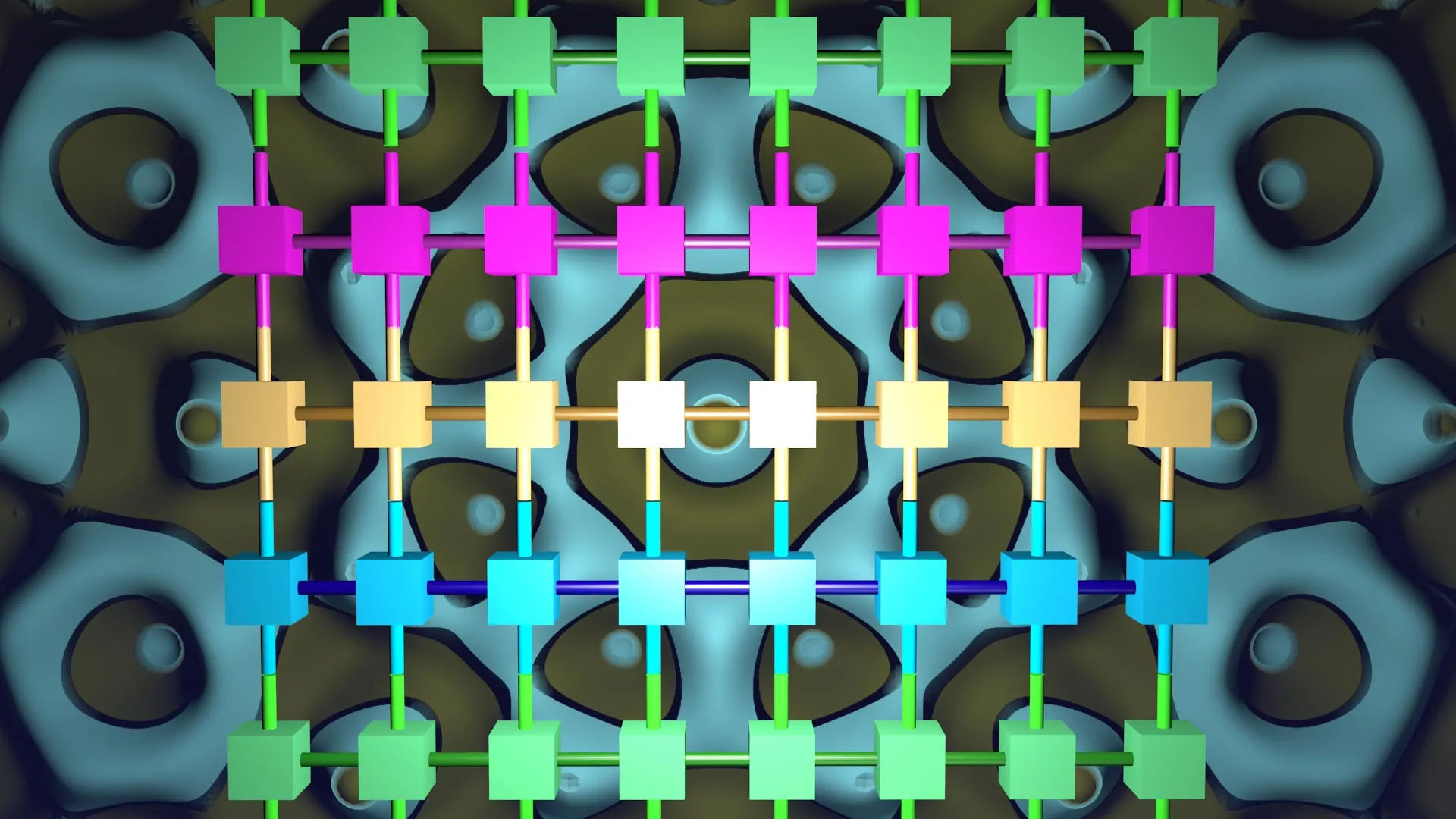
Scientists at Aalto University have developed a revolutionary quantum-inspired algorithm capable of simulating extraordinarily complex quantum materials known as quasicrystals, solving computational problems so massive that conventional supercomputers struggle to even approach them. The breakthrough could accelerate the development of advanced topological qubits and materials for future quantum computers, while also supporting the creation of dissipationless electronics that conduct electricity without energy loss. The research represents a fundamental advance in computational physics that demonstrates how quantum computing principles can solve problems in quantum materials science.
Quasicrystals represent some of the most mathematically complex structures in materials science, involving calculations that can require more than a quadrillion numbers to fully describe their properties. These exotic materials, along with super-moiré structures created by carefully layering and twisting sheets of graphene, exhibit quantum properties that could revolutionize electronics and computing. However, predicting their behavior has remained beyond the reach of even the most powerful supercomputers due to the enormous computational requirements involved in modeling their non-periodic atomic arrangements.
The research team, led by Assistant Professor Jose Lado and including doctoral researcher Tiago Antão, QDOC doctoral researcher Yitao Sun, and Academy Research Fellow Adolfo Fumega, reformulated the challenge using methods similar to those employed by quantum computers. Rather than attempting to directly calculate the full structure of quasicrystals, they developed an approach using tensor networks to encode the exponentially large computational spaces that quantum computers naturally operate within. Their algorithm successfully computed a quasicrystal containing over 268 million sites, a scale previously thought impossible.
The breakthrough focuses specifically on topological quasicrystals, unusual materials that host unconventional quantum excitations valuable for protecting electrical conductivity from disruptive noise and interference. These quantum excitations are distributed unevenly throughout the complex quasicrystal structure, making them extremely difficult to model using traditional computational approaches. The new algorithm's ability to handle such complexity opens the door to designing materials with precisely tailored quantum properties for specific technological applications.
The implications of this work extend far beyond basic research, potentially enabling the development of energy-efficient electronics that could help address the growing power demands of AI-driven data centers. The research also highlights what Lado describes as a productive feedback loop within quantum technology, where quantum algorithms enable the development of new quantum materials that could, in turn, support the construction of more advanced quantum computers. This symbiotic relationship between quantum computing and quantum materials research could accelerate progress in both fields simultaneously.