Physicists Topple a 'Quantum Supremacy' Claim — Using an Ordinary Laptop
Researchers at the Flatiron Institute and Boston University adapted a 1980s algorithm to simulate the dynamics of hundreds of qubits on classical computers, undercutting a 2025 claim that the feat required a quantum machine.

A problem once held up as proof that quantum computers can do what ordinary machines cannot has been solved on a conventional computer — and the first calculations were run on a personal laptop. The result, from physicists at the Flatiron Institute's Center for Computational Quantum Physics (CCQ) and Boston University, undercuts a high-profile claim of "quantum supremacy" and reopens questions about where the real frontier between classical and quantum computing lies.
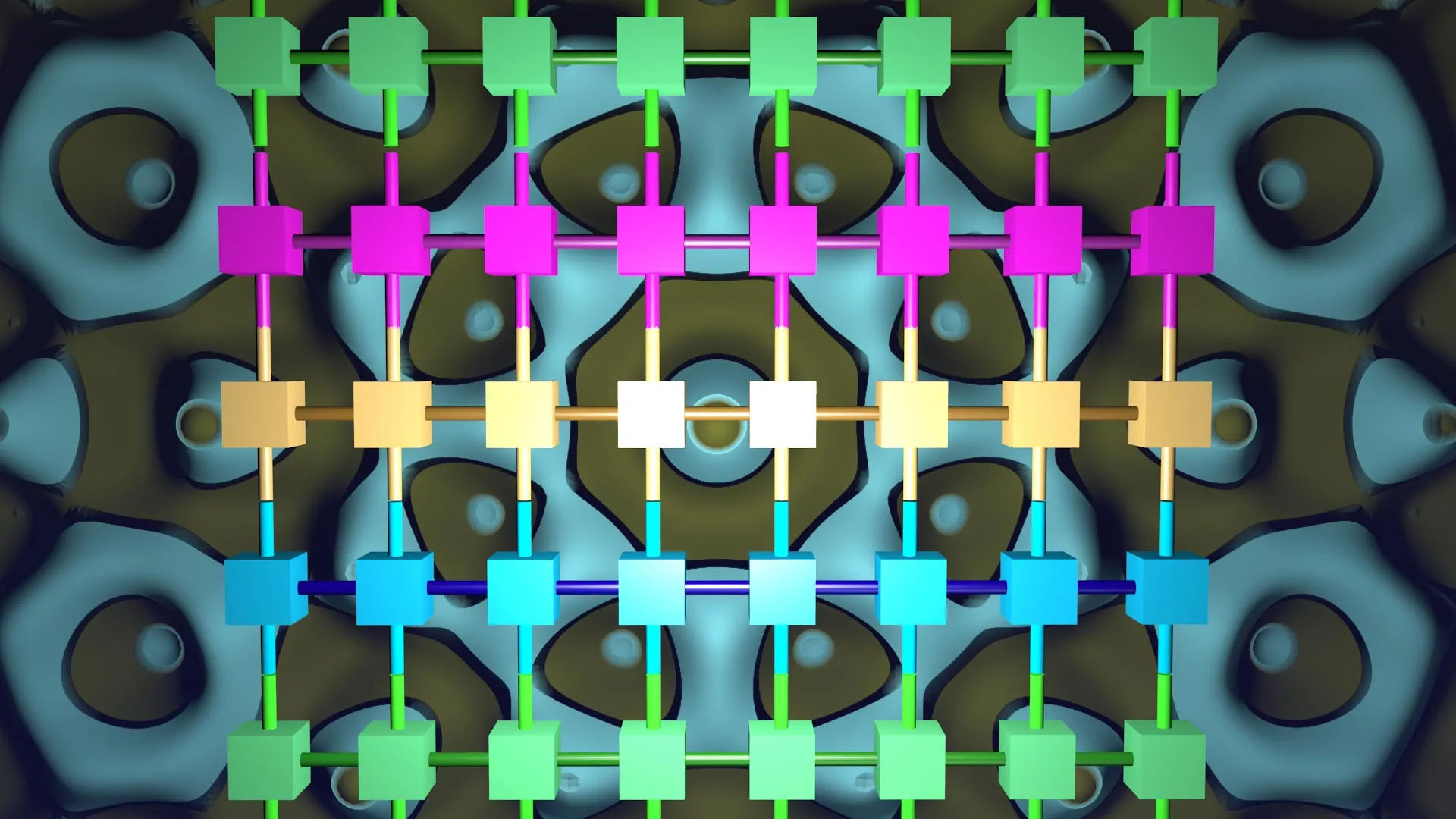
In March 2025, a team reported in the journal Science that a quantum computer had simulated the intricate dynamics of hundreds of interacting qubits arranged in a lattice — a calculation they argued was effectively impossible for classical machines. Such claims are meant to mark the moment quantum hardware decisively outpaces traditional computers on a meaningful task.
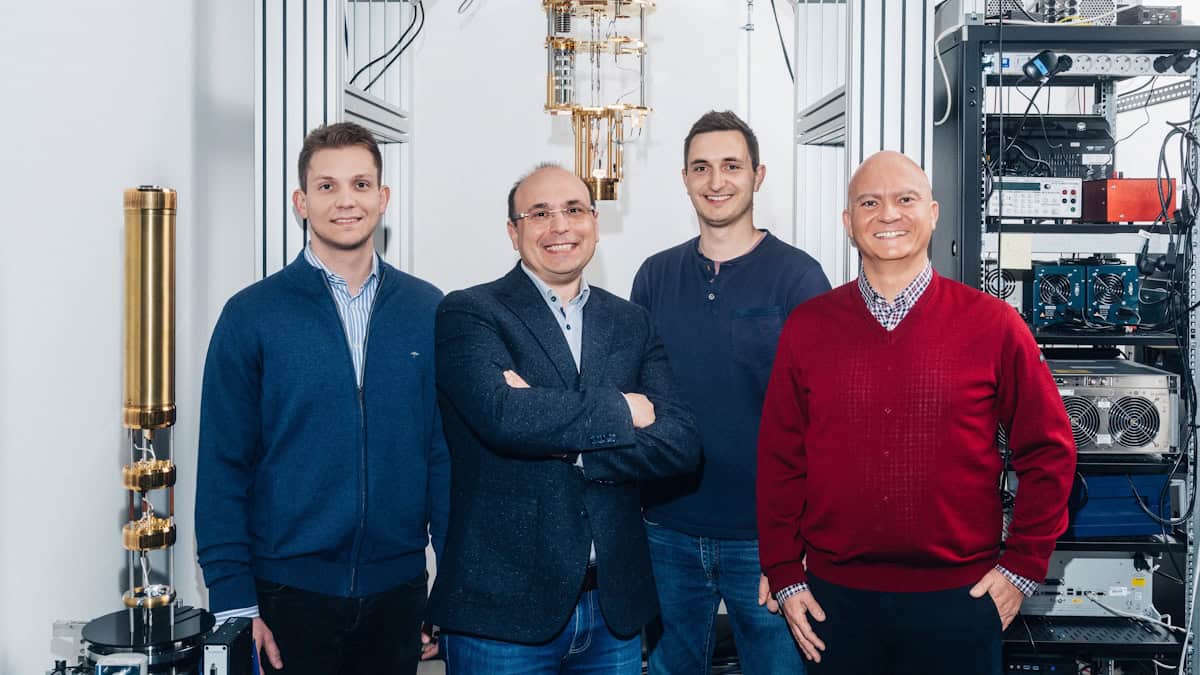
"Whenever we see these kinds of claims, we're always a bit skeptical," said Joseph Tindall, an associate research scientist at CCQ who led the new work with co-author Miles Stoudenmire. Rather than build a bigger quantum machine, the team reached back to a belief-propagation algorithm first developed in the 1980s and adapted it to tensor networks — mathematical structures that compactly represent the sprawling quantum states of many particles.
The approach proved startlingly efficient. Tindall ran his initial calculations on a personal laptop using ITensor, a tensor-network software library developed at CCQ, before scaling the method up to match the full quantum-computer problem. "It's this very powerful compression," he said, explaining how the technique lets a classical computer handle systems that look hopelessly complex, "especially in three dimensions."
The work, published May 21 in Science, does not claim that quantum computers are useless — far from it. Instead, it sharpens the moving target of quantum supremacy by showing that clever classical algorithms can sometimes catch up to, and surpass, what specialized quantum hardware was thought to uniquely achieve. Each time that happens, the bar for a convincing demonstration of quantum advantage rises.
Beyond the rivalry framing, the researchers say their method opens new avenues for studying the dynamics of complex quantum systems, which are central to understanding materials, chemistry and exotic phases of matter. By extending a decades-old idea into three dimensions, the team has handed physicists a practical, inexpensive tool — one that runs on hardware as humble as a laptop — for probing problems that until recently seemed to demand the world's most advanced quantum machines. The tug-of-war over quantum supremacy has played out repeatedly over the past decade, with classical algorithms periodically reclaiming ground that quantum machines were thought to have won. Each reversal, researchers say, ultimately sharpens the understanding of what genuinely hard computation looks like.