MEGATRON Simulations Link the Universe's First Stars to Chemical Fossils in Today's Galaxy
Four papers from an international team tie JWST's views of the earliest galaxies to the elements preserved in the Milky Way's oldest stars, and show simpler models underestimated how starlight shaped gas.
An international team of astronomers has built the most detailed simulations to date of the early universe and used them to connect the first generation of stars with chemical fingerprints still visible in stars of the Milky Way. The work was presented in four papers published in the Open Journal of Astrophysics.
The project is called MEGATRON. It is led by researchers at the University of Bath in the United Kingdom, with collaborators at the University of Chicago and the Institut d'Astrophysique de Paris, among others. It began in 2023 and is scheduled to run until 2030, supported by an award of 40 million processor hours on the UK's national supercomputers.
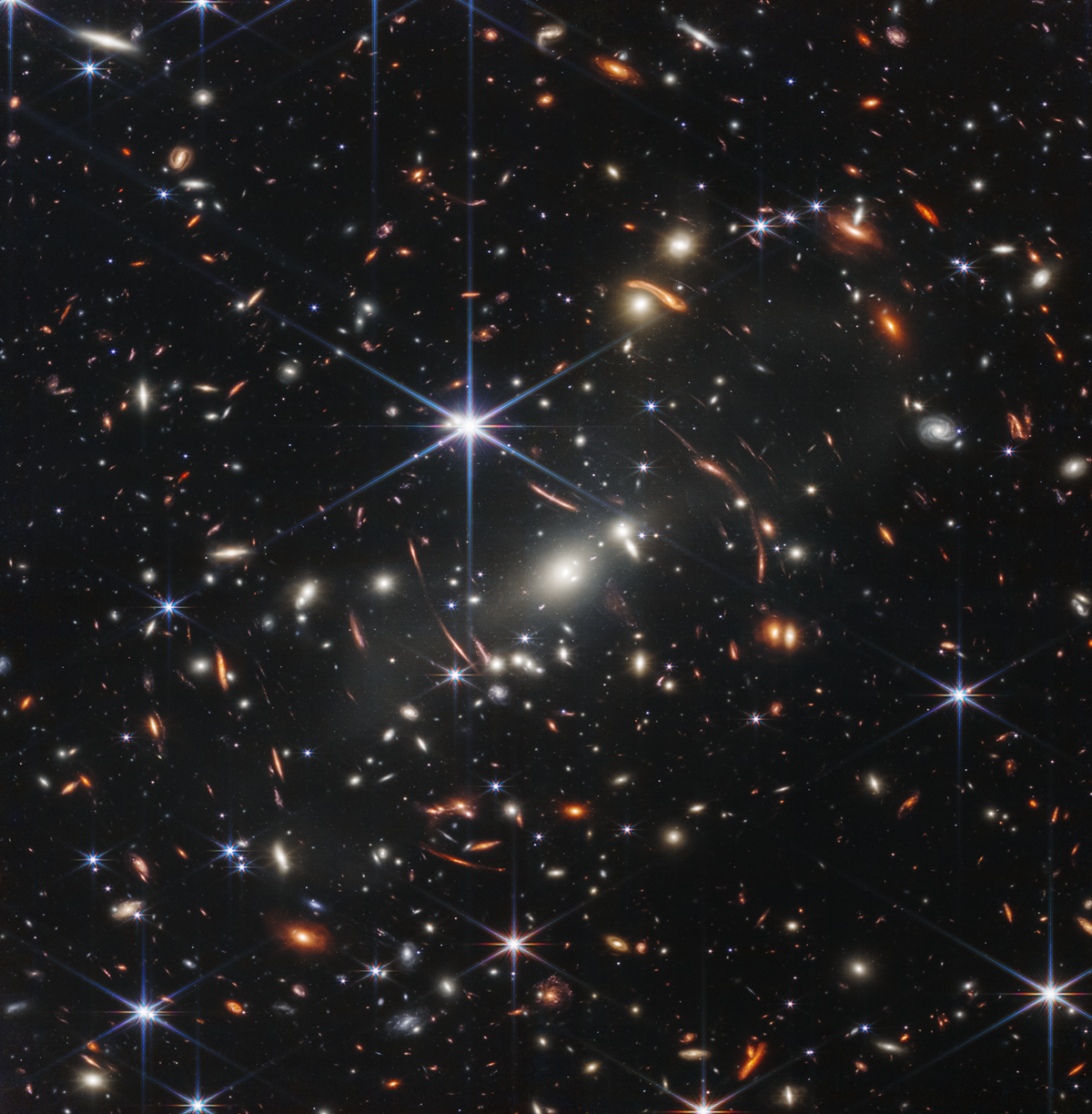
The goal is to cover a gap that telescopes cannot close. According to the most widely held theories, the first stars formed about 100 to 400 million years after the Big Bang. Even the James Webb Space Telescope cannot resolve those stars individually when it looks at the infant universe. The simulations start with the conditions shortly after the Big Bang, when the cosmos was filled with pristine gas without heavy elements, and follow the birth of the first stars, known as Population III stars.
The model tracks the intense radiation those stars gave off and their supernova explosions, which seeded the gas inside and between galaxies with newly forged heavy elements. It then follows how those elements went into the next generations of stars and galaxies, tracing a young galaxy as it grew to a mass similar to the Milky Way's. The team says MEGATRON is the first suite of cosmological simulations to couple a large nonequilibrium network of primordial species, metals and molecules to multifrequency radiation transport carried out on the fly.
"MEGATRON provides a common physical framework for interpreting two of astronomy's most exciting new datasets: JWST's view of the earliest galaxies and the stellar fossil record," said Dr. Martin Rey of the University of Bath's Department of Physics, a lead contributor. "Together, these complementary observations allow us to test competing models of the first stars in ways that weren't previously possible."
Rey described the two data sources this way: Webb gives "a direct glimpse of the infant cosmos," while stellar archaeology, the study of the oldest stars in our own neighborhood, lets researchers examine the relics of those earliest times. "MEGATRON provides a physical bridge between the two," he said.
The results show that accurately capturing the interplay between starlight, gas and newly made elements is essential to linking Webb's galaxies with the chemical makeup of ancient stars. They also suggest that earlier, simpler models of galaxy evolution underestimated how gas between galaxies was affected by stellar radiation and complex chemistry. The high resolution let the team resolve gas structures that simpler models blur out.
The findings feed into one of astronomy's basic questions, where the elements that make up the universe came from. Better predictions of how the first stars enriched their surroundings will let observers test specific scenarios against Webb data and against the abundance patterns found in the oldest stars of the Milky Way.