Quantum Algorithm Solves 'Impossible' Materials Problem in Seconds
Breakthrough could unlock powerful topological qubits and ultra-efficient electronics for quantum computers.
Scientists at Aalto University have developed a quantum-inspired algorithm that can solve materials problems so massive that conventional supercomputers struggle to even approach them. The breakthrough enables researchers to simulate extraordinarily complex quantum materials known as quasicrystals, potentially unlocking the development of advanced topological qubits and dissipationless electronics for future quantum computers.
The research team, led by Assistant Professor Jose Lado and including doctoral researcher Tiago Antão, tackled the challenge of simulating topological quasicrystals—materials with mathematical complexity involving more than a quadrillion numbers. These exotic materials host unconventional quantum excitations that are especially valuable because they help protect electrical conductivity from disruptive noise and interference, making them ideal candidates for quantum computing applications.
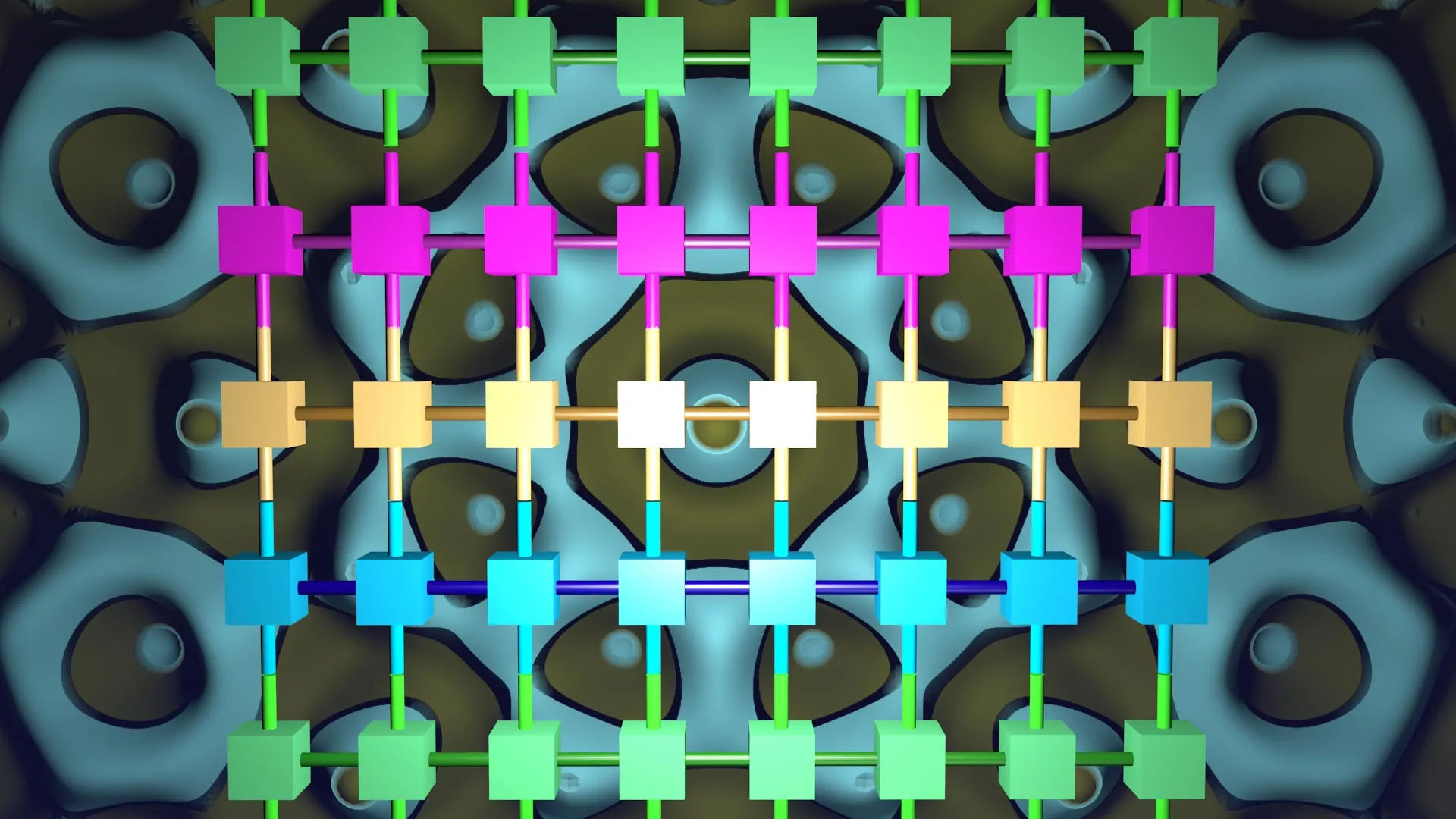
Rather than attempting to directly calculate the full structure of these materials, the team reformulated the challenge using methods similar to those employed by quantum computers themselves. They utilized a special family of algorithms known as tensor networks to encode the exponentially large computational spaces that quantum computers work within, achieving dramatic speed improvements over traditional approaches.
"Quantum computers work in exponentially large computational spaces, so we used a special family of algorithms to encode those spaces, known as tensor networks, to compute a quasicrystal with over 268 million sites," explained Antão. "Our algorithm shows how colossal problems in quantum materials can be directly solved with the exponential speed-up that comes from encoding the problem as a quantum many-body system."
The advance could eventually support the development of dissipationless electronics, which conduct electricity without energy loss—a crucial innovation for reducing the growing heat and energy demands of AI-driven data centers. Lado emphasized that this work highlights a promising feedback cycle within quantum technology itself, where new quantum algorithms enable the development of new quantum materials to build new paradigms of quantum computers, creating a productive two-way relationship between quantum materials research and quantum computing development.