Swedish Physicists Boost Superconductors by Sculpting the Surface Beneath Them
Chalmers University researchers etched nanoscale ridges into a substrate to keep an ultrathin superconducting film stable at higher temperatures and under stronger magnetic fields.
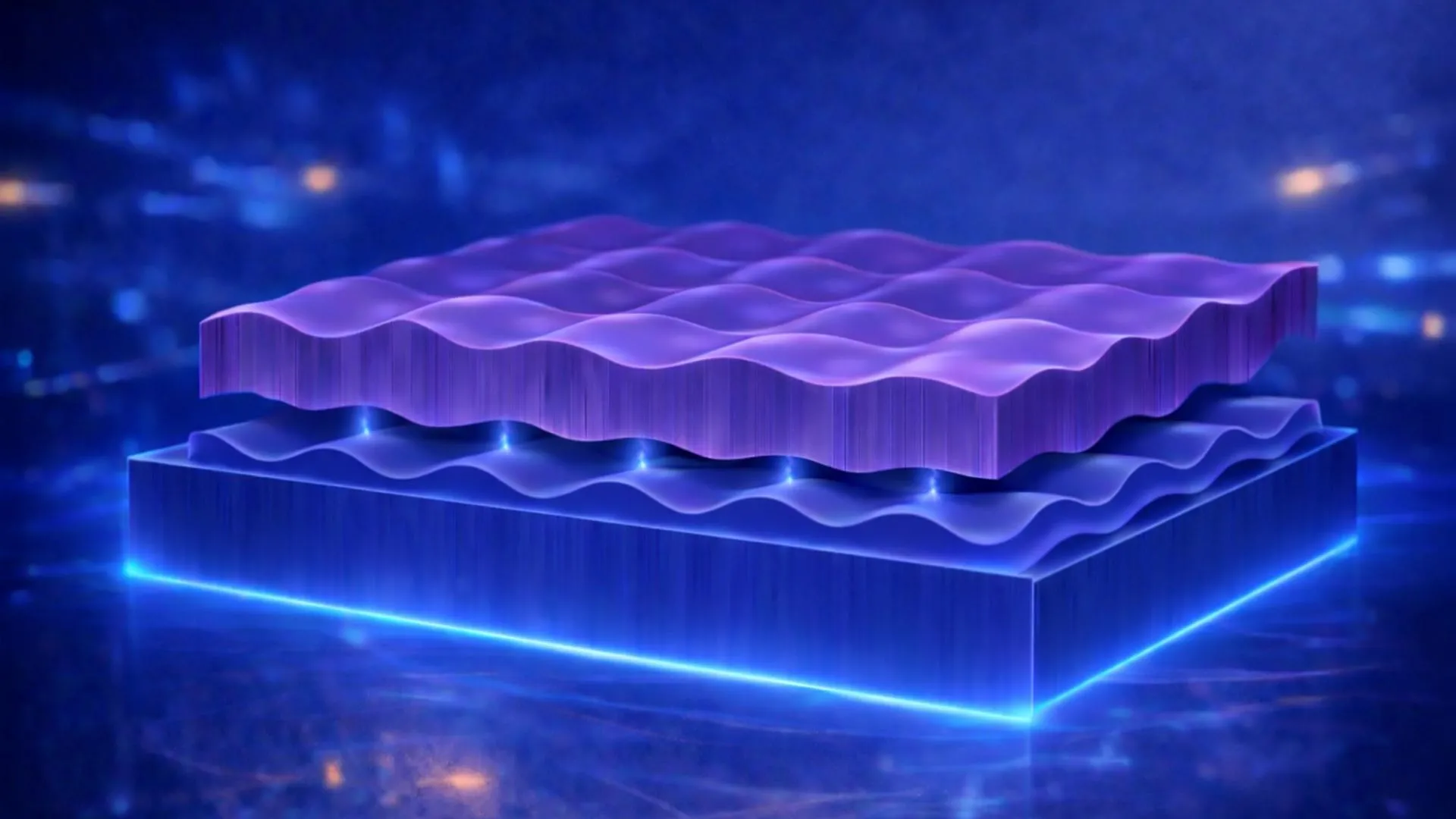
Physicists in Sweden have found a surprisingly simple way to make ultrathin superconductors perform better: instead of inventing new materials, they reshaped the surface that lies beneath the superconductor at the scale of individual atoms.
Researchers at Chalmers University of Technology, led by Professor Floriana Lombardi, sculpted nanoscale ridges and valleys into a magnesium-oxide substrate before depositing a film of the copper-oxide superconductor YBCO that is only a few nanometers thick — less than one-millionth the width of a human hair. For practical electronics, such fragile films must be grown on a supporting base, and the team discovered that the geometry of that base profoundly shapes how the superconductor behaves.
Because the atoms in a substrate are arranged in a fixed pattern, they effectively guide how the atoms in the superconducting layer settle on top. By deliberately patterning the substrate surface, the Chalmers team altered the electronic environment at the interface and, in doing so, preserved the material's superconductivity under conditions that normally destroy it: higher temperatures and strong applied magnetic fields.
Those two limitations have long stood between exotic superconductors and real-world use. Most superconducting materials lose their zero-resistance properties when warmed even slightly or exposed to the powerful magnetic fields found in technologies like MRI machines, particle accelerators and quantum processors. Keeping a film superconducting in such environments has been a central challenge for the field.
"By sculpting the substrate, we were able to enhance superconductivity rather than searching for entirely new materials," the researchers said, describing a design principle that focuses on engineering the supporting surface instead of chemically reformulating the superconductor itself. The approach is, in effect, a new dial to turn — one that had been largely overlooked.
If the technique can be scaled and reproduced across other materials, it could open a path toward far more energy-efficient electronics, where superconducting components carry current without the resistive losses that waste power in conventional circuits. It is also promising for quantum technologies, which often depend on superconducting elements operating in demanding magnetic and thermal conditions. The team cautioned that significant engineering work remains before the method reaches commercial devices, but said the result demonstrates that the substrate, long treated as a passive scaffold, can itself be a powerful tool for tuning the quantum behavior of materials.
Originally reported by ScienceDaily.