Oxygen Nuclei Smashed at RHIC Show 20% Jet Suppression, Smallest Sign Yet of Quark-Gluon Plasma
STAR experiment data from Brookhaven's final collider run set a new lower boundary for where the primordial soup can form. The LHC should see a stronger effect.

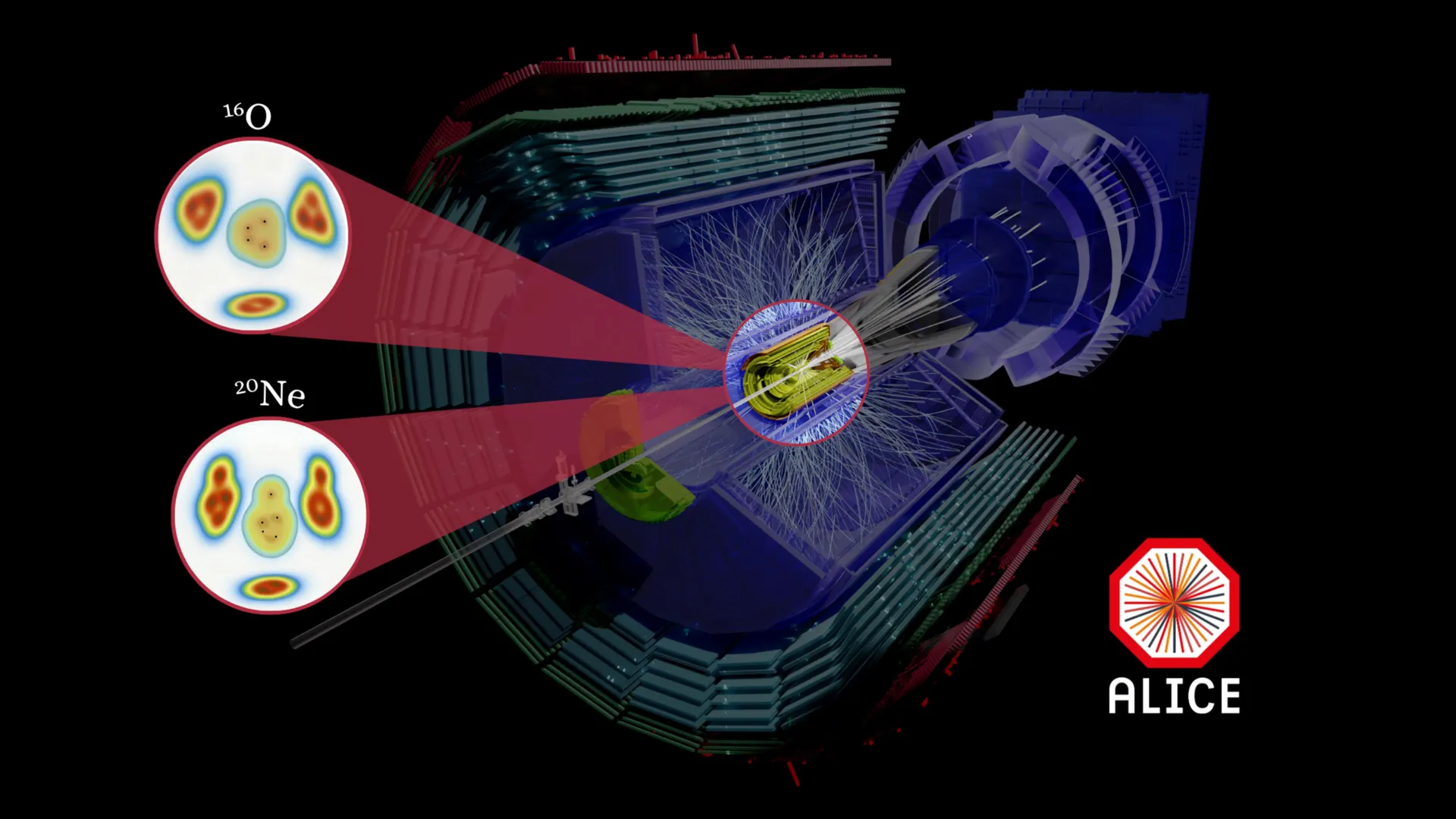
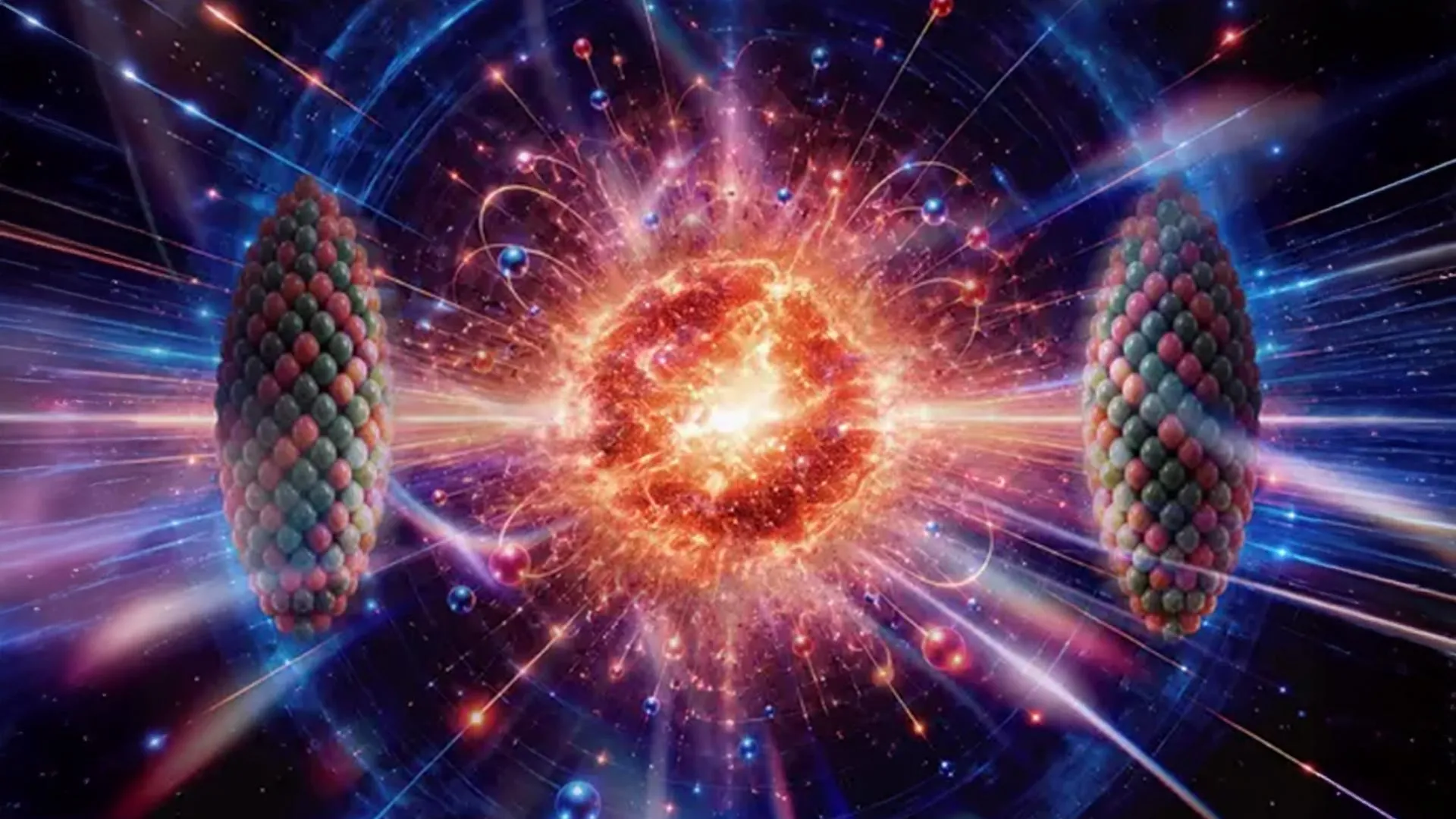
Physicists on the STAR experiment at Brookhaven National Laboratory's Relativistic Heavy Ion Collider report that oxygen-oxygen collisions at 200 GeV produce about a 20% suppression of high-energy particles, a signature called jet quenching. The result is consistent with the formation of a quark-gluon plasma, the hot soup of quarks and gluons that filled the universe in its first microseconds, in the smallest system where the signal has been seen unambiguously.
The paper, "Measurement of Jet Quenching in O+O Collisions at √s_NN = 200 GeV by the STAR Experiment at RHIC," appears in Physical Review Letters with B. E. Aboona as first author. It used STAR data collected in 2021 and involved Brookhaven, Shandong University and Yale University.
Jet quenching occurs when a fast-moving quark or gluon plows through plasma and loses energy, much as a bullet slows in water, said Li Yi, the Shandong University professor who oversaw the analysis. In gold-gold collisions, where nuclei have 79 protons and 118 neutrons, the effect is well established. Oxygen nuclei have just 8 protons and 8 neutrons, and whether such a small collision can make plasma has been debated.
"We haven't seen any unambiguous signal, so it's still kind of under debate in these small systems," said Brookhaven physicist Rongrong Ma. He said the group wanted to find the smallest system in which jet quenching can still be seen. To isolate the effect, the team compared jets from head-on central collisions with those from peripheral collisions, which produce far fewer particles and are not expected to make plasma.
The roughly 20% suppression is smaller than in gold-gold collisions, as expected for a much smaller system. The results set a new lower energy boundary for producing quark-gluon plasma in small systems. Sijie Zhang, who did the work for her master's thesis at Yale, described the measurements as counting experiments. Maowu Nie of Shandong University was involved in the analysis, and former Shandong Ph.D. student Yang He built the analysis framework and now works on LHC oxygen data.
The comparison with the Large Hadron Collider is the next step. The LHC began oxygen collisions in 2025 at energies above 5,000 GeV, so any jet quenching there should be larger. "That means the jet quenching signal, if it's there, should be bigger at LHC compared to RHIC," Yi said. Because oxygen has been studied at both facilities, the two can be compared directly.
The measurement also marks the end of an era. RHIC operated from 2000 until early 2026, and its final run ended with oxygen-oxygen collisions at STAR and sPHENIX on Feb. 6, 2026. The paper shows that even the last data taken at the collider are still producing new physics.