The NRC Is Scrapping the 50-Year-Old Rule Telling Nuclear Plants to Keep Radiation 'As Low As Reasonably Achievable'
The proposed rule also lets some workers take 10 rem in a year instead of 5. The public comment period closes Aug. 31, and it could take effect early next year.
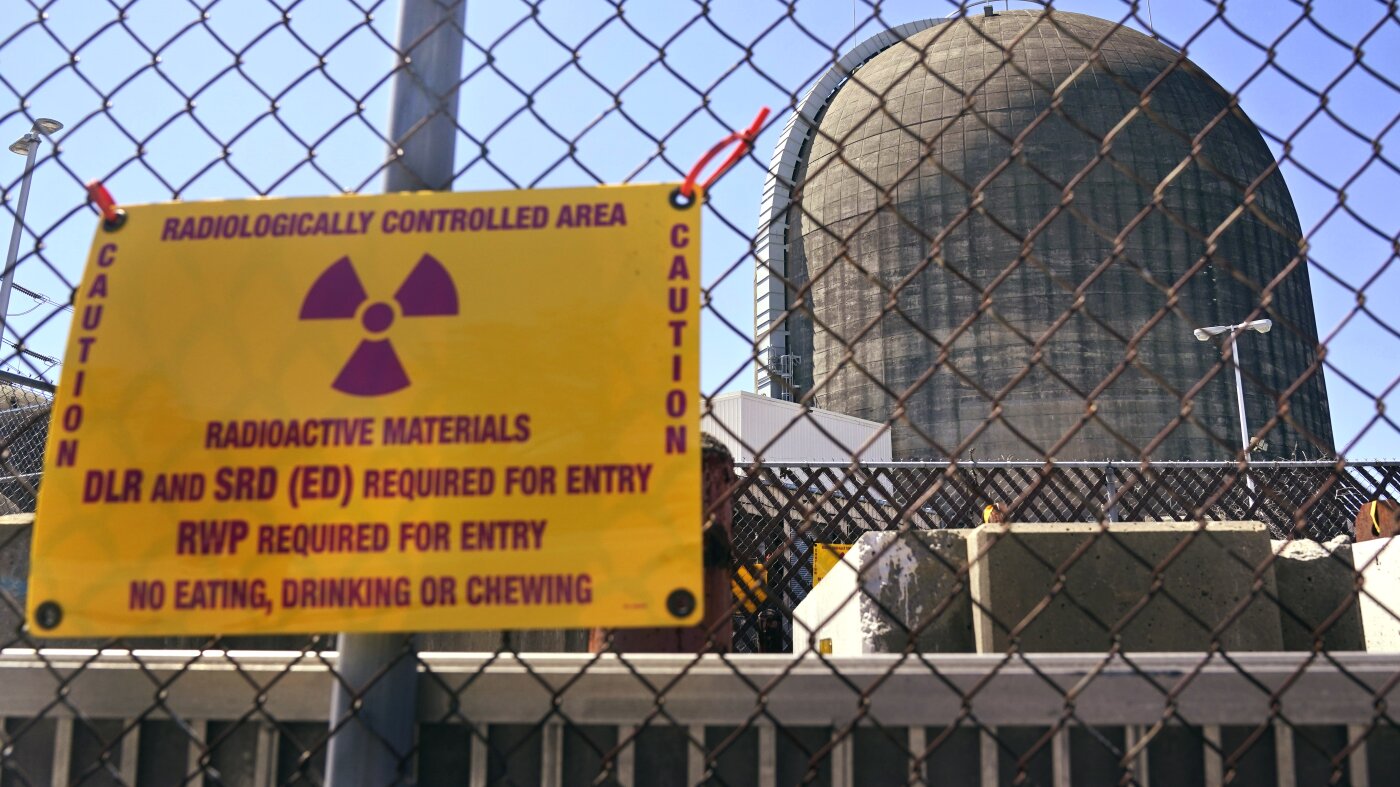
The Nuclear Regulatory Commission is preparing to delete one of the foundational principles of American radiation protection. Under a proposed rule now in its final stretch of public comment, the agency would eliminate the 50-year-old standard known as ALARA — "As Low As Reasonably Achievable" — which requires the nuclear industry to push radiation exposure for workers and the public below the legal limits wherever it practically can. The comment period closes Aug. 31, and the rule could take effect early next year.
ALARA exists because of a genuine scientific hard problem. At high doses, the link between radiation and cancer is not in dispute. "At high radiation doses, nobody's really arguing radiation causes cancer," said David Brenner, director of the Center for Radiological Research at Columbia University. High doses damage DNA and cause mutations. At low doses, the effect gets statistically buried: roughly 40% of Americans develop cancer at some point regardless. "As you go down in dose, what you're looking for is a very small increase in cancer risk over a very large background," Brenner said. "That's what makes it really, really hard." For half a century, the NRC's answer to that uncertainty was to require the industry to keep exposure as low as it reasonably could, on top of the numerical caps.
The change traces directly to a May executive order from President Trump calling for a wholesale overhaul of nuclear regulation. The order singled out ALARA, calling it a "flawed" understanding of radiation risk. Notably, the NRC declined to touch the underlying science: it kept the Linear No Threshold model, the assumption that cancer risk scales down proportionally with dose all the way to zero rather than vanishing below some safe floor. It is dropping the operational principle built on top of that model, not the model itself.
NRC Chairman Ho Nieh defended the move this week on the Federal News Network with a highway analogy. A road's speed limit might be 55, he said, but "imagine if there's another rule that says you have to drive as slow as reasonably achievable to be safer. Well, what does that mean? 50, 45, 25 miles per hour?" The ambiguity that would create for drivers, he argued, is what ALARA creates for reactor designers — a particular obstacle for the small modular reactors the agency expects to license. He was explicit about the driver behind the timeline: "The reason we're taking these regulatory reforms is because there's a demand for, an urgent demand for more electricity in the United States, due to artificial intelligence, data centers and industrial growth."
Some radiation specialists agree the principle had become unworkable. "Keeping doses as low as reasonably achievable was a fair idea," said Emily Caffrey, a radiation health physicist at the University of Alabama at Birmingham, but in practice it forced ever-more-stringent measures and left a definitional hole, "because what's 'reasonable' to one person isn't reasonable to another person." Her position is that the numbers already in the regulations should govern: "You should have a number because 'reasonable' is too loosey-goosey." Those numbers stay in place — 5 rem per year for a worker, 0.1 rem for a member of the public. For scale, the EPA puts a whole-body CT scan at about 1 rem.
The provision drawing the most attention is a new carve-out. Under the proposal, the industry could request a "planned occupational dose limit extension," allowing a worker to receive 10 rem in a given year instead of 5, so long as the five-year total stays under 25 rem. At an NRC public meeting earlier this month, the agency said it expected the extension to be used sparingly, for jobs like reactor refueling and plant upgrades. Caffrey said 10 rem approaches the range where elevated cancer risk becomes measurable. "I personally, knowing everything I know, would not want to get 10 rem every year for my working life," she said. "But occasionally, I would be OK with that."
Critics say the practical effect of removing ALARA is to remove the reason companies did better than the minimum. "Removing it would remove that incentive for these companies to continue to maintain the practices that protected their workers and the public," said Edwin Lyman, director of nuclear power safety at the Union of Concerned Scientists. Lyman acknowledges ALARA is imperfect but argues its net effect has been to hold exposures to very low levels, and that the NRC's own risk models say the harms of low-dose exposure are real even when they are impossible to see in the statistics. In his view the revised rule "is trying to devalue and deemphasize the harm of ionizing radiation exposure."