North Atlantic Right Whale Count Falls to 382, Reversing Recent Gains and Alarming Scientists
The roughly 2% drop leaves just 73 reproductive females, even after one of the best calving seasons on record. Congress is weighing a delay of new protections to 2035.
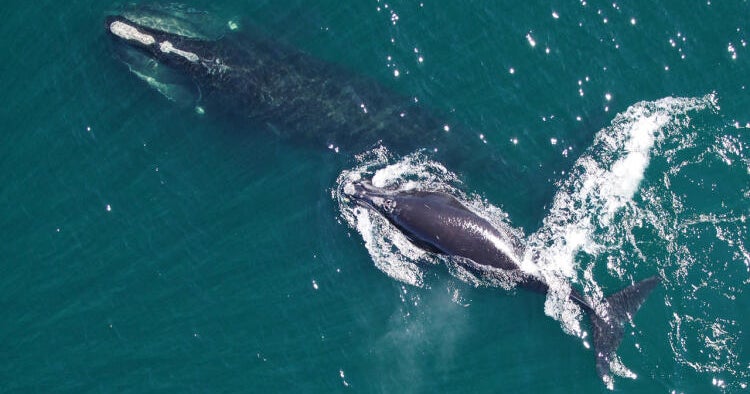
PORTLAND, Maine — The population of one of the world's rarest whales has dropped after several years of slow growth, and scientists say the animal is still at risk of extinction.
The North Atlantic right whale now numbers 382 animals, according to the annual population estimate released Monday by a consortium of scientists. That is about a 2% decline from last year's estimate of 384, which had itself been a 2.1% increase over the year before and continued a slow, steady climb.
The whales were nearly wiped out by centuries of commercial whaling, which mostly ended in the 1930s. They recovered only slowly and are now threatened by entanglement in fishing gear and collisions with ships. Their population fell about 25% from 2010 to 2020, a stretch in which years of poor reproduction coincided with high mortality. The last few years had looked somewhat more encouraging.
Heather Pettis, chair of the North Atlantic Right Whale Consortium, said a warming ocean is adding to the problem. Warming has pushed the whales' food, tiny organisms called copepods, into new areas, and the whales have followed them into waters that lack protection from ship strikes and entanglements. "We know that this population can and will move around to find food and if we aren't protecting them throughout their range, we may see another situation where we have this tremendous decline again," Pettis said.
The latest estimate lands even though last year was one of the most successful calving seasons on record, with more than 20 babies born. The problem is that the population has only 73 reproductive females, which makes replenishing it difficult. The National Oceanic and Atmospheric Administration has said the last nine years have also brought unusually high numbers of injuries and deaths among the whales.
Conservationists say the numbers show how much depends on protection. "The latest numbers are disappointing and make the road to recovery longer for critically endangered North Atlantic right whales," said Nora Ives, a marine scientist on the environmental group Oceana's right whale campaign. "This iconic whale will not escape extinction if its population cannot grow." Ives said the loss underscores the need to spare the whales from entanglements and ship strikes.
Oceana is among several environmental groups that opposed a proposal in Congress to delay new right whale protections until 2035. The proposal, which has passed the House of Representatives, is meant to protect commercial fishing interests from regulations that industry members describe as burdensome.
The whales can weigh 150,000 pounds. They give birth in winter off the Carolinas, Florida and Georgia and travel north to feeding grounds off New England and Canada. In spring, large groups, sometimes including a fifth of the entire population, are seen off Massachusetts. Whalers gave them their common name because they were the "right" whale to hunt: they live fairly close to shore, float when killed and yield a high volume of oil.
Scientists say a lasting recovery would require several years of high birth counts alongside new protections, a combination the population has not yet managed to sustain.