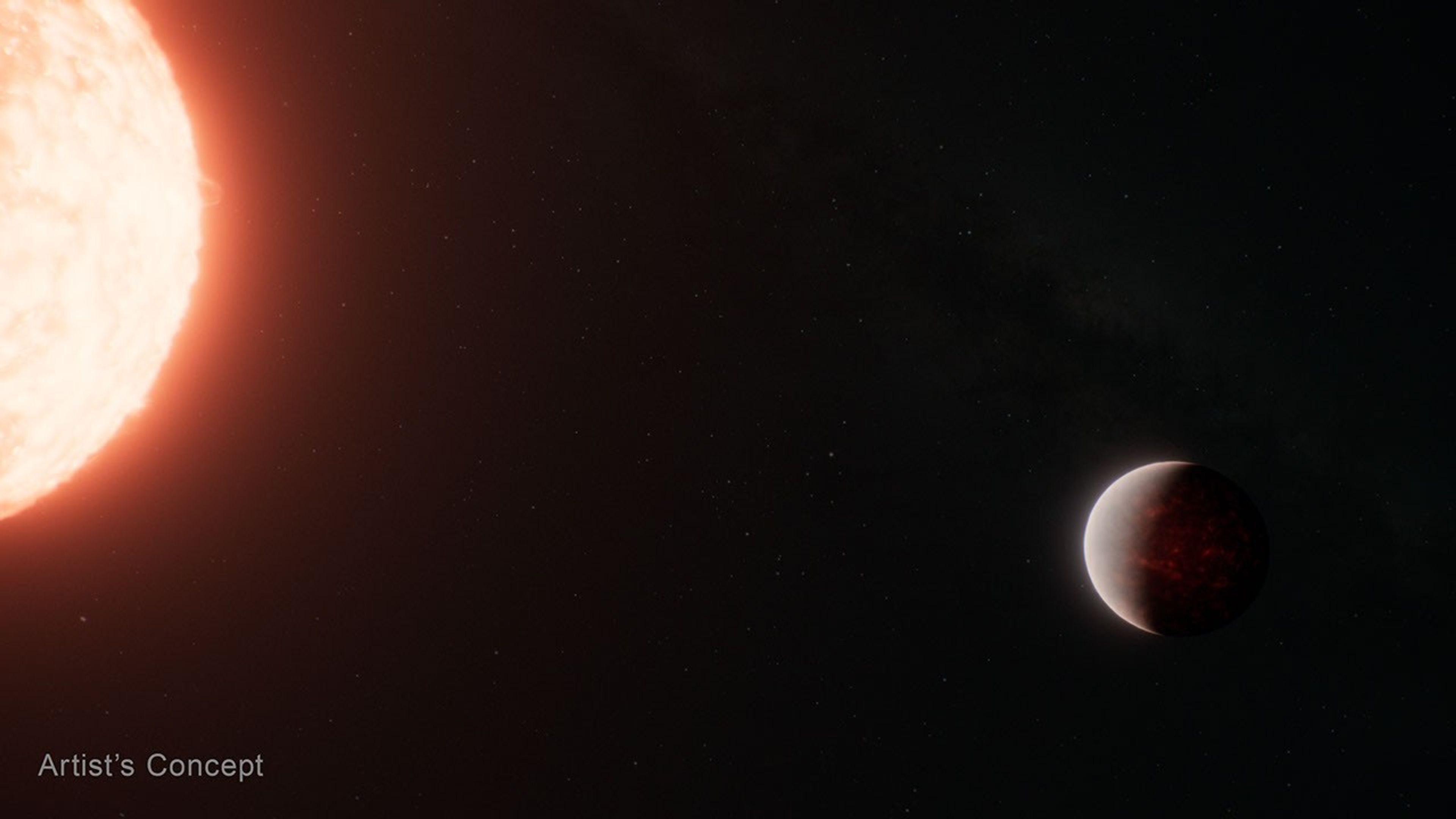
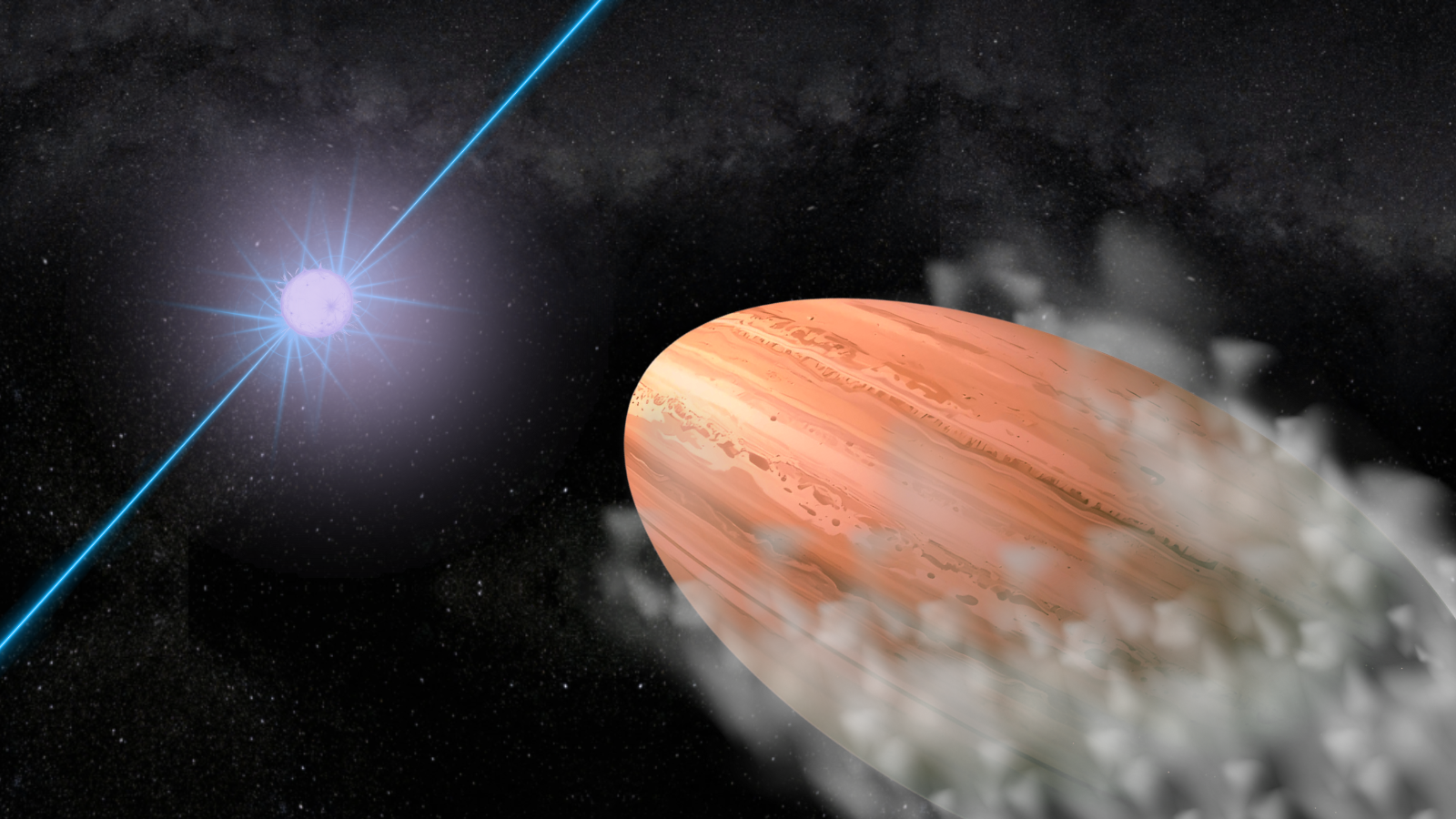
NASA's Webb Telescope Discovers Planet Where Rock Clouds Vanish Every Night
The giant exoplanet WASP-94A b has a bizarre daily weather cycle where mineral clouds appear every morning and disappear by evening, giving scientists unprecedented insights into alien atmospheres.
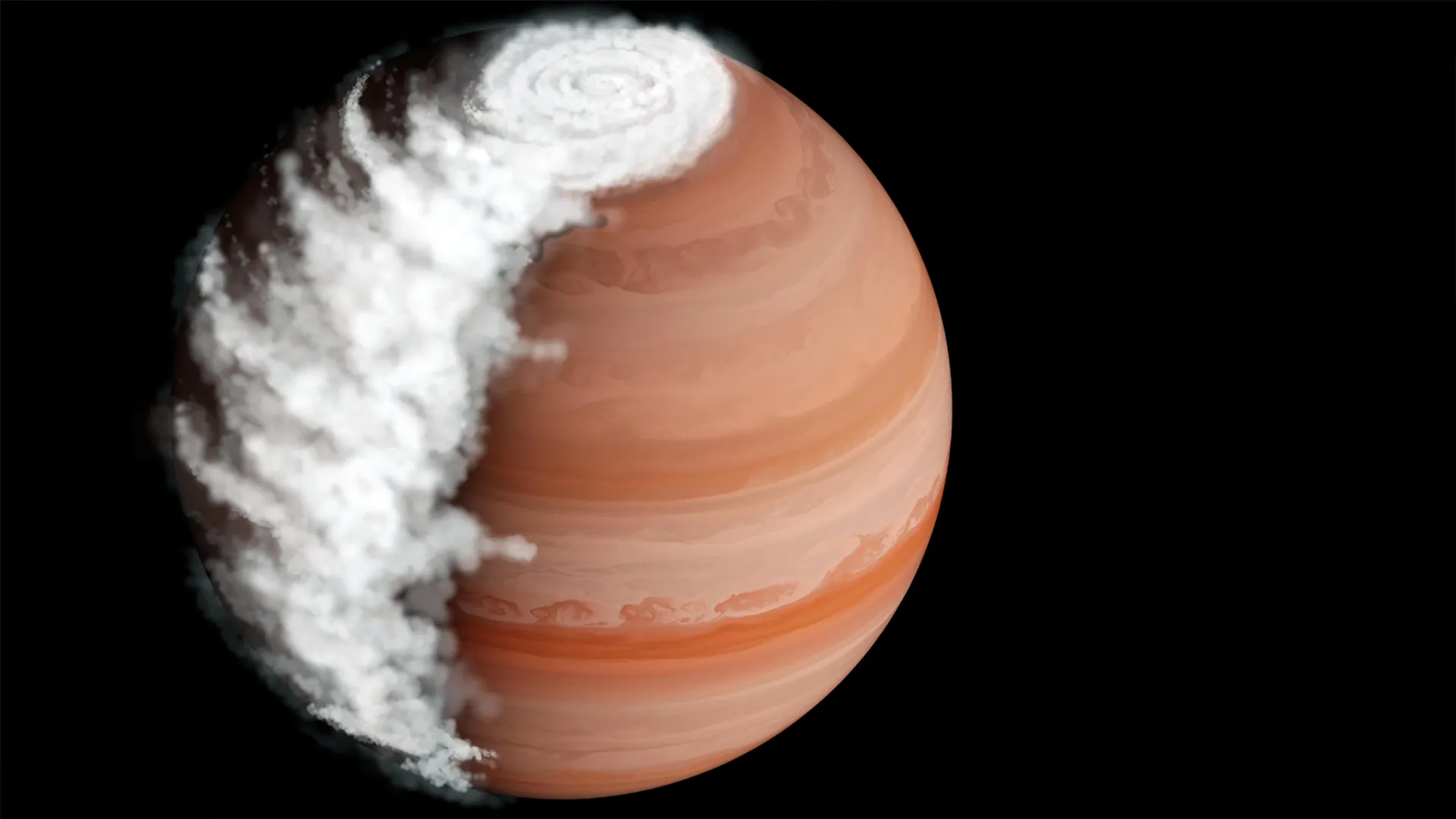
Every morning on the giant exoplanet WASP-94A b, clouds made from rocky minerals gather across the sky. By evening, those clouds are gone. Using observations from the James Webb Space Telescope, astronomers discovered this dramatic daily weather cycle on the distant world, located nearly 700 light years from Earth in the constellation Microscopium. The findings mark one of the first times scientists have directly observed cloud cycling on a Hot Jupiter exoplanet.
The discovery also gave researchers a much clearer view of the planet's atmosphere, helping them better understand what the world is made of and how its weather behaves. "I've been looking at exoplanets for 20 years, and general cloudiness has been a thorn in our side," said co-author David Sing, a Bloomberg Distinguished Professor of Earth and Planetary Sciences at Johns Hopkins. "Not only have we been able to clear the view, but we can finally pin down what the clouds are made out of and how they're condensing and evaporating."
To study WASP-94A b, scientists observed the planet as it crossed in front of its host star, allowing JWST to separately examine the leading and trailing edges of the planet. The leading edge represents the planet's morning side, where atmospheric winds carry air from the cooler night side toward the intensely hot day side. The trailing edge acts as the evening side, where air moves back toward darkness.
The observations revealed a striking difference between morning and evening conditions. The morning side was packed with clouds made of magnesium silicate, a mineral commonly found in rocks on Earth. The evening side, however, appeared almost cloud-free. Researchers believe the clouds either get dragged deep into the planet's atmosphere on the scorching day side or evaporate in temperatures exceeding 1,000 degrees.
"It was a huge surprise," Sing said. "What we saw was a real dichotomy between the weather on both sides of the planet, and huge differences in cloud coverage, and that changes our whole picture of the planet." The clearer evening skies gave scientists an unprecedented opportunity to peer through alien clouds and analyze the planet's atmospheric composition in detail.