Webb Telescope Detects Water Vapor on Potentially Habitable Exoplanet, With Tantalizing Hints of Life Signature
Seventeen transits of rocky world K2-18c revealed atmospheric water, carbon dioxide, and a tentative signal of dimethyl sulfide — a molecule produced almost exclusively by biological processes on Earth.

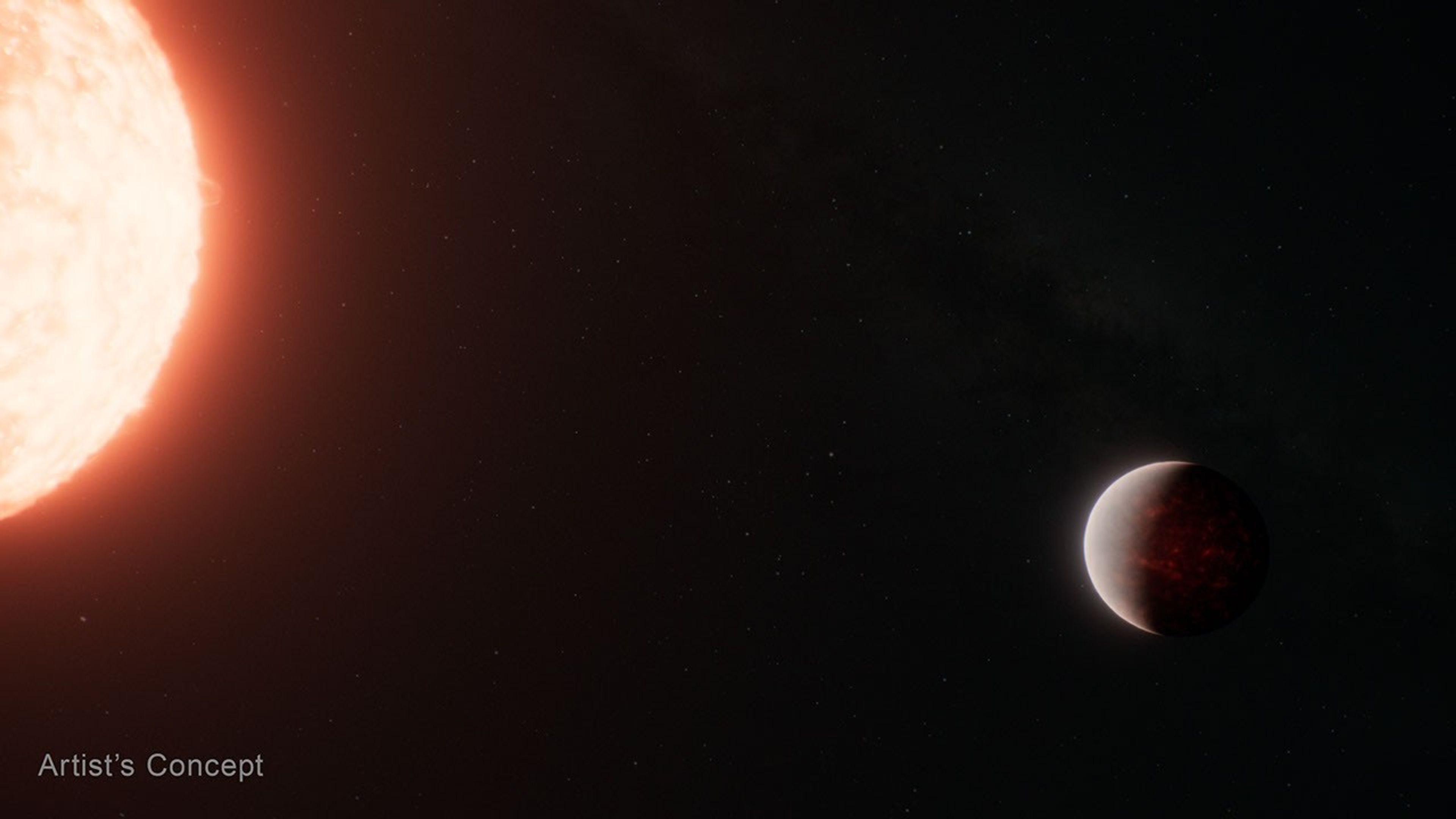
Scientists using NASA's James Webb Space Telescope have detected clear spectroscopic signatures of water vapor and carbon dioxide in the atmosphere of a rocky exoplanet located in the habitable zone of its host star, marking one of the most significant discoveries in the telescope's operational history and reigniting scientific debate about the conditions necessary for life elsewhere in the universe. The planet, designated K2-18c, orbits a cool M-dwarf star approximately 124 light-years from Earth and was previously known to possess a water-rich sub-Neptune companion, but the new observations provide the first direct atmospheric characterization of this smaller, potentially more Earth-like sibling world.
The research team, led by astronomers at the University of Cambridge's Institute of Astronomy and Johns Hopkins University, used Webb's Near-Infrared Spectrograph and Mid-Infrared Instrument to analyze starlight filtered through the planet's atmosphere during seventeen separate transits — each instance when the planet passed across the face of its star. The resulting transmission spectrum revealed absorption features consistent with water vapor, carbon dioxide, and tantalizing hints of dimethyl sulfide, a molecule that on Earth is produced almost exclusively by biological processes, primarily marine phytoplankton. The DMS signal is tentative and not yet confirmed at a statistically definitive level, the researchers cautioned.
NASA administrator Bill Nelson called the results "extraordinary" in a briefing with reporters, while stressing that the agency was not claiming to have discovered life. "What we have found is that this rocky, temperate world has an atmosphere, that atmosphere contains molecules associated with liquid water and life as we know it, and that we cannot currently explain the chemistry we see without considering biological hypotheses," Nelson said. "That is a profoundly important scientific result, not a claim of discovery, and it demands further investigation." The paper describing the findings has been accepted for publication in the Astrophysical Journal Letters.
The discovery underscores why astronomers fought for decades to build a telescope with Webb's capabilities. Previous space observatories lacked the sensitivity to characterize the atmospheres of rocky planets orbiting in the habitable zones of their stars — a goal that drove much of the scientific case for the 10 billion dollar instrument. The M-dwarf systems that Webb targets offer a particular advantage because such stars are smaller and cooler than the sun, meaning transits by orbiting planets produce a proportionally larger signal relative to stellar flux. This makes atmospheric characterization feasible in a way it would not be for Earth-sized planets around sun-like stars.
Skeptical voices within the planetary science community urged caution before broader claims were drawn from the DMS signal. Dr. Sara Seager of MIT, one of the world's foremost experts on exoplanet atmospheres, noted in a comment published alongside the paper that abiotic chemical pathways could potentially produce similar molecular signatures under certain geophysical conditions not yet fully characterized. She said the results were nonetheless compelling and that the scientific community should prioritize follow-up observations at higher signal-to-noise. Additional Webb observation time has already been requested and is expected to be granted in the next scheduling cycle.