James Webb Telescope Finds 'Forbidden' Planet With Atmosphere That Defies Planet Formation Theory
TOI-5205 b — a Jupiter-sized world orbiting a tiny red dwarf — has an atmosphere poorer in heavy elements than even its own star, with its bulk interior locking away 100 times more metals than reach the observable atmosphere.

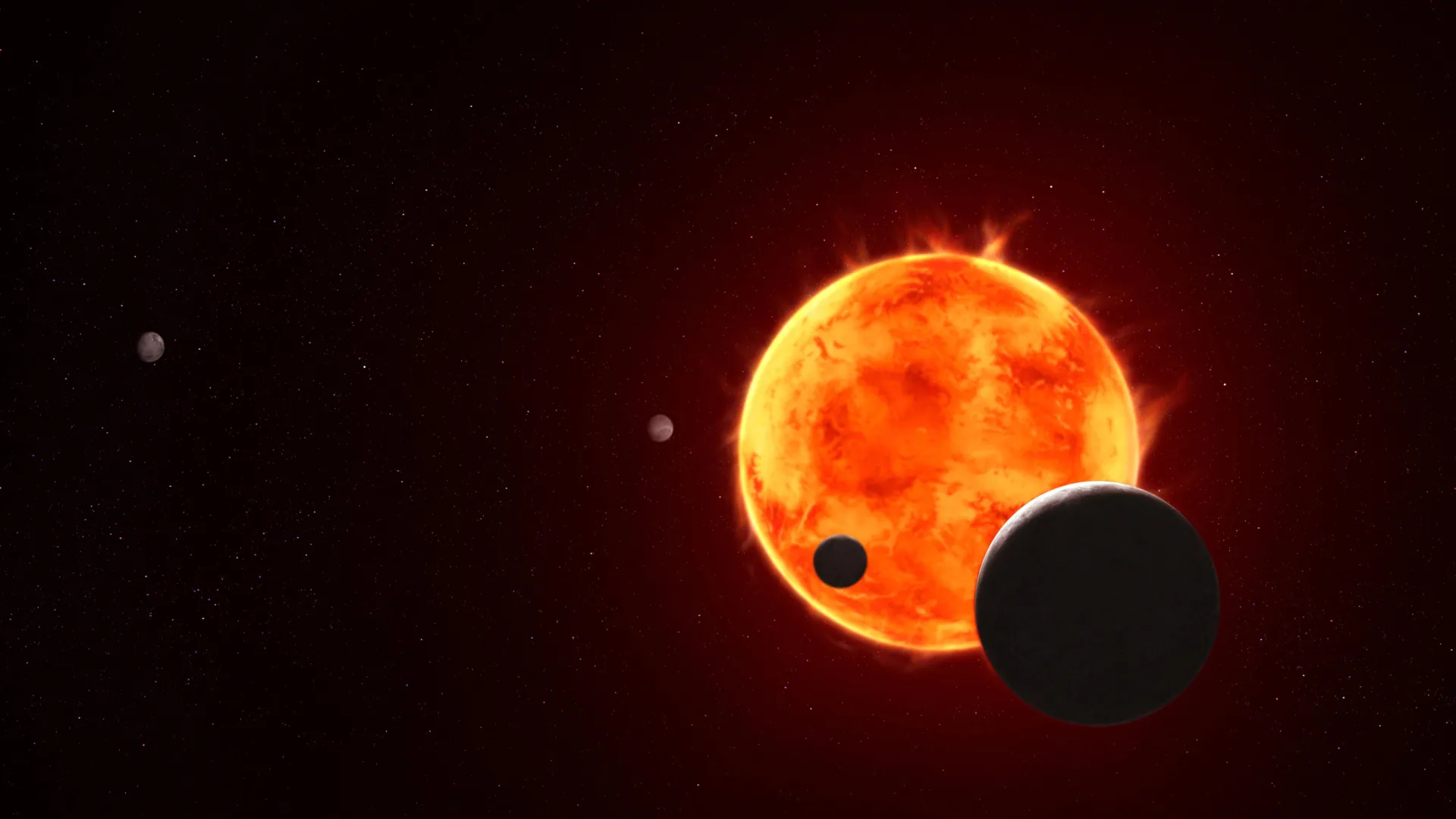
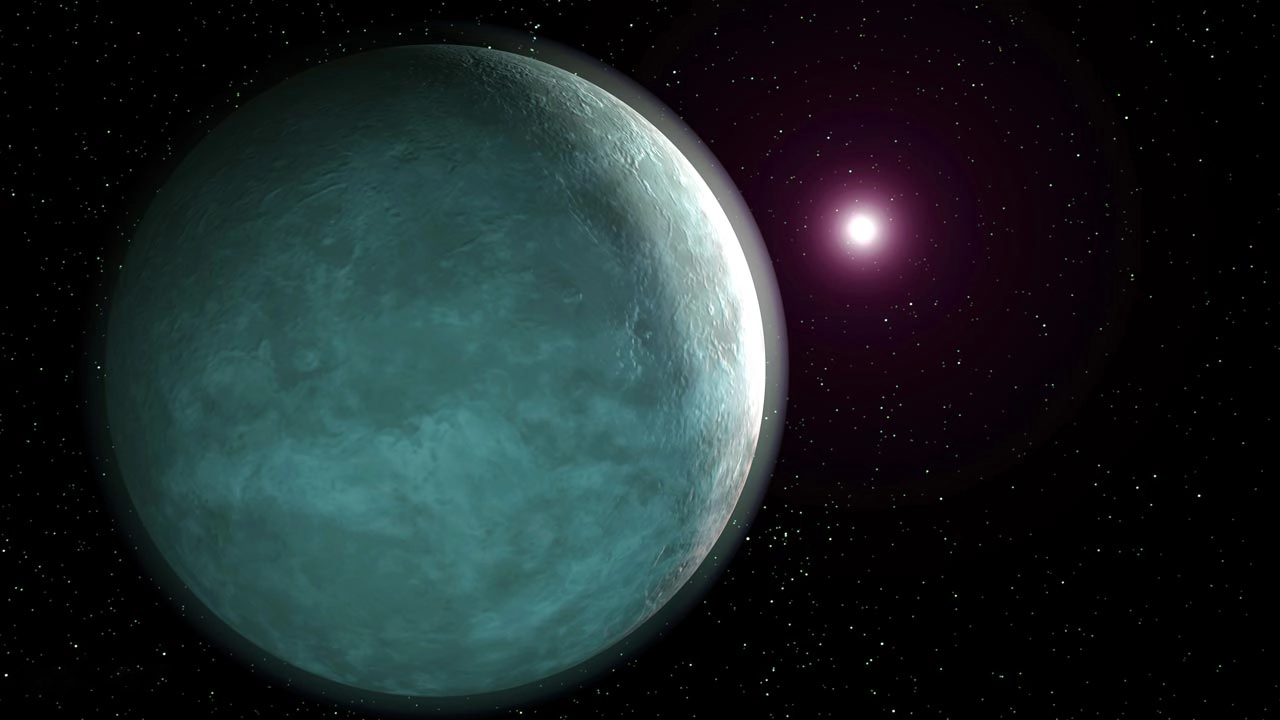
The James Webb Space Telescope has revealed a planetary puzzle that is forcing astronomers to rethink how gas giants form: TOI-5205 b, a Jupiter-sized world orbiting a small red dwarf star, possesses an atmosphere dramatically poorer in heavy elements than both its host star and any giant planet in our own solar system. The finding, published this week in The Astronomical Journal, provides the clearest evidence yet that the processes governing giant planet formation around small stars can produce conditions that existing theoretical models simply cannot explain.
Led by Caleb Cañas of NASA's Goddard Space Flight Center and Carnegie Science's Shubham Kanodia, the research team used Webb's Near Infrared Spectrograph and MIRI instrument to analyze the planet's atmosphere as it transited its host star. The observations detected clear signatures of methane and hydrogen sulfide — making TOI-5205 b "a very carbon-rich, oxygen-poor planet atmosphere" — but found concentrations of heavy elements far below what would be expected given the planet's size and the composition of its parent star.
The "forbidden" label that astronomers attach to TOI-5205 b stems from its very existence. The host star, designated TOI-5205, is an M-dwarf roughly 40 percent the mass of the Sun — a cool, dim red star that according to the standard core accretion model should struggle to accumulate enough disk material to birth a Jupiter-mass world before the protoplanetary gas disk dissipates. The planet appears to defy those constraints, orbiting at close range and retaining a thick gaseous envelope despite forming around such a diminutive star.
The atmospheric composition deepens the mystery. Cañas and his colleagues found that the bulk interior of TOI-5205 b contains approximately 100 times more metal — astronomers' shorthand for elements heavier than hydrogen and helium — than its atmosphere does. Their models suggest heavy elements migrated inward during the planet's formation and now reside locked in the deep interior rather than mixing upward into the observable atmosphere. "This is the opposite of what we see in Jupiter and Saturn," Cañas said. "It tells us the planet formed or evolved in a way we haven't adequately modeled."
The discovery carries significant implications for the search for planets around the galaxy's most common type of star. Red dwarfs like TOI-5205 account for roughly 70 percent of all stars in the Milky Way, and astronomers have catalogued numerous Earth-sized and super-Earth planets in their habitable zones. Understanding how and whether gas giants also form around red dwarfs — and how their atmospheric chemistry differs from solar-system planets — will shape future decisions about which targets Webb and its successors prioritize in the ongoing search for signs of life beyond Earth.
The study was funded in part by NASA's Goddard Space Flight Center and involved collaborators from Johns Hopkins University, the California Institute of Technology, Penn State University, and multiple international institutions. The team plans additional transit observations to refine atmospheric abundance measurements and test competing formation models. "TOI-5205 b is telling us there are chapters of planet formation we haven't read yet," Kanodia said.