NASA's Psyche Spacecraft to Slingshot Past Mars at 12,000 MPH in Dramatic Flyby
The probe will skim just 2,800 miles above Mars on Friday to gain gravitational boost while testing instruments and capturing rare crescent views of the Red Planet.
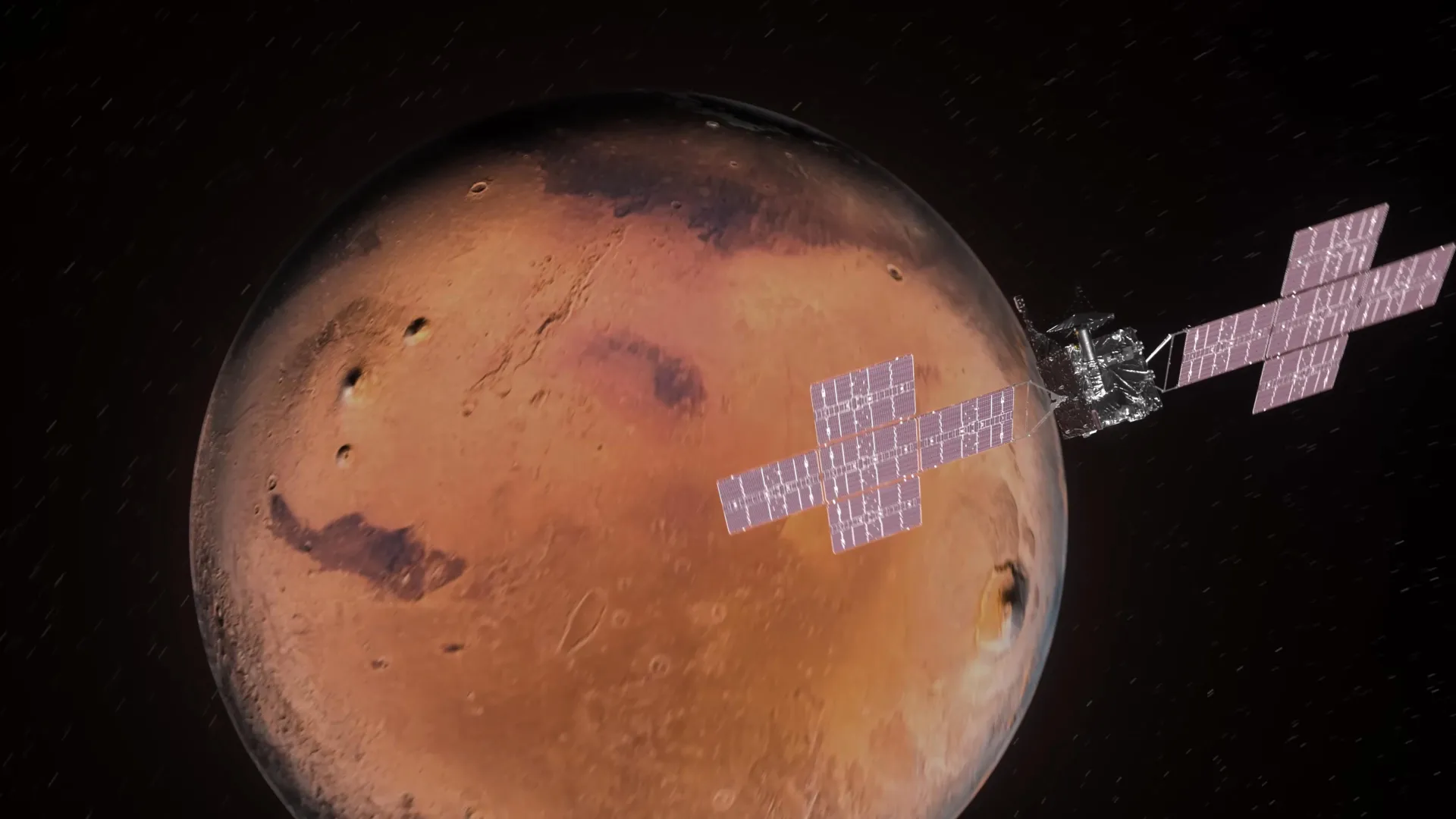
NASA's Psyche spacecraft is preparing for a high-speed encounter with Mars that will dramatically alter its trajectory toward the mysterious metal-rich asteroid Psyche. On Friday, May 15, the spacecraft will pass just 2,800 miles above the Martian surface while traveling approximately 12,333 mph, using the planet's gravity to increase its speed and reduce the amount of propellant needed for the remainder of its mission to reach the asteroid in 2029.
Launched on October 13, 2023, Psyche relies on a solar-electric propulsion system powered by xenon gas for its primary thrust. However, mission planners are taking advantage of Mars' gravitational pull to provide a significant boost without consuming precious fuel reserves. The flyby also presents an invaluable opportunity for the science team to test and calibrate the spacecraft's instruments before reaching its ultimate destination, the unusual metallic asteroid that shares the mission's name.
During the encounter, mission controllers plan to use Psyche's multispectral imager to collect thousands of observations of Mars, providing crucial data to help scientists refine imaging techniques and practice operations they will later employ while orbiting the asteroid. The spacecraft has already begun returning preliminary images, with the mission website displaying raw images showing a starfield with Mars appearing as a tiny point of light starting May 7.
"We are now exactly on target for the flyby, and we've programmed the flight computer with everything that the spacecraft will do throughout May," said Sarah Bairstow, Psyche's mission planning lead at NASA's Jet Propulsion Laboratory in Southern California. "This is our first opportunity in flight to calibrate Psyche's imager with something bigger than a few pixels, and we'll also make observations with the mission's other science instruments."
The view from Psyche will differ dramatically from typical Mars images captured by orbiters and telescopes. Because the spacecraft is approaching from the planet's night side, Mars will initially appear as a thin crescent illuminated by only a narrow strip of sunlight. "We are approaching Mars at a very high phase angle, which means we are catching up with the planet from its night side with only a sliver of sunlight creating a thin crescent," explained Jim Bell, the Psyche imager instrument lead at Arizona State University. Engineers expect to process the flyby images in coming weeks to create a time-lapse sequence of the dramatic encounter.