Scientists Create a 'Living Plastic' That Self-Destructs in Six Days
Engineered bacteria embedded in the material digest it on command, breaking it fully into building blocks with no microplastics left behind.
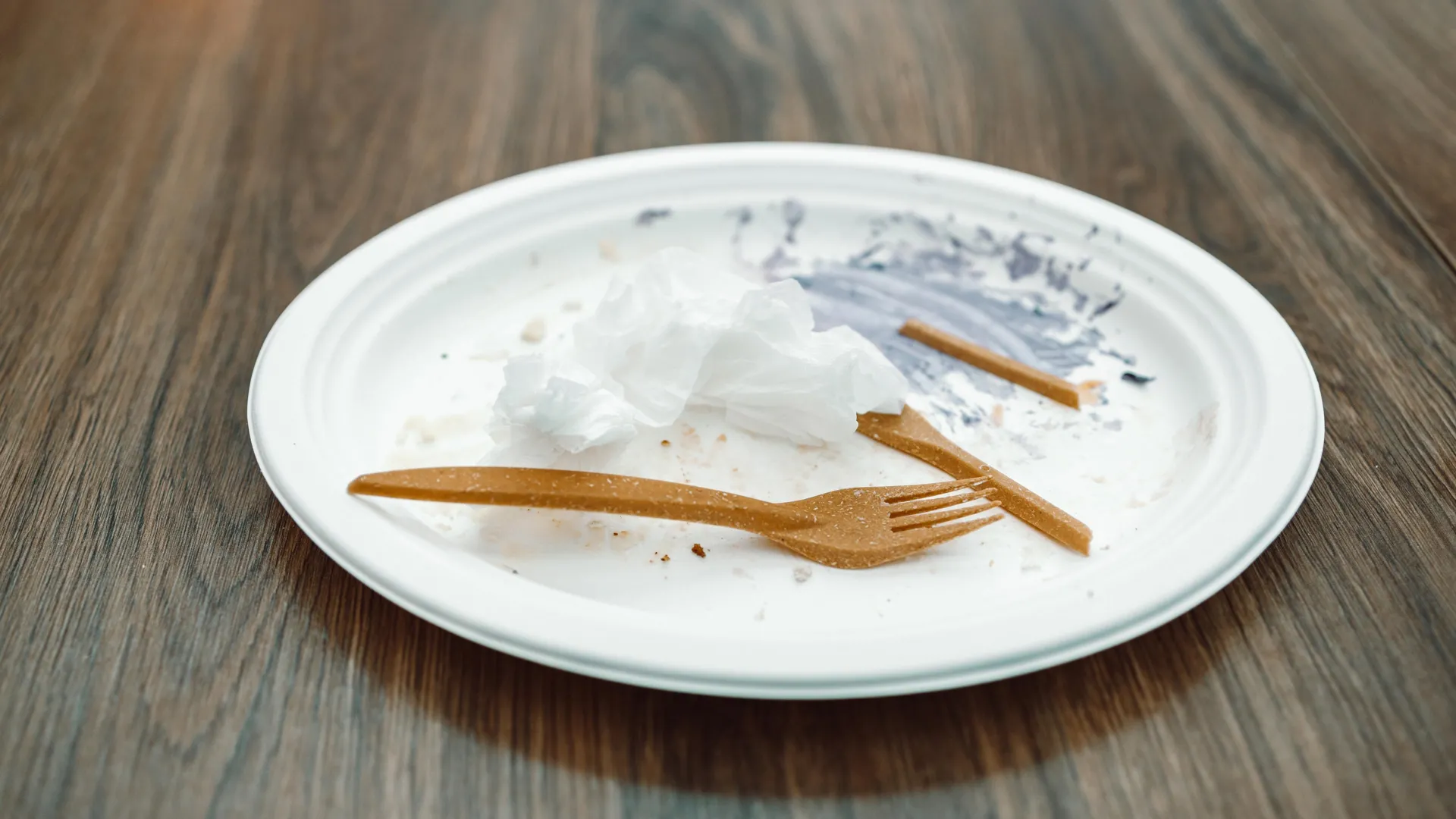
Researchers have created a new kind of plastic that comes with a built-in kill switch: a material seeded with living bacteria that can be triggered to devour it from the inside, breaking it down completely within days and leaving behind none of the microplastic fragments that ordinary "biodegradable" plastics often shed.
In a new study, scientists at the Shenzhen Institute of Synthetic Biology in China embedded engineered microbes into a plastic film and showed that, once activated, the material fully decomposed in about six days. The team engineered two cooperating strains of Bacillus subtilis, a common and generally harmless soil bacterium, to produce a pair of polymer-cutting enzymes that finish the job together.
The two enzymes work as a tag team. The first slices the plastic's long polymer chains at random points, chopping them into shorter fragments. The second enzyme then attacks those fragments from their ends, dismantling them down to their individual monomer building blocks — the small molecules from which the plastic was originally assembled. Because the breakdown goes all the way to monomers, the process avoids leaving behind the persistent microscopic shards that make conventional plastic pollution so difficult to clean up.
The researchers focused on polycaprolactone, or PCL, a biodegradable polyester already used in some 3D-printing filaments and medical products such as dissolvable surgical sutures. By tucking dormant bacteria inside the plastic and keeping them inactive until needed, the scientists effectively turned the material "alive," reframing durability as a feature that can be switched off on command rather than a permanent environmental liability.
The work, published in the journal ACS Applied Polymer Materials, is part of a growing wave of research into so-called engineered living materials that blend biology with manufacturing. The appeal is straightforward: plastics that perform normally in use but then disassemble themselves cleanly at the end of their life could help chip away at a global waste problem measured in hundreds of millions of tons a year.
Significant hurdles remain before such materials reach store shelves. The demonstrations were done on a specific, relatively easy-to-degrade plastic, and scaling the approach to the cheap, ubiquitous polymers that dominate packaging — the ones clogging landfills and oceans — will require substantial new engineering. The embedded microbes must also stay safely dormant during a product's useful life. Still, the researchers argue their results point toward a future in which plastics could be designed from the outset to know how, and when, to break themselves down.