Learning Musical Instruments Later in Life Protects Memory and Slows Brain Aging
Four-year study shows older adults who continued practicing maintained cognitive performance while those who quit experienced memory decline.
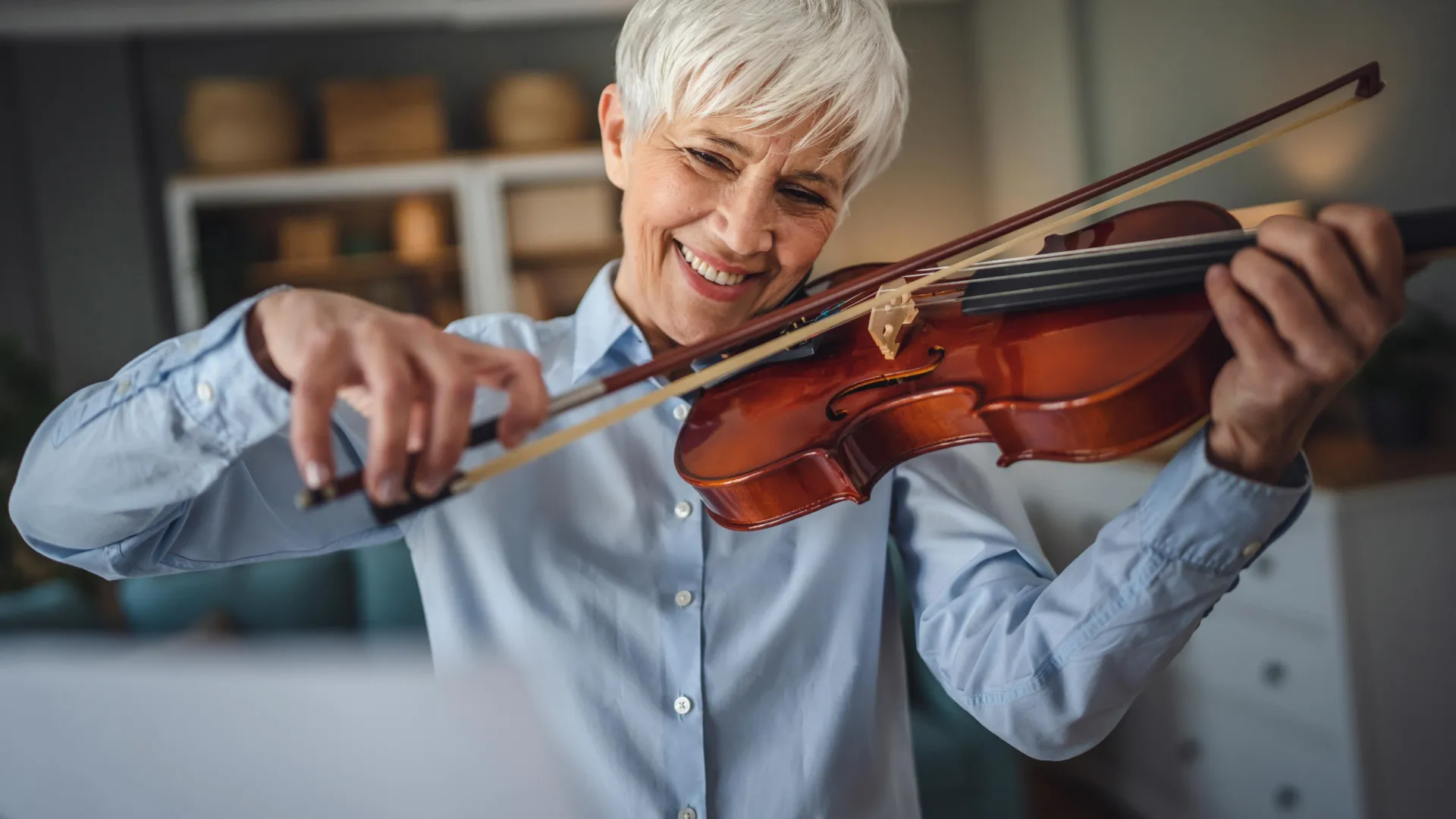
Learning to play a musical instrument in your 70s and beyond may help protect against age-related cognitive decline, according to groundbreaking research from Kyoto University. The four-year study found that older adults who continued practicing musical instruments showed significantly better memory performance and less brain shrinkage compared to those who stopped playing, suggesting that musical training can serve as a powerful tool for healthy brain aging.
The research followed participants who had taken up musical instruments for the first time at an average age of 73. After completing an initial four-month training period in 2020, roughly half continued practicing for more than three years while others pursued different hobbies instead. When researchers brought participants back for brain scans and cognitive assessments four years later, clear differences had emerged between the two groups.
Participants who stopped playing music showed significant declines in verbal working memory and a reduction in gray matter volume within the right putamen, a brain region crucial for movement and learning. In contrast, those who continued practicing did not experience the same memory decline or degree of brain shrinkage. The researchers also observed greater activity across broader areas of the cerebellum in continuing players compared to those who had stopped.
"We were surprised to find that the effects on the brains of elderly people who start and continue practicing an instrument were also concentrated in these two areas of the brain, and that this was an effective way to prevent age-related decline," says corresponding author Kaoru Sekiyama. The findings are particularly significant because they demonstrate that cognitive benefits can be maintained through sustained practice, rather than just initial learning.
The study challenges conventional assumptions about brain plasticity in older adults and provides concrete evidence that it's never too late to start learning new skills. The research suggests that musical instrument training may be one of the most effective non-pharmaceutical interventions for supporting cognitive health in aging populations, offering hope for millions of older adults seeking ways to maintain mental sharpness throughout their later years.