Friedrich Merz Canceled His Trip to the U.N. Because 'His Presence Is Required in Berlin.' Eight CDU Governors Signed a Statement Backing Him, Including the Man Most Likely to Replace Him.
Ten days after the AfD took 43.8% in Saxony-Anhalt, the chancellor's party is polling at 7% in Mecklenburg-Western Pomerania and 78% of Germans say he is the wrong man for the job. Two more state votes come Sunday.
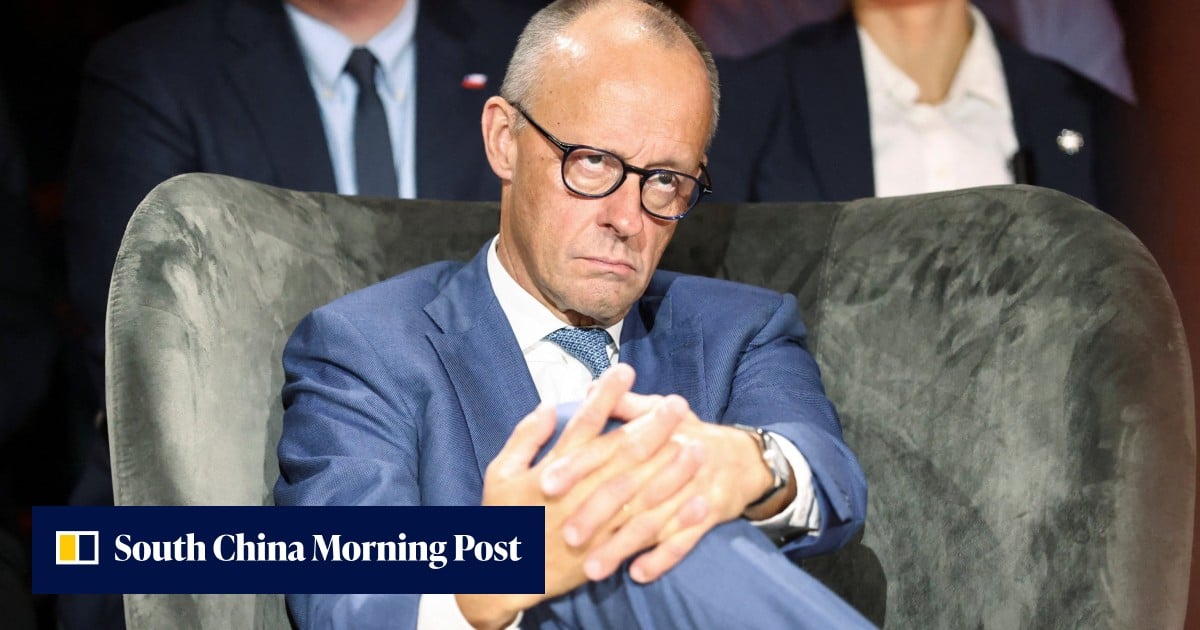
German Chancellor Friedrich Merz has scrapped his trip to next week's United Nations General Assembly in New York, where he had been scheduled to address world leaders on Wednesday, as speculation about his political survival mounts ahead of two difficult state elections on Sunday. "The chancellor will not travel to New York next week, as his presence is required in Berlin," a government source said.
The decision follows a humiliating result on September 6 in Saxony-Anhalt, where the far-right Alternative for Germany won 43.8% of the vote and came within a few seats of an outright majority, the strongest showing by any far-right party in a German state since 1945. Merz's Christian Democrats finished a distant second at 17.2%. Nationally, the CDU and its Bavarian sister party, the CSU, are polling between 18% and 20%, below their result in last year's federal election, and a survey this week found that 78% of Germans, and a majority of CDU supporters, no longer believe Merz is the right person for the job.
Sunday's votes in Mecklenburg-Western Pomerania and Berlin threaten to make things worse. In the northeastern state, where Social Democrat Manuela Schwesig is the most popular politician in the country, the CDU is polling at 7% and risks falling below the 5% threshold needed to enter the state parliament. "The chancellor doesn't give people the feeling that he sees and understands their problems," Schwesig said. In Berlin, the CDU is tied with the Left party at around 20% and could lose the mayor's office; Deputy Mayor Stefan Evers is running in place of the incumbent, Kai Wegner.
On Wednesday, eight CDU state premiers issued a joint statement backing the chancellor, saying that now more than ever "Germany's political landscape needs stability" and that they were determined to tackle people's problems "together with the chancellor." The signatories included Hendrik Wüst, the premier of North Rhine-Westphalia, who is most often named as Merz's likely successor. Markus Söder, the CSU leader and Bavarian premier who is the other name in the frame, also said he was backing Merz and expected the CDU leadership to do the same. The party has called a special leadership meeting for Sunday, after the polls close, to coordinate its response and demonstrate unity.
Merz, 70, has been in office for 16 months at the head of a coalition with the center-left Social Democrats. He has spent much of that time pushing reforms of pensions and the welfare state and lecturing Germans that they work too few hours and take too many sick days, in an economy that has barely grown in years. "I was elected for four years, and I would like us to use these four years to steer the country out of this difficult period," he said this week, adding that "giving up is not an option for me."
No senior ally has publicly called for him to go, and many have warned against a "personnel debate." But the arithmetic is unforgiving. The AfD is polling well ahead of the CDU nationally, and its candidate in Mecklenburg-Western Pomerania, federal lawmaker Leif-Erik Holm, has cultivated a moderate image that has broadened its appeal. "People are fed up and they want something different," said AfD lawmaker Beatrix von Storch.
Originally reported by South China Morning Post.