Washington Denied Mahmoud Abbas a Visa for the U.N. General Assembly for the Second Year Running. The State Department Says the Palestinians Failed to Reform, Kept Suing Israel at The Hague and Kept Paying Prisoners' Families.
A U.S.-brokered ceasefire in Gaza is nearly a year old and Israeli strikes are still killing people there. The Palestinian president will again have to address world leaders by video from Ramallah.
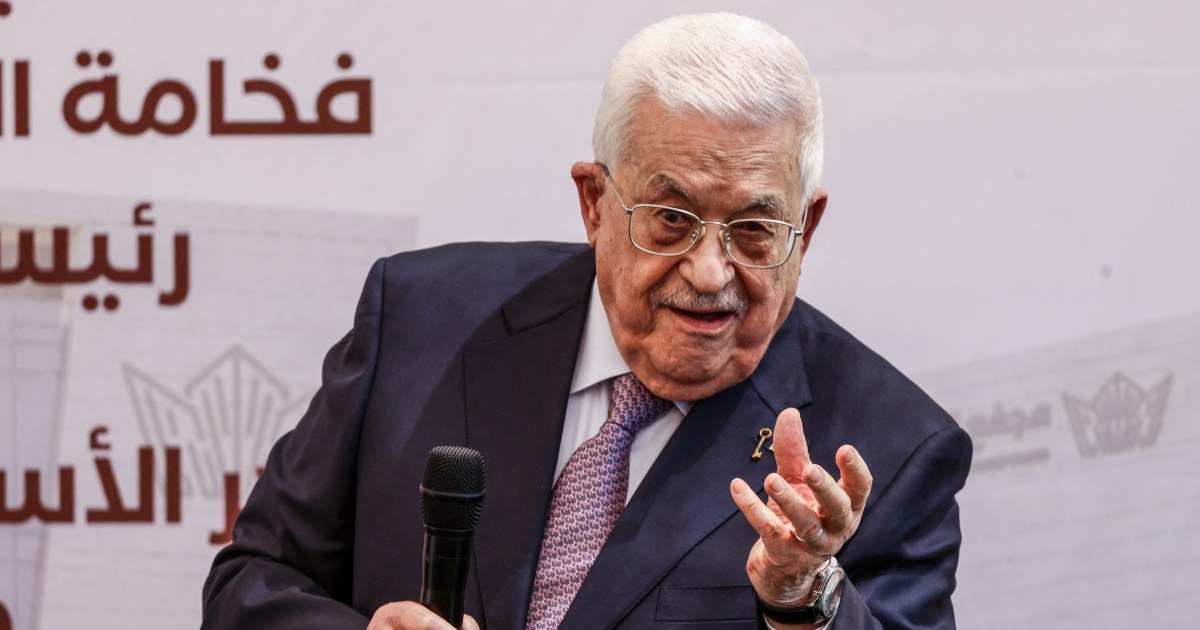
The Trump administration has denied visas to Palestinian Authority President Mahmoud Abbas and the senior delegation that would accompany him to next week's gathering of world leaders at the United Nations General Assembly in New York, the State Department said Wednesday night. It is the second consecutive year the United States has barred the Palestinian leadership from the annual meeting, and the decision was announced hours after the department extended the underlying sanctions rather than letting them lapse.
"As a consequence of their failure to reform, contrary to their commitments to the United States," the department said in its statement, "the United States will extend sanctions that deny visas to PLO members and PA officials." It listed three grievances: the Palestinian Authority's continued pursuit of cases against Israel at the International Court of Justice and the International Criminal Court, its ongoing stipend payments to the families of Palestinians imprisoned for attacks on Israelis, and the involvement of Palestine Liberation Organization officials in the delegation.
The United States is the host country of the U.N. and is obliged under its 1947 headquarters agreement to admit representatives of member states and observers, a commitment Washington has stretched before, most famously when it kept Yasser Arafat out of New York in 1988 and the General Assembly decamped to Geneva to hear him. The Palestinians hold non-member observer status. Their accredited diplomats at the U.N. mission in New York are unaffected by the visa denial and will represent them during the session. Last year, after the first denial, Abbas addressed the assembly by video from Ramallah. He is expected to do the same this year.
The decision lands at a delicate moment in Gaza. A U.S.-brokered ceasefire took effect in October 2025, but Israeli strikes have continued. On Tuesday night a seven-story apartment block in Gaza City that had already been gutted by earlier bombardment collapsed on roughly 100 people sheltering inside, killing at least 20, six of them children. The Trump administration is also preparing its largest-ever sale of 2,000-pound bombs to Israel, 40,000 of them for $2.8 billion, and is campaigning openly to dismantle the International Criminal Court, which neither Israel nor the United States recognizes and which issued an arrest warrant for Prime Minister Benjamin Netanyahu in 2024.
For Abbas, 90, the ban deepens the isolation of a Palestinian Authority that has lost control of Gaza to Hamas since 2007, has not held a presidential election since 2005 and is regarded by many Palestinians as a subcontractor for Israeli security in the West Bank. The prisoner-payment program the State Department cited, known in Israel as "pay for slay," has been a sticking point in U.S.-Palestinian relations for a decade; the Authority announced changes to it in 2025 that Washington and Israel dismissed as cosmetic. The lawsuits at The Hague are, from Ramallah's perspective, the one form of leverage it has left.
The State Department statement did not say whether it would make exceptions for lower-level Palestinian officials, and it gave no indication the sanctions would be lifted as long as the Authority's cases against Israel remain open.
Originally reported by NBC News.