FAA Investigates Boeing 737 Max Software Glitch That Can Drop Flight Guidance on Go-Arounds
Southwest and United have refused new jets running the flawed software, and the review could delay certification of the long-delayed 737 Max 10.
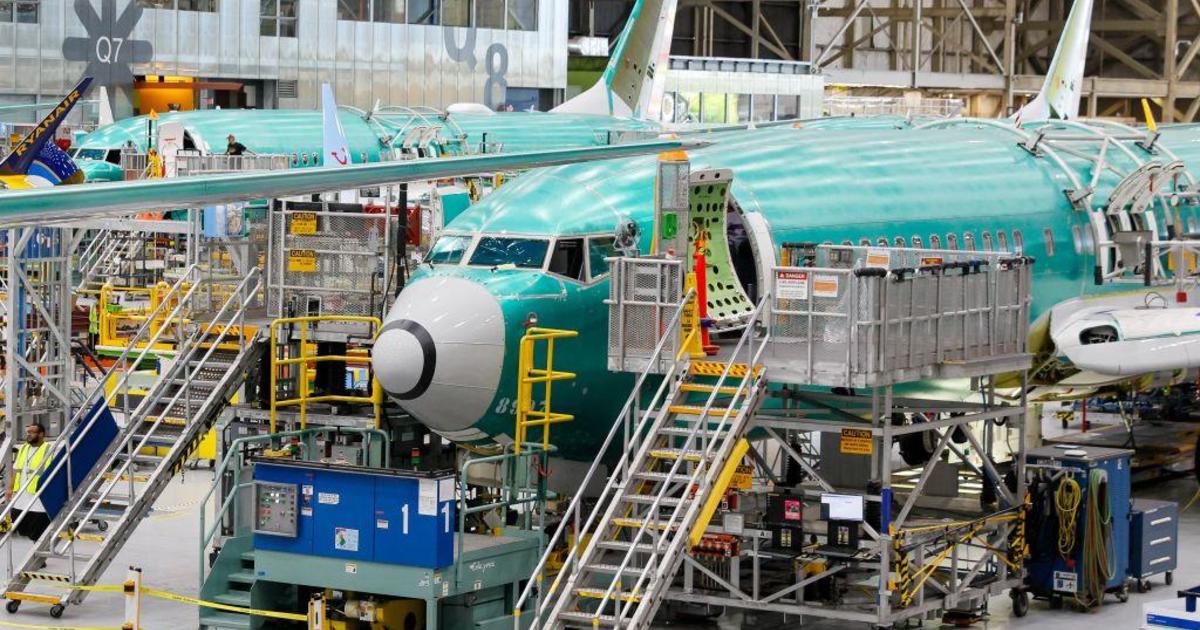
The Federal Aviation Administration is investigating a software flaw in some Boeing 737 Max jets that can cause an automated flight guidance system to switch off during an aborted landing, a maneuver pilots call a go-around, CBS News reported Friday.
The problem sits in the plane's flight management computer. In rare cases where a pilot is flying a precision approach with the autopilot on, changes the pre-programmed flight plan and then has to abandon the landing, the jet's vertical navigation system, known as VNAV, can disengage and fall back to a simpler form of automated pitch control. VNAV is designed to hold the planned altitude at each waypoint along a route. If it drops out, pilots must take extra steps on their next approach, typically close to the ground and near an airport, when their workload is already high. "How busy do you want your crew to be?" one airline source told CBS News. "Are you introducing distractions at the worst possible moment?"
Boeing said it warned all 737 operators last month. "We shared information with operators that reinforced existing pilot procedures for safely handling such cases. Our engineers are working on a software update to permanently address the issue," a company spokesperson said, adding that the autopilot keeps working even if VNAV disengages and that all pilots are trained to land without it. The bulletin to airlines said the glitch was not an immediate safety issue and appears in versions 14 and 14.1 of the Max's flight management software.
The FAA said it is "working closely with Boeing and the airlines" and will convene a Corrective Action Review Board, promising "immediate action if it identifies a safety concern." CBS News learned that an airline first flagged the issue to Boeing in November 2024, and that Boeing concluded in February 2025 it was not a safety problem. New information from operators earlier this year led the company to open a formal safety review board, whose findings went to the FAA this month. Boeing's original bulletin said a software fix would not arrive until sometime in 2028, with updated pilot guidance due in November; the company says it is trying to speed up both.
Southwest Airlines and United Airlines have told Boeing they will not accept new aircraft running the affected software and will take an earlier version instead. Alaska, American, Southwest and United said none of their jets now in service use it. The stakes for Boeing are high. The 737 Max 7 was certified on version 14, and nearly all of its orders belong to Southwest, which was due to begin taking deliveries this fall. The larger Max 10, flown with version 14.1 during certification testing and launched by Alaska Airlines, had been thought to be days from FAA approval after years of delays.
The Max is Boeing's most important product and central to its turnaround. Two Max crashes in 2018 and 2019, caused by faulty software, killed 346 people, and a door panel blew out of an Alaska Airlines Max in January 2024 because of manufacturing errors. Several U.S. carriers now appear to be taking a trust-but-verify stance with the manufacturer. The glitch was first reported by The Wall Street Journal.