A Jet Took Off From Reagan National While Marine One Was in the Air With Trump Aboard
Nobody Stopped the Traffic.
The FAA says an Envoy Air regional jet and the president's helicopter lost required separation over Washington on Tuesday. Controllers were supposed to halt departures three minutes before Marine One lifted off — and air traffic audio shows the pilots called the tower at least three times.

WASHINGTON — A regional passenger jet carrying a full load of travelers to Florida lifted off from Ronald Reagan Washington National Airport on Tuesday afternoon at the same moment the military helicopter carrying President Donald Trump was climbing out of downtown Washington three miles away, and federal investigators now want to know why nobody on the ground stopped it.
The Federal Aviation Administration confirmed Wednesday that the two aircraft lost the separation that federal rules require. "Based on our preliminary safety review, there was momentary loss of separation after which the aircraft continued to move away from one another," the agency said in a statement. The FAA said Trump was not in danger. Under FAA rules, aircraft operating near an airport must stay at least 1.5 miles apart horizontally and 500 feet apart vertically.
The timeline is tight. Marine One lifted off from the Ellipse, just south of the White House, at roughly 2:33 p.m. Eastern, carrying Trump to Joint Base Andrews for a flight to Los Angeles, according to a pool report. One minute later, at 2:34 p.m., Envoy Air Flight 3742 — an Embraer E170 bound for Pensacola, Florida — rolled and departed Reagan National. Envoy is a wholly owned subsidiary of American Airlines, which did not immediately comment. A second flight, Republic 4700, an Embraer 175 inbound from Raleigh-Durham, was about three miles from the airport at the time and was rerouted as a precaution, looping around before landing at 2:52 p.m., according to FlightAware. Both Marine One and the Envoy jet landed without incident.
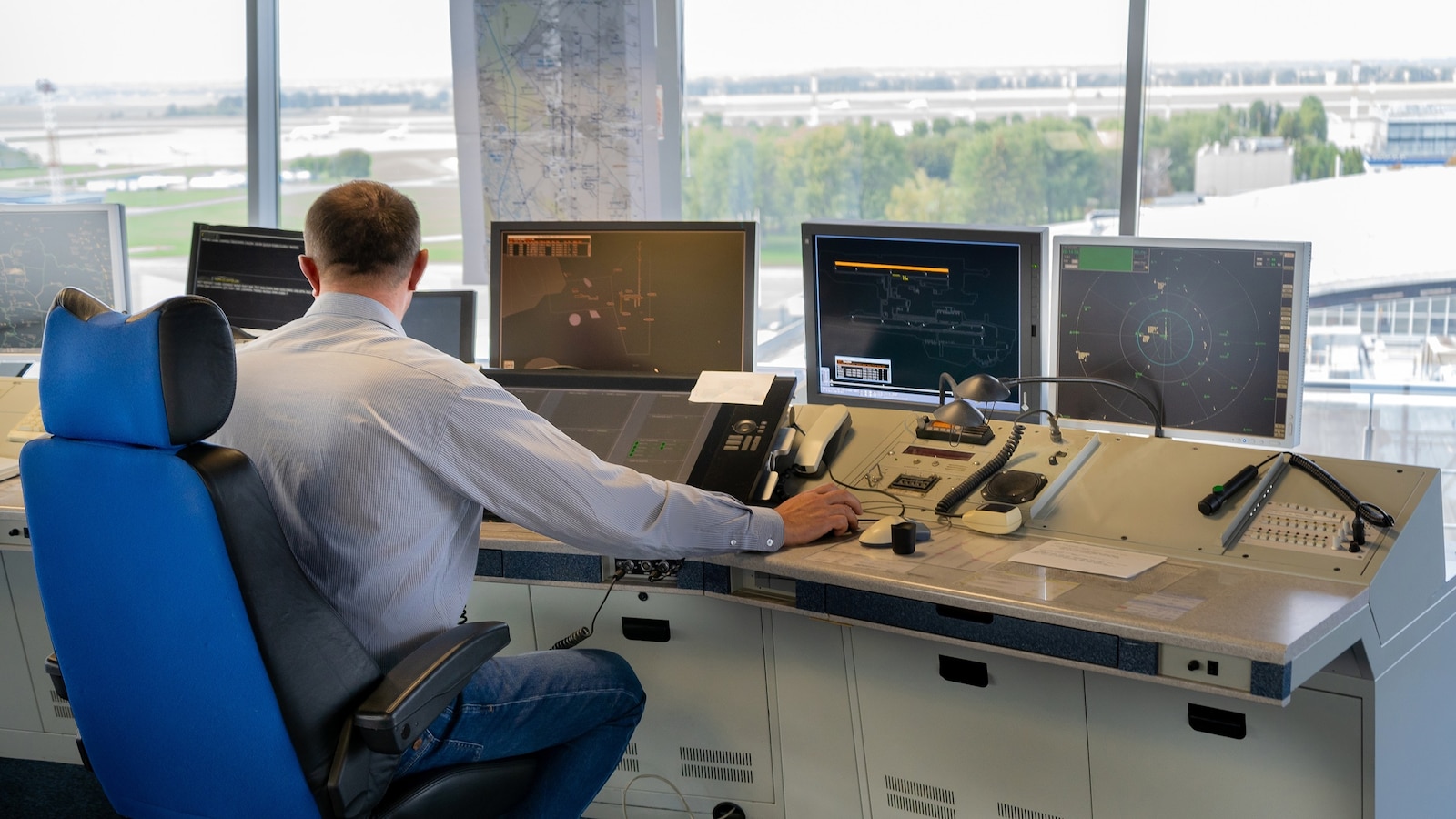
Air traffic control audio reviewed by CNN and captured by ATC.com shows the Marine One crew trying to warn the Reagan National tower repeatedly. "Tower, do you copy. Marine One, three minutes to lift," a pilot transmitted at 2:31 p.m. The controller did not appear to acknowledge it. The pilot called again and was told the transmission was "broken and unreadable." Departures at Reagan kept rolling anyway. Under a policy set after last year's disaster, FAA controllers are given at least three minutes' notice before Marine One departs specifically so they can hold traffic at the airport.
That policy exists because of the deadliest U.S. aviation accident in more than two decades. In January 2025, an American Airlines regional jet collided with an Army Black Hawk helicopter over the Potomac on approach to Reagan National, killing all 67 people aboard the two aircraft. The FAA responded by imposing permanent restrictions on helicopter operations in the airport's corridor, and in March it barred controllers from using visual separation to manage helicopter traffic near major airports at all.
The National Transportation Safety Board opened an investigation Wednesday. Chair Jennifer Homendy said the agency's air traffic control specialists were pulling records. "We're in the process of collecting additional information. Our air traffic control specialists are reviewing the information they already have and information they're going to collect to determine whether we investigate," Homendy told Reuters earlier in the day. Two sources told the wire service the FAA also intends to convene a safety review team, the mechanism the agency uses when it suspects a systemic breakdown rather than a single bad call. The central question is not how close the aircraft came — it is why the tower kept launching jets into a corridor that, by the FAA's own post-crash rules, should have been empty.