An Air Traffic Facility Covering 330,000 Square Miles Went to 'ATC Zero.' Planes Across Nine States Stopped
A telecommunications failure knocked out radar and radio at the FAA's Minneapolis Center on Thursday, forcing controllers to declare they could no longer control anything. Aircraft were diverted out of the region and delays ran past three hours.
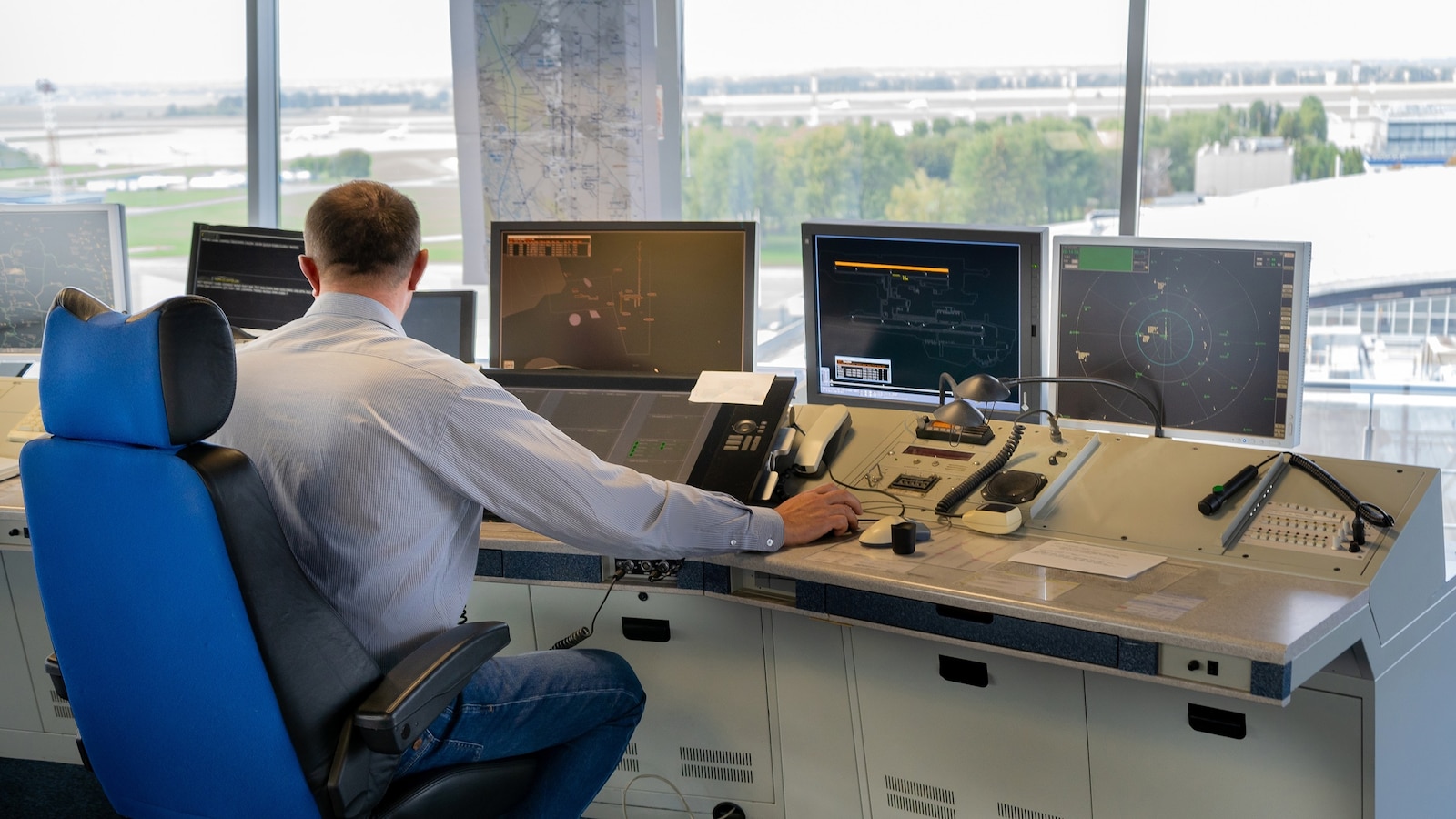
The Federal Aviation Administration facility that separates airplanes over most of the upper Midwest lost both its radar and its radios Thursday afternoon, and for roughly two hours the controllers inside it could not do the job the building exists to do.
The Minneapolis Air Route Traffic Control Center — known in the system as Minneapolis Center, or ZMP — went to a status controllers call "ATC Zero" at about 2 p.m. local time. ATC Zero is not a delay or a slowdown. It is the formal declaration that a facility is incapable of providing air traffic control services at all. Everything that facility normally handles has to be handed to neighboring centers, held on the ground, or routed around.
The airspace involved is enormous. Minneapolis Center works traffic across roughly 330,000 square miles, a block of sky spanning Minnesota, Wisconsin, Michigan, Iowa, Missouri, Kansas, Nebraska, North Dakota and South Dakota. That is not a metropolitan approach control handling arrivals into one airport; it is the high-altitude en route structure that airliners crossing the country fly through. When it goes dark, the practical effect is that a large rectangle in the middle of the national airspace system becomes unusable.
The FAA attributed the failure to telecommunications problems and said it had opened an investigation into the cause. Radar and radio capability were restored after about two hours, but the recovery did not end the disruption. Aircraft already airborne when the outage began had to be diverted onto alternate routings and, in some cases, landed outside the region entirely. Flights that had not yet departed were held at their gates under ground stops issued for airports feeding the affected airspace. Once controllers can talk to airplanes again, the backlog does not clear instantly — the metering has to be rebuilt from scratch.
Delays at Minneapolis-St. Paul International Airport averaged about 90 minutes Thursday evening, and cascading delays at other airports in the region ran as high as 205 minutes. Airports in Michigan, Kansas, Missouri, Nebraska, Wisconsin and the Dakotas were still reporting disruptions well after the systems came back up. Cherry Capital Airport in Traverse City, Michigan, warned travelers of continued delays even after its ground stop was lifted. Regional airports in Omaha and Lincoln, Nebraska, reported knock-on effects.
The outage lands on an agency already under sustained scrutiny over the reliability of its infrastructure and the size of its controller workforce. Controllers working traffic in and out of Newark Liberty International Airport have repeatedly lost radar and radio contact with aircraft for periods measured in seconds to minutes over the past year, incidents that prompted congressional attention and an FAA commitment to replace aging telecommunications lines. Thursday's failure was categorically larger: not a 90-second gap at one approach facility, but a complete loss of capability at an en route center responsible for a ninth of the continental United States.
No injuries, collisions or losses of separation were reported in connection with the outage. The FAA has not said what specifically failed within the telecommunications system or whether the equipment involved was scheduled for replacement.