Elite 'Icefall Doctors' Battle Frozen Gateway to Mount Everest Summit
Glacial ice seals route to world's highest peak as hundreds of climbers await passage through treacherous Khumbu Icefall.
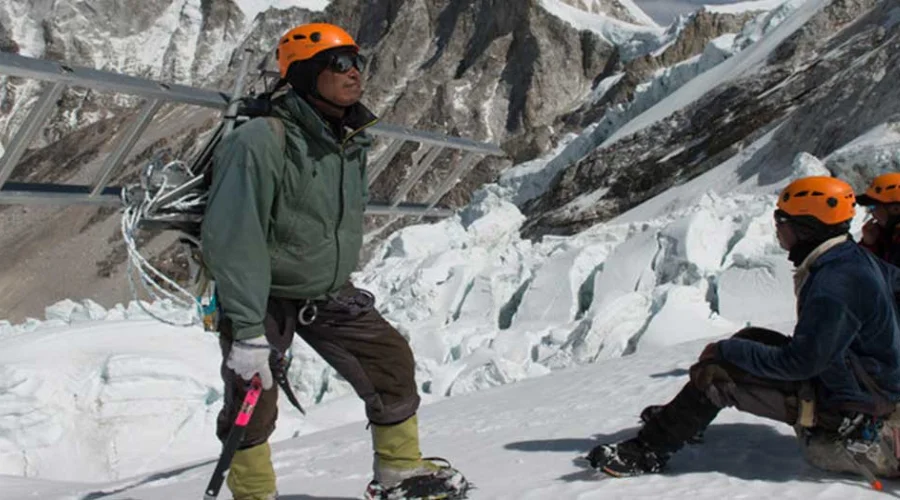
Mount Everest's gateway to the summit has been sealed by an unprecedented buildup of glacial ice, trapping hundreds of ambitious climbers at base camp while a specialized team of Sherpa "icefall doctors" works to carve a safe passage through the treacherous Khumbu Icefall. The elite group of mountaineering experts faces one of the most challenging seasons in recent memory as shifting ice formations have created nearly impassable conditions on the route that serves as the primary pathway for climbers attempting to reach the world's highest peak. The situation highlights both the increasing unpredictability of Himalayan conditions and the extraordinary skill of the Sherpa teams who make Everest climbing possible.
The Khumbu Icefall, a constantly moving glacier that sits between Everest Base Camp and Camp I, represents one of the most dangerous sections of the standard climbing route. The icefall doctors, a team of experienced Sherpa climbers, are responsible for establishing and maintaining the route through this maze of crevasses, ice towers, and unstable seracs. Each climbing season, these specialists spend weeks placing aluminum ladders across deep chasms, fixing ropes along precarious ice walls, and constantly adjusting the route as the glacier shifts and changes. Their work requires not only exceptional mountaineering skills but also an intimate understanding of ice behavior and glacier dynamics.
This year's ice conditions have proven particularly challenging, with larger-than-usual formations blocking traditional pathways through the icefall. The doctors must navigate around massive ice blocks while ensuring the route remains as safe as possible for the commercial expeditions and individual climbers who will follow. Weather patterns in the region have contributed to the unusual ice buildup, with late-season storms depositing additional snow and creating more complex ice formations than typically seen during the pre-monsoon climbing window.
The delays have created a bottleneck effect at base camp, where expedition teams are burning through supplies and acclimatization schedules while waiting for the route to open. Climbing companies are facing pressure to maintain client safety while working within narrow weather windows that could close rapidly as the monsoon season approaches. The situation has also raised questions about the long-term sustainability of current Everest climbing practices as climate change continues to affect ice and weather patterns throughout the Himalayas.
Sherpa communities have served as the backbone of Everest climbing for decades, with their expertise and local knowledge proving essential for safe passage through the mountain's most dangerous sections. The icefall doctors represent the most skilled members of this community, often working in life-threatening conditions to establish routes that thousands of climbers will use during each climbing season. Their current efforts to break through the ice barrier demonstrate both the technical challenges of high-altitude mountaineering and the crucial role these specialists play in making Everest accessible to climbers from around the world.