Diwali Fireworks Send New Delhi's Air Quality Past 350 as Smog Blankets City
Residents set off firecrackers despite court restrictions, adding to crop-fire smoke and stagnant winter air in a metropolitan region of more than 30 million.
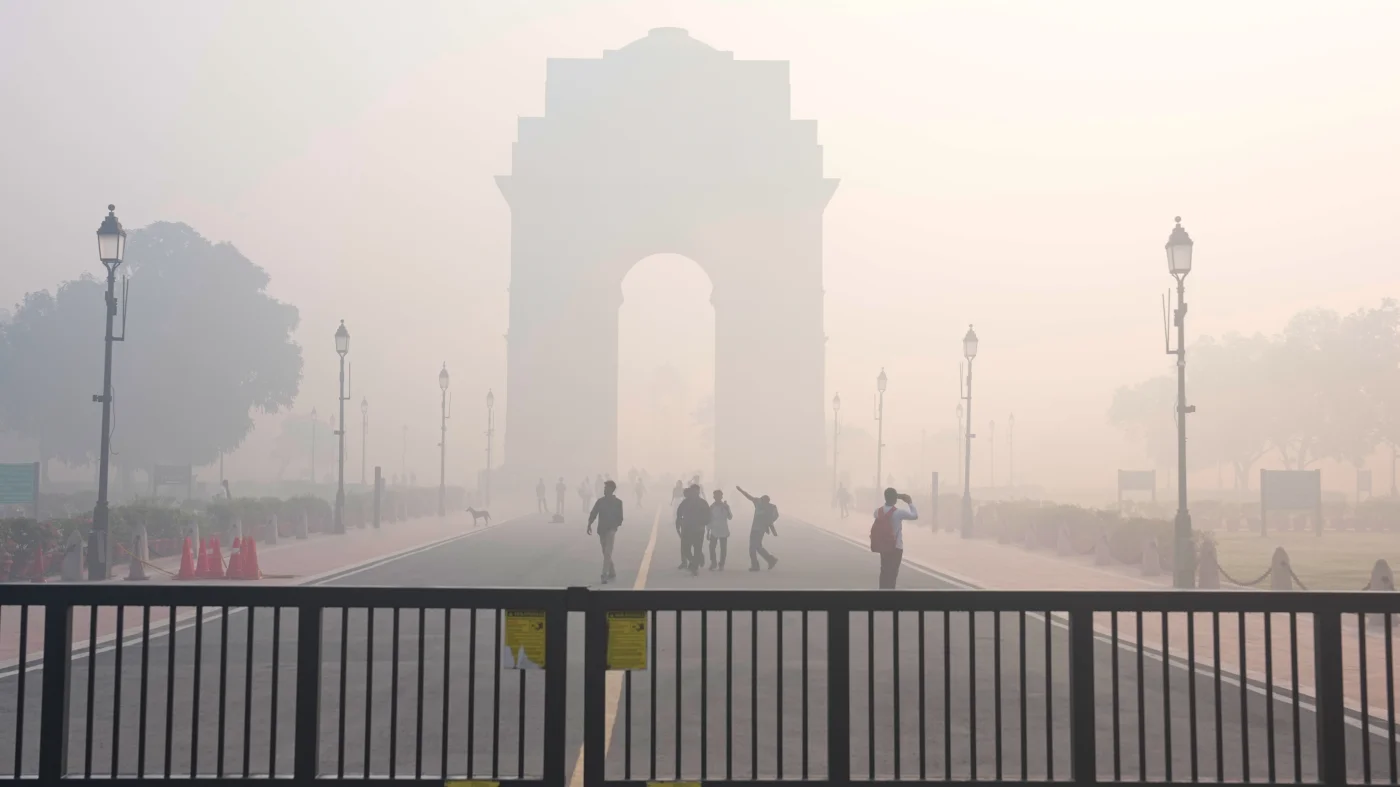
A thick blanket of smog covered India's capital on Monday after firecrackers lit the skies over New Delhi during Diwali celebrations, worsening air pollution that was already dangerously high. The air quality index topped 350 in several parts of the city on Monday morning, which falls in the severe category and poses significant health risks. Monitoring stations across the city recorded similar readings, and visibility dropped as a gray haze settled over streets and high-rise buildings.
Residents celebrated the Hindu festival of lights with firecrackers on Sunday evening despite restrictions on fireworks. In October, India's Supreme Court tried to limit Diwali pollution by barring conventional firecrackers and allowing only approved "green firecrackers," under set conditions, during three-hour windows on Saturday and Sunday. Green crackers produce fewer emissions but are not pollution-free. They still release particulate matter and other pollutants into air that is already hazardous.
"Because of the pollution there is irritation in the throat and itching in the eyes," said Isyad, a New Delhi resident who uses one name, describing the effect on his health.
New Delhi and its surrounding metropolitan region, home to more than 30 million people, regularly rank among the world's most polluted areas in winter. Several causes stack up at once. Diwali fireworks arrive just as the weather turns cooler, and smoke drifts in from crop-residue fires in the neighboring states of Punjab and Haryana. After harvesting rice, farmers often burn leftover stalks to clear fields for the next planting. That smoke combines with emissions from vehicles, industry and construction dust.
The problem is sharpest in late October and November, when cooler temperatures, low wind speeds and stagnant air keep pollutants from dispersing. The haze can linger over the capital and nearby areas for days.
Authorities have introduced measures meant to curb the pollution, including limits on construction activity and restrictions on diesel generators, while courts have sought restrictions on firecrackers. The measures have not stopped severe pollution from returning each year. Environmentalists say lasting fixes, such as cleaner energy and stricter controls on vehicle emissions, are needed to end the annual crisis.
Shweta Narayan, a public health expert at the Global Climate and Health Alliance, described the government's response so far as "knee-jerk" and "temporary." She said, "A lot of interventions happen only because the government is pressured or pushed in a corner to do something."
The Associated Press report underscores how the capital's pollution is a recurring seasonal event rather than a one-off emergency. The same combination of festival fireworks, farm fires and still air returns every autumn, and residents say they feel it in their eyes and throats within hours. For a city of this size, the gap between the rules on paper and the air people breathe on the morning after Diwali remains wide, and public health experts say that without sustained changes to energy use and traffic, the smog will keep returning each winter.