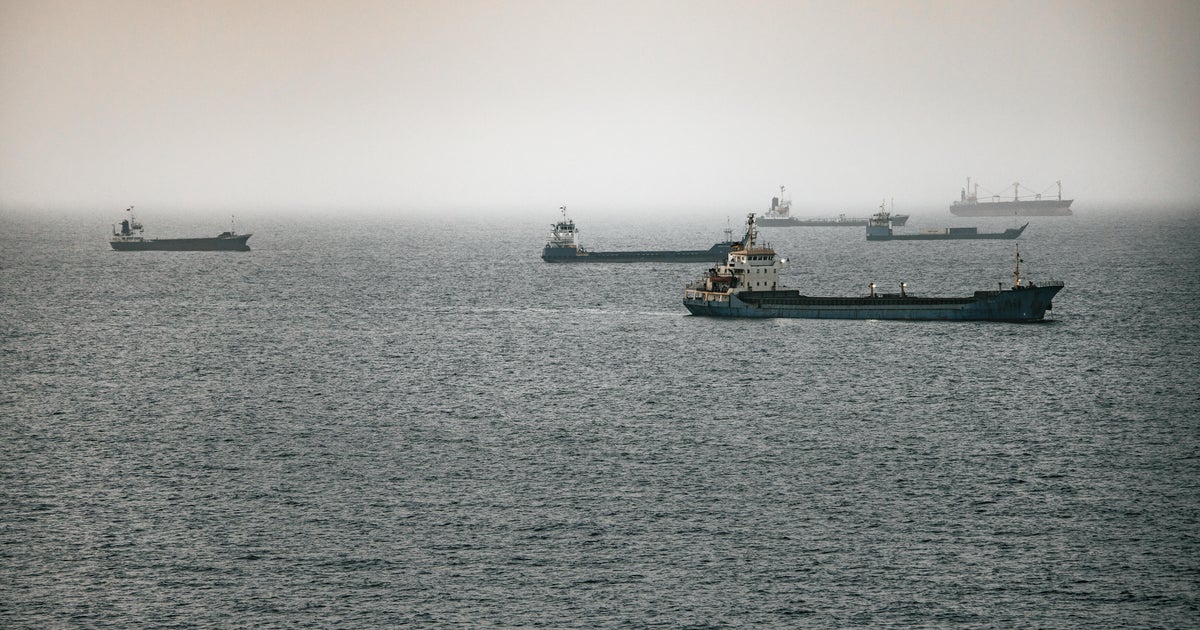
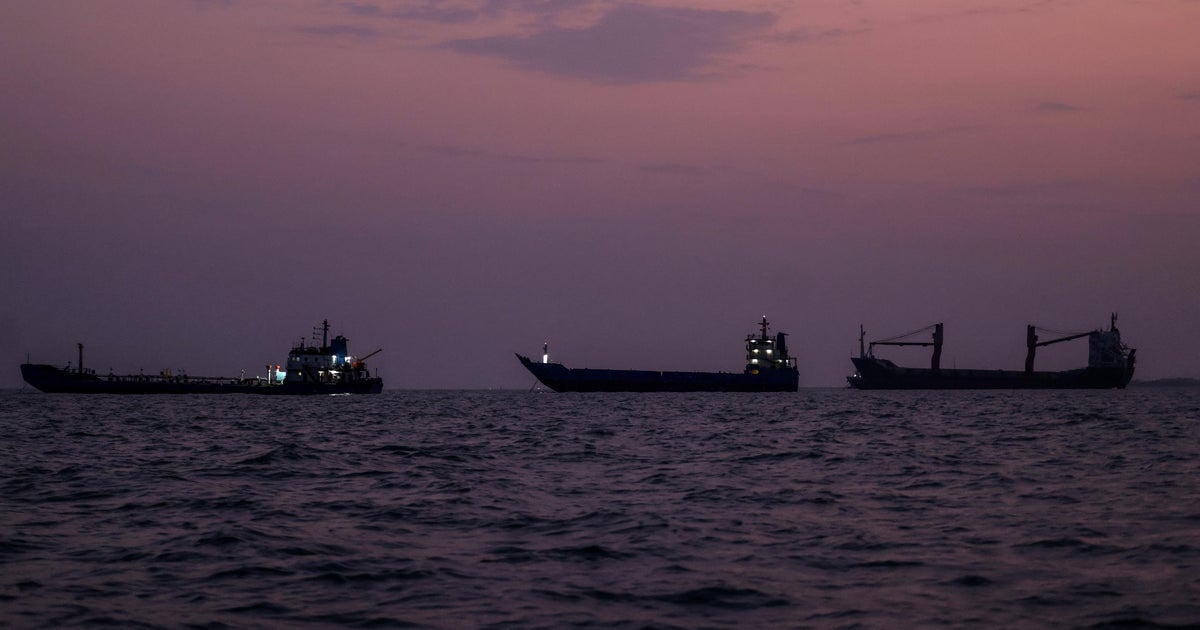
Container Ship Sinks and Tanker Is Hit in Hormuz as Attacks on Shipping Hit a Record
An Indian-crewed crude tanker was struck by a projectile Friday, a day after the Singapore-flagged GFS Pride caught fire and went down in the strait.
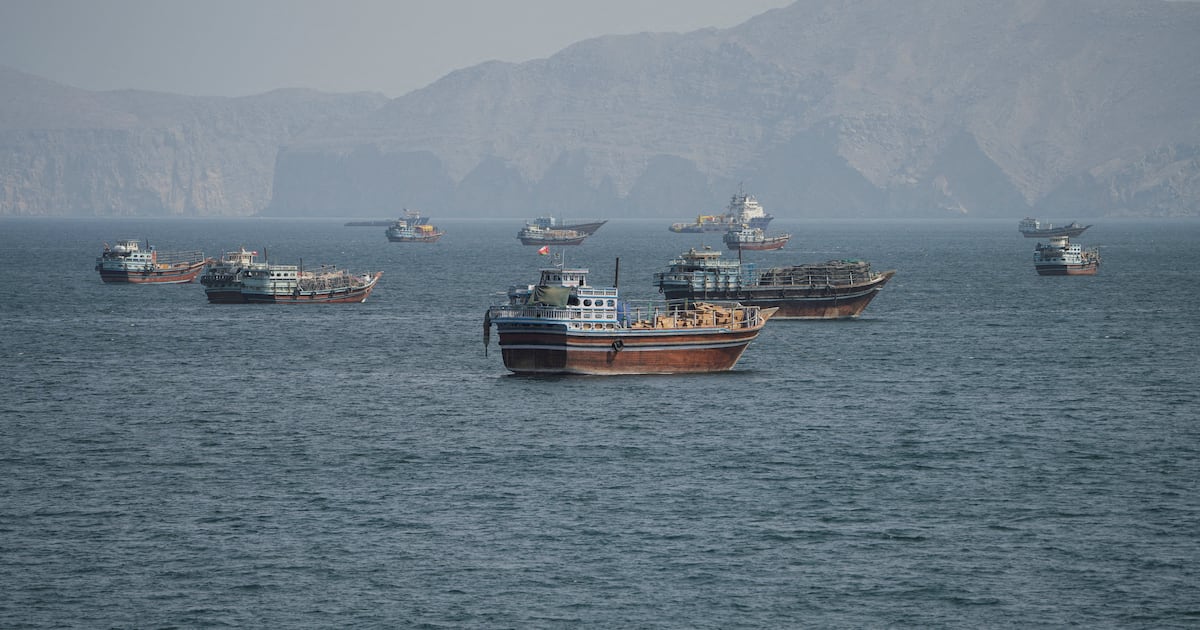
A crude oil tanker carrying 15 Indian crew members was struck by a projectile in the Strait of Hormuz on Friday, India's minister of ports, shipping and waterways said, the latest in a run of attacks that has pushed commercial traffic through the waterway to its most dangerous point of the war.
Minister Sarbananda Sonowal said on X that all Indian citizens aboard the vessel, the MT ST 3, were safe and uninjured. "We are continuously monitoring both situations and remain in close contact with the ship management companies to ensure the ongoing security and wellbeing of our crew members," he said.
On Thursday, a Singapore-registered container ship, the GFS Pride, caught fire and sank in the strait after being hit by an unidentified projectile. Singapore's maritime authority said all 21 crew were evacuated safely and no injuries were reported. At least two ships have now been sunk, and The National reported that attacks on vessels transiting the strait have surged to a record high.
Earlier this month, India condemned an attack on the MT On Peace, a vessel owned by Dubai shipping company Onex. Twelve crew members were injured, including 11 Indians, according to a statement from India's Ministry of External Affairs. Democracy Now, citing maritime officials, reported that 12 vessels were attacked in and around the strait between Oct. 5 and 11, the highest pace since the United States imposed a naval blockade of Iranian ports.
No group has claimed responsibility for most of the strikes, and attribution remains unconfirmed. The National said the strikes attributed to Iran have sent crude oil prices above $100 a barrel in the United States. Iran's Islamic Revolutionary Guard Corps has used drones, missiles and sea mines in the strait to choke off exports and drive up oil prices in an effort to pressure Washington, according to the report. Mohsen Rezaei, secretary of Iran's Supreme National Security Council, has said Iranian forces target five or six vessels each night that he claims are being used to transfer oil to larger tankers. That claim could not be independently verified.
The attacks come as diplomacy has stalled. Earlier this month Iran said the strait would stay shut until the United States met seven conditions drawn from a June deal, and last month President Trump rejected an Iranian offer to reopen it on a seven-day plan with a $12 billion price tag. Iran has still managed to ship some liquefied petroleum gas and jet fuel past the blockade since July, according to the group United Against Nuclear Iran, which counts at least eight tankers leaving the Gulf of Oman since mid-July.
The strait carries a large share of the world's seaborne oil, and the consequences are visible far from the Gulf. Maine heating oil has climbed to $5.97 a gallon, up 79% in a year, as winter approaches. Governments with large seafaring workforces, India among them, are now tracking individual crews as the risk to merchant ships rises.
The U.S. Navy has worked to shepherd tankers through the strait and has reduced Iran's near-total grip on the passage, but Thursday's sinking and Friday's strike show that merchant ships remain exposed. Attribution for Thursday's sinking and Friday's strike remains unconfirmed.