An AI Wrote 302 Virus Genomes From Scratch. Sixteen of Them Came Alive and Killed E. Coli
Stanford and Arc Institute researchers used the Evo genome language models to design bacteriophages no evolution ever produced — the first peer-reviewed case of generative AI building a functioning viral genome.
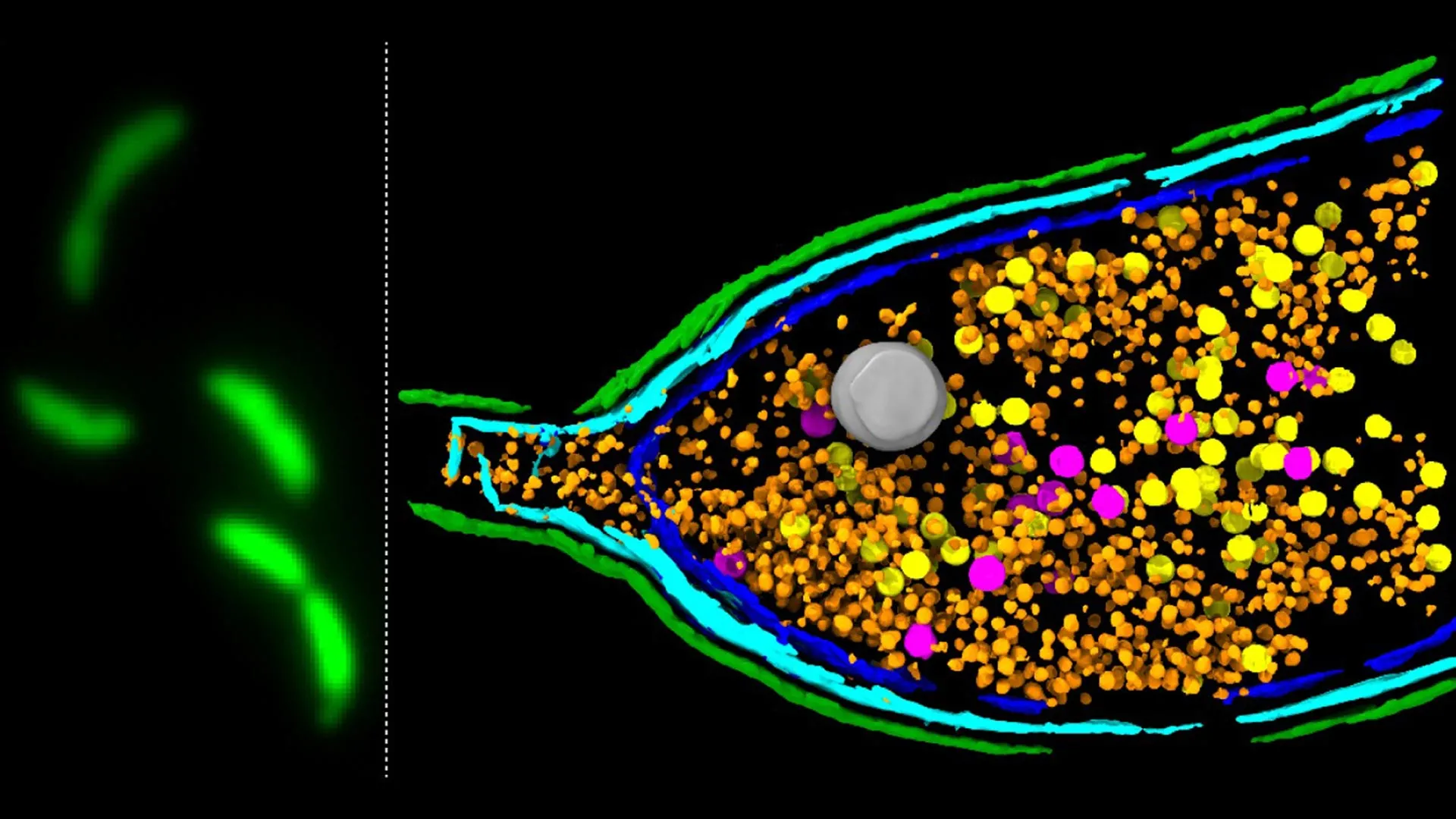
Researchers at Stanford University and the Arc Institute used generative AI to design complete viral genomes from scratch, then built 302 of them in the lab. Sixteen produced fully functional viruses that infected and killed E. coli — the first peer-reviewed demonstration that a language model can write an entire working genome.
The work, published in the journal Science, used Evo 1 and Evo 2, genome language models developed by Brian Hie, an assistant professor at Stanford and an innovation investigator at the Arc Institute. The models were trained on genomic sequence the way a text model is trained on prose, and were prompted to generate new versions of ΦX174, a small, well-characterized bacteriophage that infects E. coli. Phages infect bacteria, not human cells, which is why this particular family was chosen as the proving ground.
The generated genomes were not copies. The team reported that the sixteen viable phages carried substantial evolutionary novelty — arrangements of genes that do not appear in any natural organism on record. In one test, a cocktail combining all sixteen AI-designed phages rapidly overcame resistance in three separate E. coli strains that had already evolved immunity to the natural ΦX174 virus, defeating bacteria that the original phage could no longer touch.
That result is the optimistic reading of the paper. Phage therapy — using viruses to kill bacteria that antibiotics can no longer control — has existed for a century but has been limited by the slow work of hunting for the right phage in nature and by bacteria evolving resistance to whatever is found. A model that can generate large numbers of novel, functional candidates on demand changes the economics of that search, at a time when drug-resistant infections kill more than a million people a year worldwide.
The pessimistic reading is that the same capability does not care what it is pointed at. Biosecurity researchers at Johns Hopkins have warned that no U.S. law currently requires DNA synthesis companies — the firms that turn a digital sequence into physical DNA — to screen orders against AI-generated sequences, which by construction will not match the known-pathogen databases that existing voluntary screening relies on. A sequence that has never existed cannot be flagged by a list of sequences that have.
Legislation is pending but has not moved. The Biosecurity Modernization and Innovation Act, introduced in January 2026 by Senators Tom Cotton and Amy Klobuchar, would direct the Secretary of Commerce to require sequence and customer screening at all gene synthesis providers. As of Friday it had not passed. The Stanford team worked with phages that target bacteria and excluded human-infecting viruses from the models' training data — a deliberate guardrail, and one that depends entirely on the next group choosing to install the same one.