140 Hours of X-Rays From a Dead Star Suggest Empty Space Bends Light — Exactly as Heisenberg Predicted 90 Years Ago
NASA's IXPE telescope stared at the magnetar 1E 1547.0-5408 and found X-ray polarization nearly three times higher than any comparable source. The leading explanation is vacuum birefringence: the vacuum itself behaving like a lens.

An international team of astronomers has reported the strongest evidence yet for one of the oldest unconfirmed predictions in quantum physics: that empty space, placed in a sufficiently violent magnetic field, stops behaving like nothing and starts behaving like glass.
The prediction dates to 1936, when Werner Heisenberg and Hans Euler worked out a consequence of quantum theory that has embarrassed experimentalists ever since. A vacuum is not truly empty. It seethes with virtual particles that flicker into existence and vanish faster than any instrument can catch them. Push a strong enough magnetic field through that froth and the virtual particles line up, and light passing through is slowed differently depending on how it is oriented. The vacuum acquires a grain, like a crystal. Physicists call the effect vacuum birefringence.
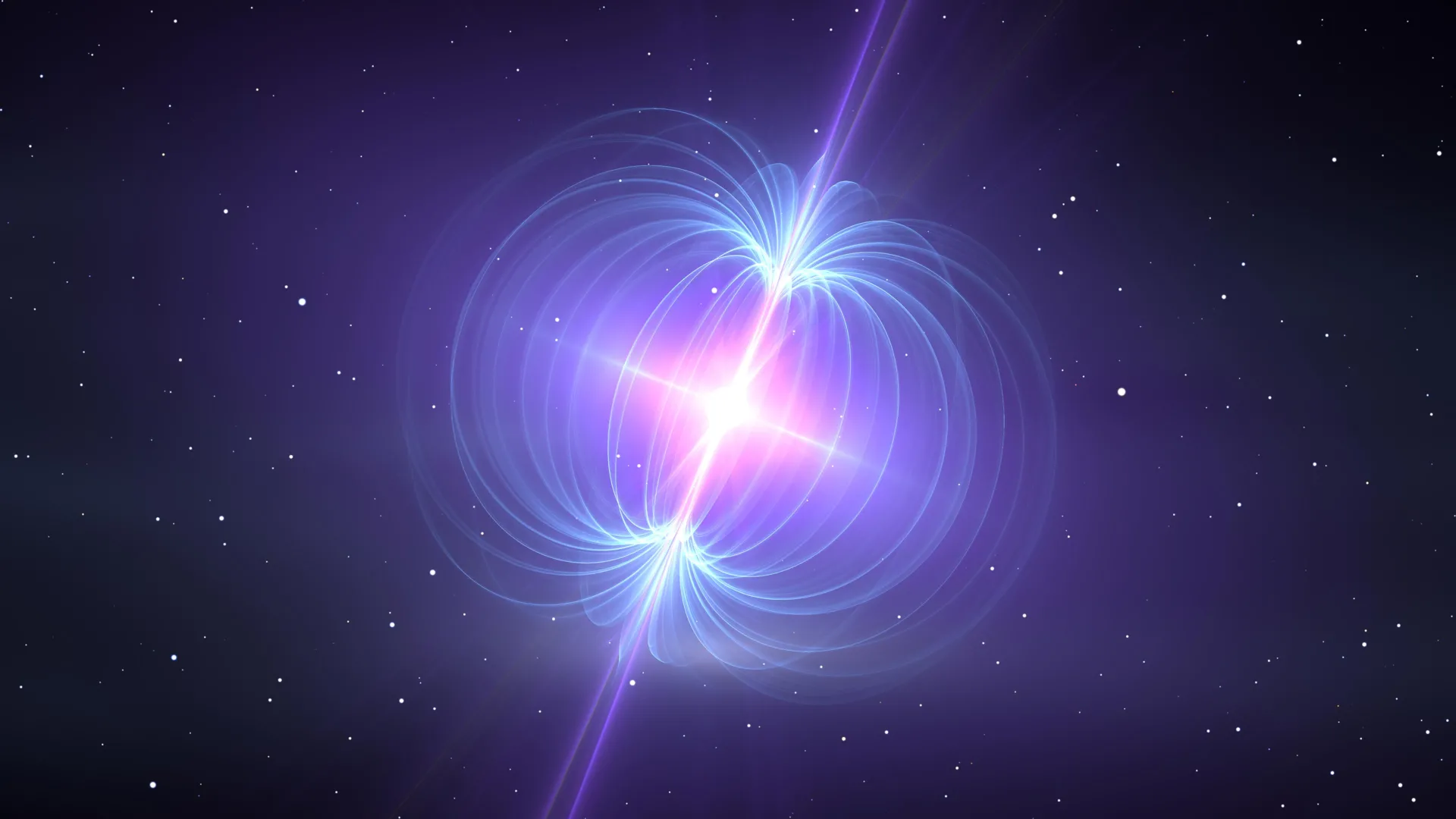
The problem has always been the field strength required. "Detecting vacuum birefringence requires a magnetic field that is over 100 million times stronger than any we've ever made on Earth," said Dr. Marcus Lower of Swinburne University of Technology, who led the study published in Nature on Aug. 5. No laboratory can produce it. Only one class of object in the known universe can: magnetars, the rare neutron stars whose magnetic fields run trillions of times stronger than Earth's.
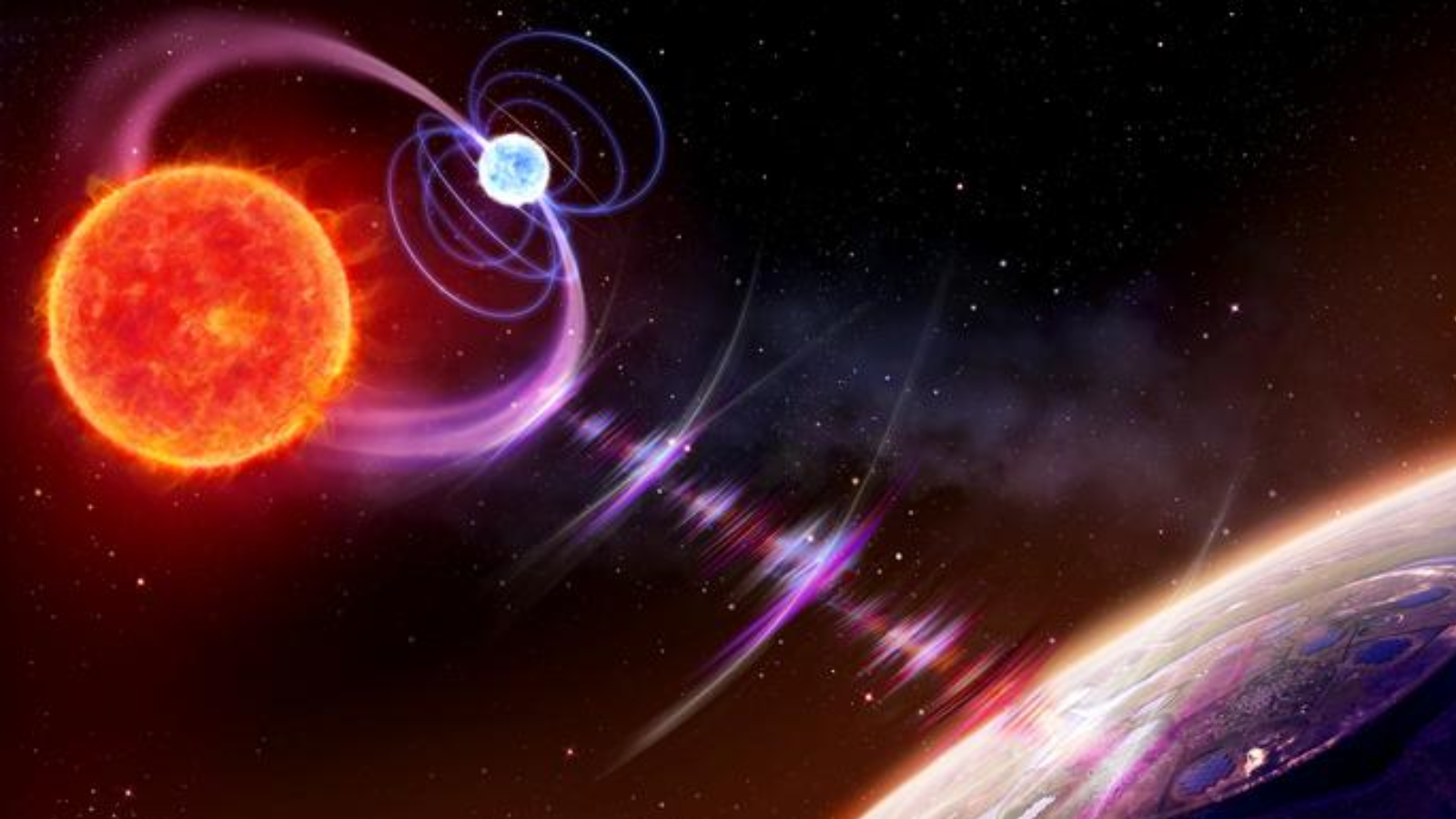
The team pointed NASA's Imaging X-ray Polarimetry Explorer at the magnetar 1E 1547.0-5408 and collected more than 140 hours of observations between March and April 2025, coordinating them with radio telescopes. Two things stood out. The X-rays coming off the star were polarized to a degree nearly three times greater than anything measured from comparable sources — a level standard models of neutron-star surface emission simply do not produce. And the direction of that polarization was locked to the star's magnetic field, tracking the behavior seen in the radio waves. That combination is what the vacuum-birefringence prediction says should happen, and it is the first time radio and X-ray polarization have been measured together for a magnetar.
The finding is not settled, and the researchers say so. Distinguishing a vacuum-birefringence signal from the ordinary physics of a magnetar's surface and magnetosphere requires better simulations and more observing time. An independent team reanalyzing the same data with a different geometric model concluded it could not be called compelling evidence on its own, though that group agreed the high polarization was consistent with the effect.
What is not in dispute is the scale of the measurement. If the interpretation holds, an orbiting telescope has confirmed a 90-year-old prediction about the structure of the vacuum by using a dead star as the apparatus — an experiment no one on Earth can build, run by the universe on its own equipment.