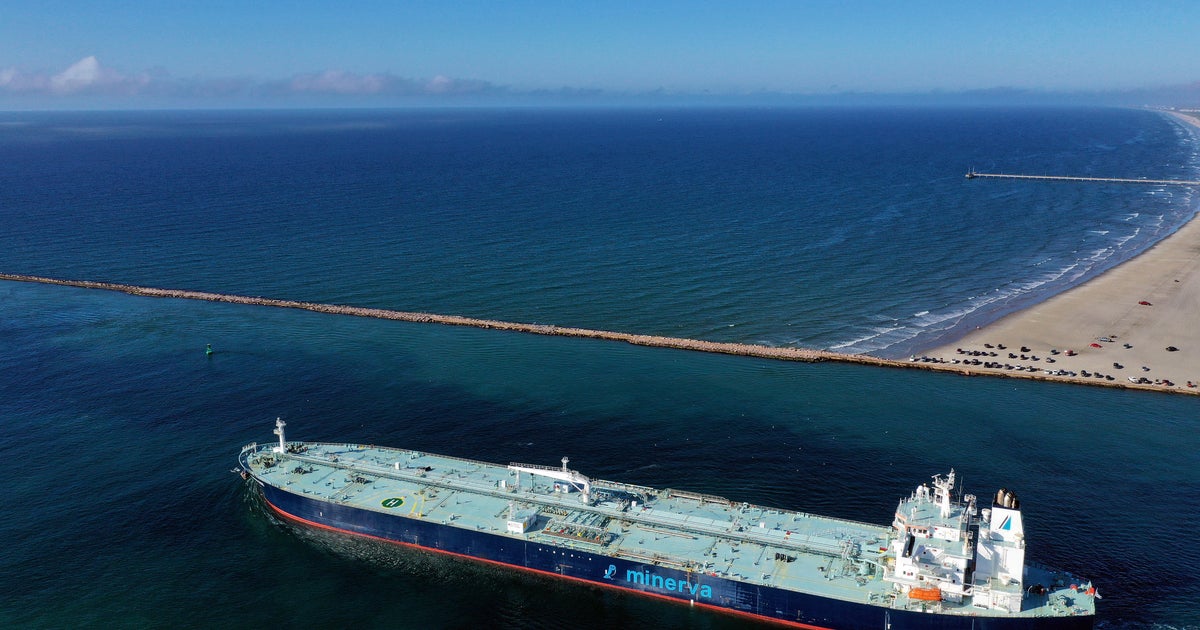
Tanker's Rudder Jammed Before It Hit New Orleans Riverboat; All 190 Aboard Survived
The NTSB says the Atlantic Asphalt reported a "steering casualty" about two minutes before it struck the docked American Heritage, which capsized 22 minutes later. Salvage crews are preparing to pull 16,000 gallons of fuel.
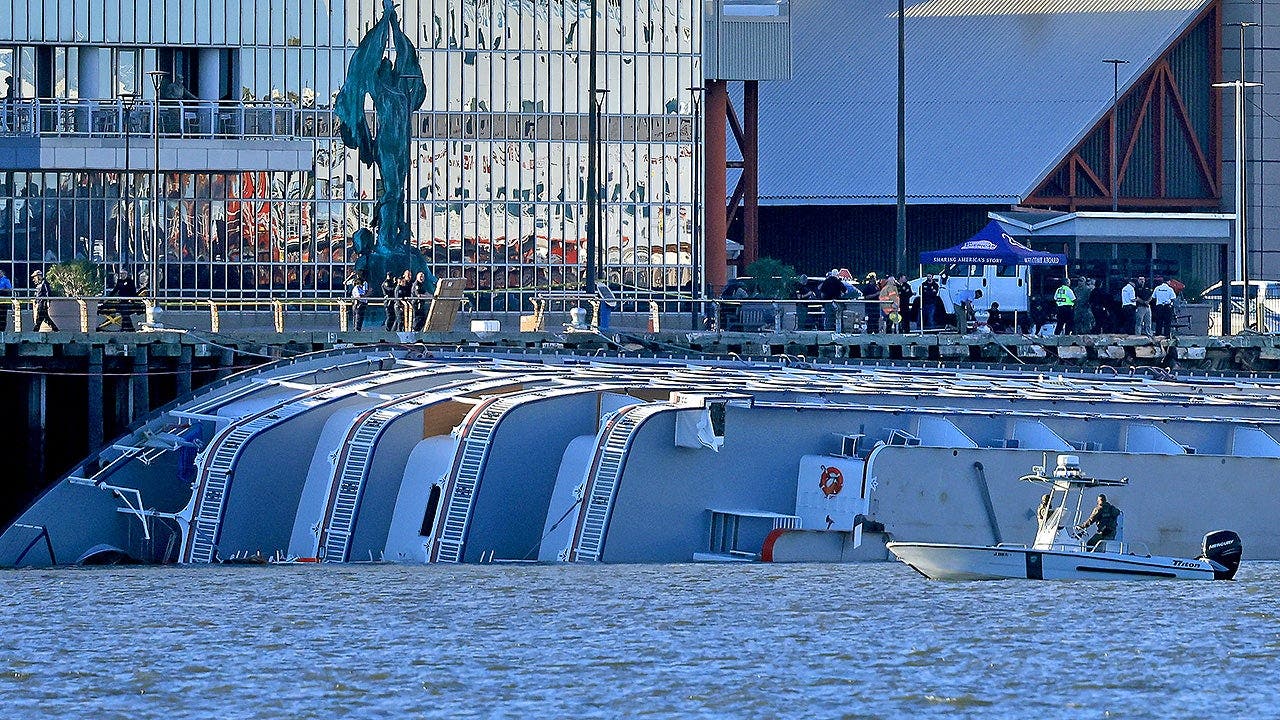
NEW ORLEANS — A tanker's rudder locked to the right and sent the ship across the Mississippi River into a docked riverboat on Friday, Nov. 13, and federal investigators said Sunday that the vessel's own recorder captured the crew sounding warnings, dropping anchors and calling for help in the final moments before impact.
The tanker, the Atlantic Asphalt, was heading upriver near the Crescent City Connection Bridge at about 12:26 p.m. when its rudder stuck turned to the right, pushing the ship toward the east bank, according to the National Transportation Safety Board. About two minutes later, at roughly 12:28 p.m., it struck the American Heritage, an American Cruise Lines riverboat that was tied up at the time. Preliminary information shows the riverboat capsized about 22 minutes after the collision.
The NTSB said 190 people were aboard the American Heritage: 140 passengers and 50 crew members. Officials said everyone survived. About 100 people were pulled from the river, and Port of New Orleans Harbor Police Chief Melanie Montroll said responders had evacuated more than 80 others before the vessel rolled over. As of Saturday, eight people remained in the hospital, two of them in serious condition and six stable.
New Orleans Mayor Helena Moreno said the riverboat's captain was injured but stayed aboard until everyone was accounted for, making him the last person to leave the ship.
Investigator Bart Barnum told reporters that the tanker's voyage data recorder holds more than nine hours of information, including bridge audio, rudder angle, engine RPM, course and speed. The recordings capture the ship's whistle, warnings and radio calls for help, anchor deployment orders and emergency shiphandling commands. Barnum described the rudder failure as a "steering casualty" but cautioned that the phrase does not explain what went wrong. "It could be many different things," he said.
NTSB board member John DeLeeuw said investigators have the tanker's speed data but are still analyzing it. Video shows the tanker's anchors were down, he said, but it is not yet clear which ones were deployed or how far they dropped.
The focus now is partly on the wreck itself. Coast Guard Capt. Melanie Burnham said crews were preparing to remove 16,000 gallons of fuel from the capsized riverboat before salvage can begin, and she warned that removing the vessel could take weeks. Divers have been working in the water, and the Coast Guard and salvage companies are overseeing the operation.
Investigators began interviewing crew members from the American Heritage on Sunday. Interviews with the crew of the Atlantic Asphalt were scheduled for Monday and through the rest of the week. The NTSB expects to issue a preliminary report within about 30 days. Sunday's briefing was the board's last planned news conference at the site, and further updates will be posted online.
The case turns on a narrow question that the recorder data should be able to answer: whether the steering fault was mechanical, electronic or the result of a crew action, and whether the tanker's crew had any chance to slow or turn the ship in the 120 seconds between the failure and the impact. For the passengers who ended up in the river, the answer came too late to matter. For the investigators, it will decide who is responsible and what changes for ships working the river.