Scientists Recreate Nuclear Fireball Conditions, Discover Surprising Fallout Formation Process
Lawrence Livermore researchers find that cooling pathways dramatically alter radioactive particle formation, especially for volatile elements like cesium.
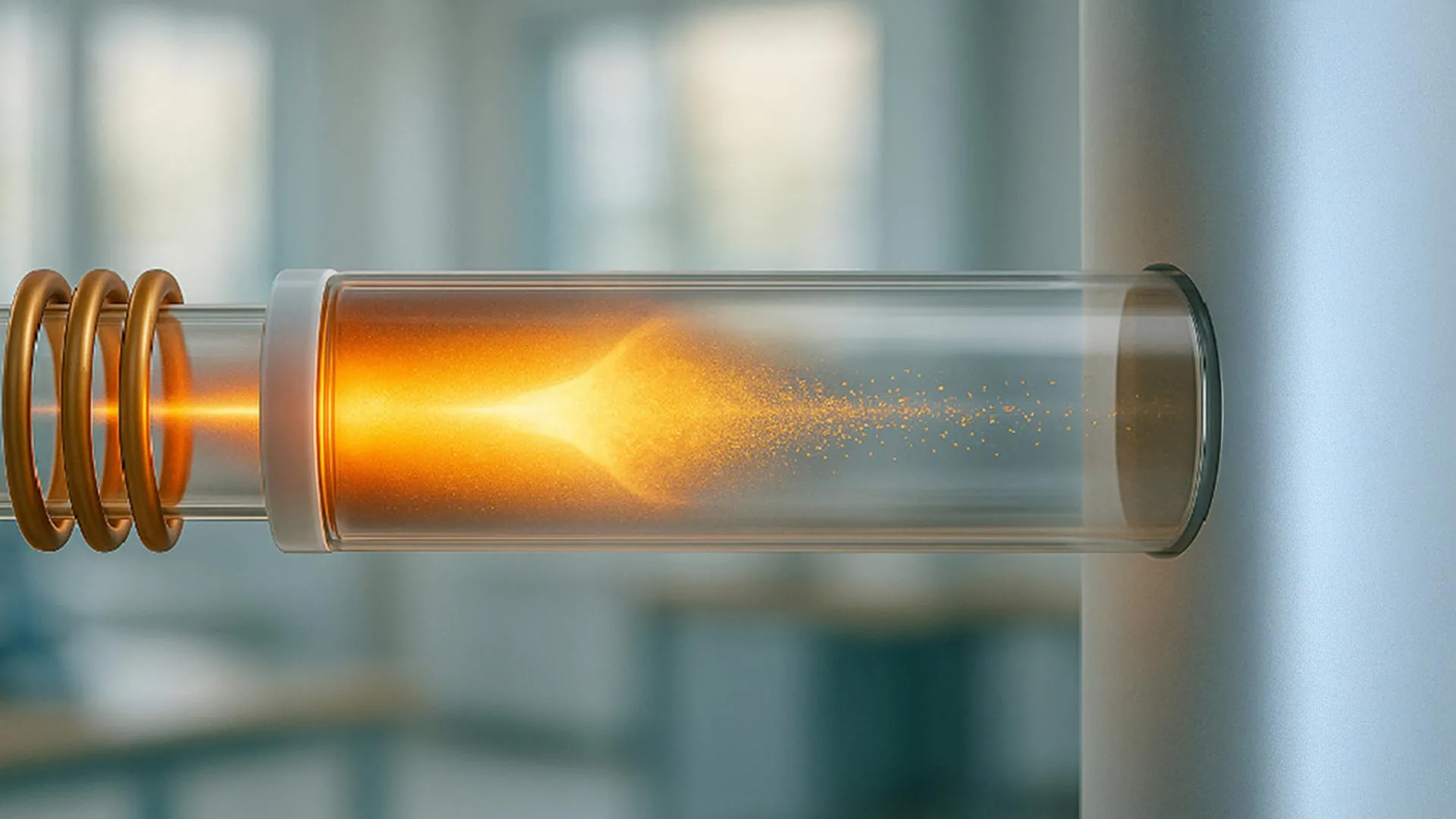
Scientists at Lawrence Livermore National Laboratory have successfully recreated the intense conditions inside a nuclear fireball to better understand how radioactive fallout forms, revealing surprising insights that could improve safety models for nuclear emergencies. Using a specialized plasma flow reactor, researchers found that the way vaporized materials cool can dramatically change the particles that eventually form, particularly affecting how volatile elements like cesium are incorporated into fallout debris.
When a nuclear weapon detonates or a serious reactor accident occurs, temperatures reach millions of degrees in microseconds, instantly vaporizing nearby materials and creating an expanding cloud of gas and plasma. As this nuclear fireball grows and mixes with the atmosphere, it gradually cools and condenses into tiny solid particles that become nuclear fallout. The new study, published in Analytical Chemistry, examined how uranium, cerium, and cesium behave during this critical condensation process under carefully controlled laboratory conditions.
The research team, led by LLNL scientist Rakia Dhaoui, exposed specific material combinations to two different cooling scenarios using their plasma flow reactor. In one scenario, temperatures gradually declined throughout the cooling process, while in the other, materials remained at high temperatures longer before cooling rapidly. The different 'thermal histories' produced significantly different results, with longer exposure to high temperatures altering chemical reactions and changing how volatile elements were incorporated into the final particles.
Dhaoui explained that changing how long materials remain at high temperature can alter chemical reactions and affect how volatile elements like cesium are incorporated into particles. These particles preserve a record of how they formed, and by studying these processes in a controlled system, researchers can replace assumptions with actual measurements. This approach could improve the models used to interpret nuclear debris and support critical decision-making during nuclear emergencies.
The findings suggest that some widely used fallout models may overlook important chemical interactions that occur during particle formation. Historical fallout studies have indicated that the cooling pathway is crucial, but this research provides the first detailed experimental data on how different thermal histories affect particle composition. The work could lead to more accurate predictions of fallout behavior and better emergency response protocols, as understanding the formation process helps scientists interpret the chemical signatures left behind in radioactive debris and improve safety assessments for nuclear facilities.
