Scientists Discover Hidden 40-Million-Year-Old Ant in Goethe's Amber Collection
Advanced 3D imaging reveals extinct ant species preserved in extraordinary detail, offering new insights into ancient forest ecosystems and behavior.
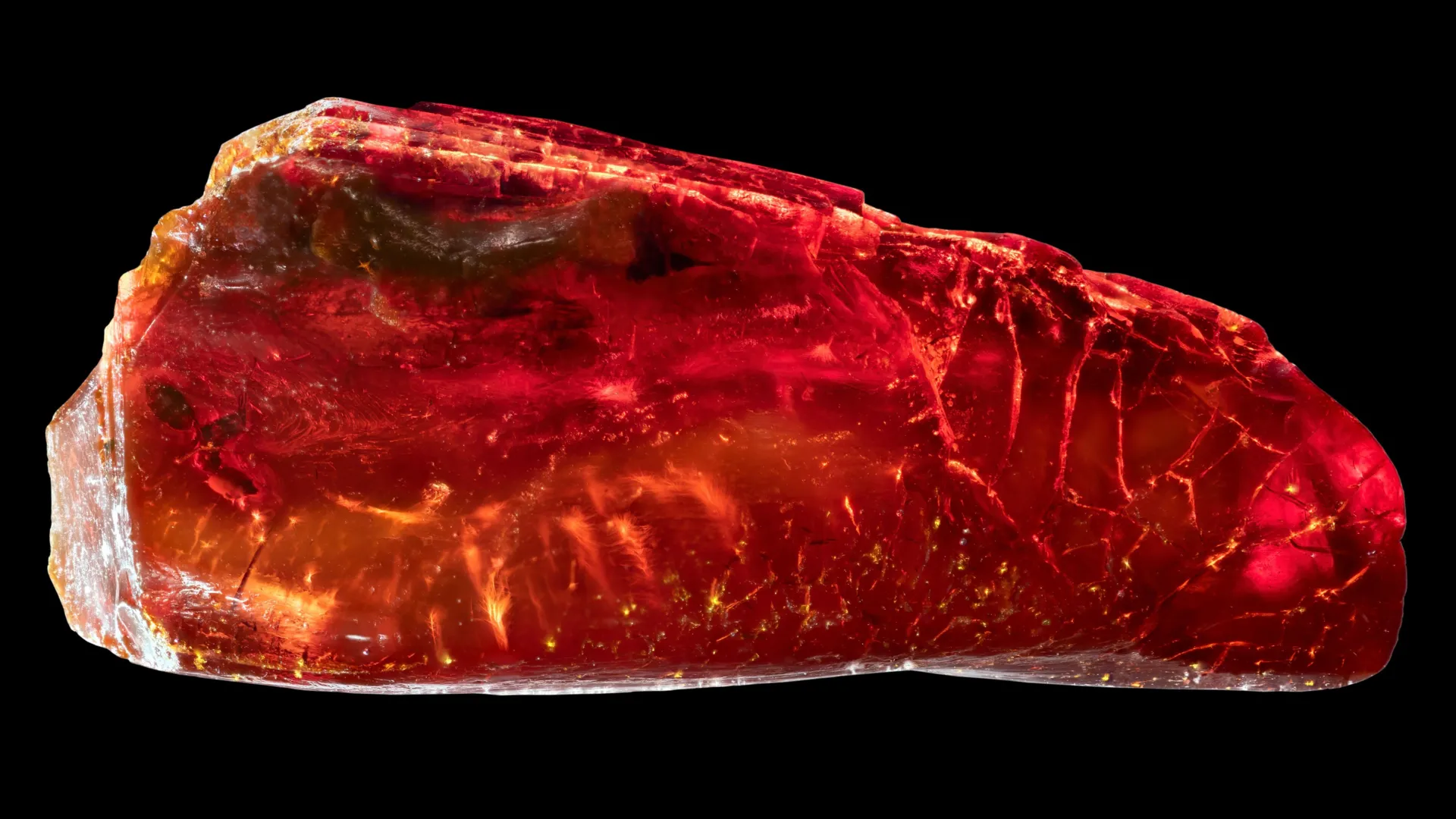
Scientists have made a remarkable discovery hidden within the personal amber collection of famed German writer Johann Wolfgang von Goethe, using cutting-edge imaging technology to reveal three fossilized insects that had remained invisible for centuries. The most significant find was an exceptionally well-preserved ant from the extinct species Ctenobethylus goepperti, which lived approximately 40 million years ago during the Eocene epoch.
The discovery emerged from a systematic examination of 40 pieces of Baltic amber housed at the Goethe National Museum and managed by the Klassik Stiftung Weimar. Researchers from the University of Jena employed synchrotron micro computed tomography at the German Electron Synchrotron (DESY) in Hamburg to peer inside the unpolished amber specimens. This advanced technique created detailed three-dimensional images that revealed not only the ant's external features but also internal skeletal structures within its head and thorax.
Bernhard Bock from the Phyletisches Museum explained that while Ctenobethylus goepperti is commonly found in amber, this particular specimen's exceptional preservation allowed scientists to describe the species in unprecedented detail. The high-resolution scans revealed fine body hairs on the worker ant and provided valuable new information about the anatomy and evolutionary relationships of this ancient species. The research team also created a complete digital reconstruction available online for researchers worldwide.
Comparisons with the modern ant genus Liometopum, which today inhabits North America and warmer regions of Europe, suggest that the extinct ants likely built large nests in trees. This behavior may explain why Ctenobethylus goepperti specimens are so frequently preserved in amber, as tree-dwelling ants would have been more likely to become trapped in sticky tree resin that eventually fossilized into amber.
Ironically, Goethe himself showed little interest in amber beyond its optical properties, even grinding lenses from fossilized resin for his color theory studies. While scientific publications about amber and its fossils were available in his personal library, the broader scientific community of his era lacked the technological tools to reveal the hidden treasures within his collection. This discovery demonstrates how modern scientific techniques can unlock secrets that remained hidden for centuries, providing new windows into ancient ecosystems and evolutionary history.