Sanders Tells Schumer, Jeffries and the DNC Chair to Ban Super PACs From Democratic Primaries
The Vermont senator's letter points at $517 million in corporate-backed super PAC spending this cycle — and at one Michigan primary where a single group put in $30 million.
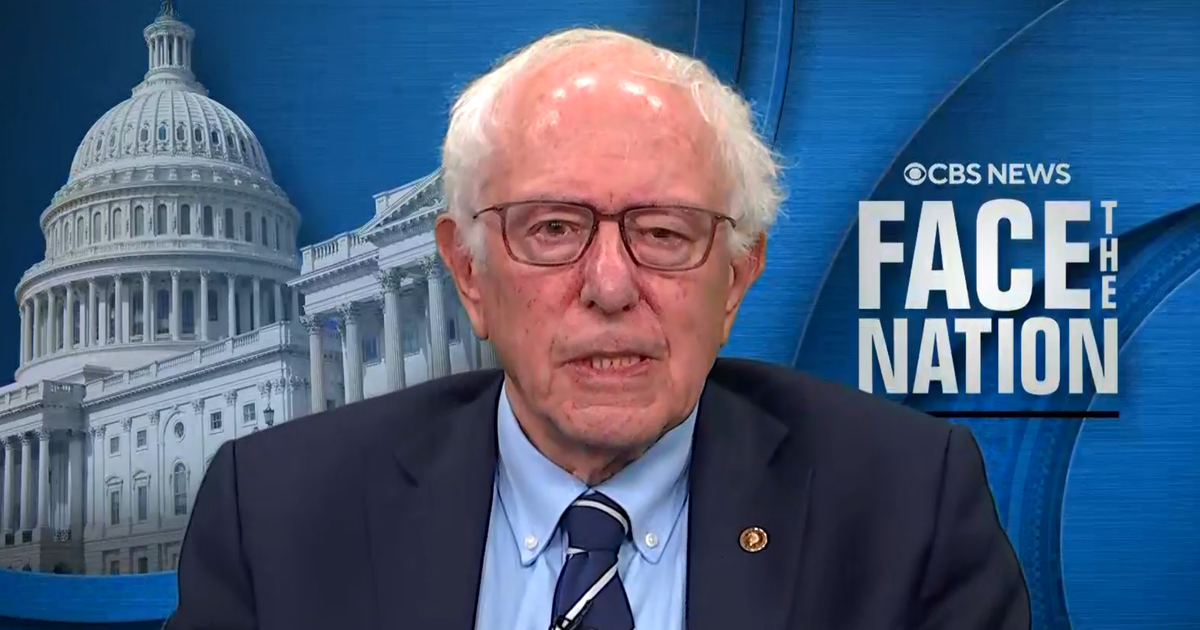
Sen. Bernie Sanders sent a letter Sunday to the three people who effectively control the Democratic Party's money and message — Senate Minority Leader Chuck Schumer, House Minority Leader Hakeem Jeffries and Democratic National Committee Chair Ken Martin — demanding that the party bar super PACs from taking part in its own primaries.
"I urge you to take action and make clear that the Democratic Party will no longer maintain this corrupt system," Sanders wrote. Alongside the primary ban, he called on the leadership to push a constitutional amendment repealing Citizens United, the 2010 Supreme Court decision that opened the door to unlimited independent political spending by corporations and unions.
The number Sanders builds his case on is $517 million — what corporate-backed super PACs have spent so far in the 2026 midterm cycle. His sharper example is a single race. Michigan Senate candidate Haley Stevens has received more than $50 million in support from outside organizations, of which $30 million came from AIPAC, the American Israel Public Affairs Committee. Sanders noted that AIPAC also plans to spend "tens of millions" backing Republican Mike Rogers, a point he uses to argue that the money is not attached to either party's principles.
"What you are seeing is, it doesn't matter that you're a Democrat or Republican," Sanders said. He was equally direct about who else is writing the checks: "It's not just AIPAC, it's the AI people, it's crypto." Both sectors have built out political operations at speed this cycle, with crypto-aligned groups in particular having demonstrated in 2024 that a well-funded super PAC can decide a low-turnout primary almost single-handedly.
The demand puts the party's leadership in an awkward spot. Super PACs are legally independent of campaigns and cannot be directly controlled by a party committee, so a "ban" would have to work through party rules, candidate pledges or a norm enforced by the leadership's own refusal to coordinate with the groups. That is a considerably weaker instrument than a prohibition, and it would apply to a category of spending Democrats have come to rely on in competitive general elections.
Sanders, who has raised billions of dollars across three national campaigns almost entirely from small-dollar donors and has refused super PAC support throughout, is not making the argument for the first time. What is different is the timing. The letter went out as senators left Washington for a five-week August recess and headed into midterm campaigning, and as the party runs a series of contested primaries in which outside money is already the dominant variable.
Neither Schumer's nor Jeffries' office nor the DNC responded publicly to the letter on Sunday. The practical question they face is whether refusing outside money in primaries is unilateral disarmament in a system where the other side has no intention of matching it — the same question that has ended every previous attempt to get either party to give the money up.