The Pentagon Told Elizabeth Warren the D.C. National Guard Deployment Will Cost $1.4 Billion More
Defense Department estimates provided to Congress project an average of 2,500 troops in Washington through January 2029, at a cost covering fiscal years 2027 through 2029.
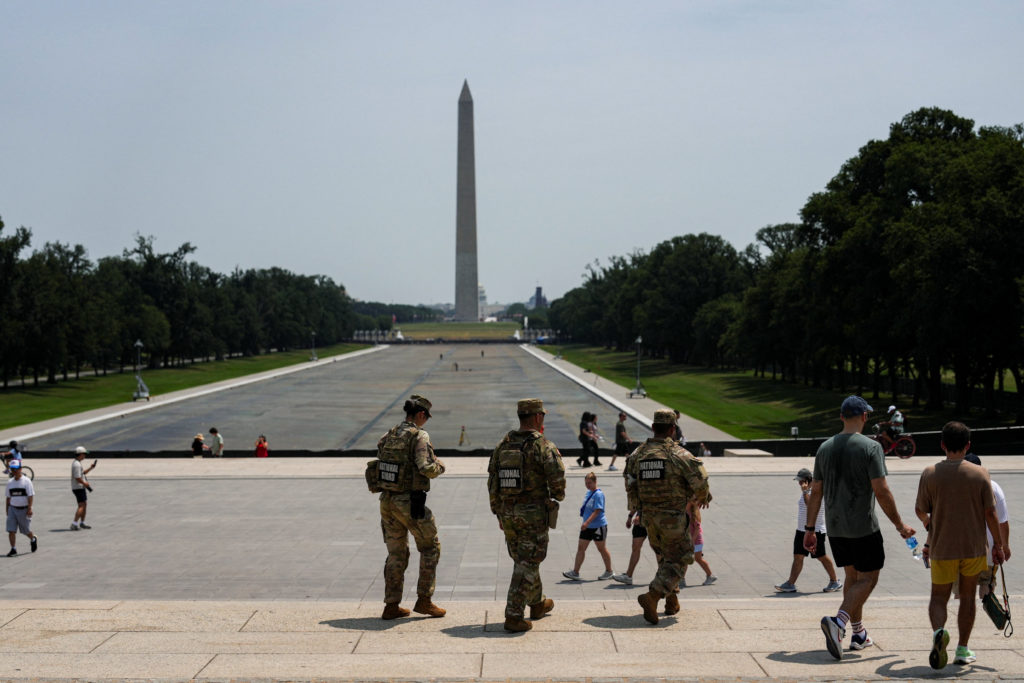
Keeping National Guard troops on the streets of Washington through January 2029 will cost roughly $1.4 billion beyond what has already been spent, according to Defense Department estimates provided to Congress and first reported this week.
The figures were produced in response to questions from Sen. Elizabeth Warren, the Massachusetts Democrat who sits on the Senate Armed Services Committee. They cover fiscal years 2027 through 2029 and assume an average of about 2,500 Guard members remain in the city through the end of the presidential term. That is a smaller force than is there now: as of late July, roughly 4,600 military personnel from the District and 23 states and territories were deployed in Washington, a number that had surged to about 5,000 around the July 4 anniversary events.
"While American families are getting flattened by skyrocketing costs, Donald Trump is spending $1.4 billion to keep troops on the streets," Warren said.
The deployment began in the summer of 2025, when President Trump issued an emergency order launching a federal law enforcement surge in the capital that the administration described as a crime-fighting measure. In the year since, the mission has expanded well past anything resembling emergency policing. Guard troops have supported arrest operations, but they have also been assigned to snow removal and to what the Pentagon has categorized as beautification work. A study published in June found the deployment had done little to reduce violent crime in the District, at a cost then running about $1.5 million a day.
Washington occupies a unique legal position that has allowed the deployment to outlast similar efforts elsewhere. Federal courts have restricted the use of National Guard forces in several states, where governors control their own units. In the District, the president is the direct commander of the D.C. Guard, and an appeals court has allowed the deployment to continue. Local officials have objected throughout, calling it an infringement on the city's autonomy, and congressional Democrats have argued it amounts to militarizing the capital at taxpayer expense.
Individual states have been quietly pulling back. Georgia has had roughly 800 personnel in the city. Arkansas planned to withdraw half of its 238 soldiers by the end of the month. Louisiana has committed troops only through January 2027. Hawaii's contingent was scheduled to leave after the July events. Minnesota Gov. Tim Walz pulled his state's Guard out early last month after troops turned up on neighborhood patrols.
The Pentagon's estimate is notable less for its size than for what it concedes: that the administration is now budgeting for a Guard presence in Washington as a standing, multi-year fixture running to Inauguration Day 2029, rather than as the temporary emergency it was announced to be.
Originally reported by PBS NewsHour.