NASA Tests Record-Breaking Electric Thruster That Could Power Mars Missions
The experimental lithium-powered engine reached 120 kilowatts during testing at JPL, glowing hotter than molten lava and generating 25 times more power than current spacecraft thrusters.
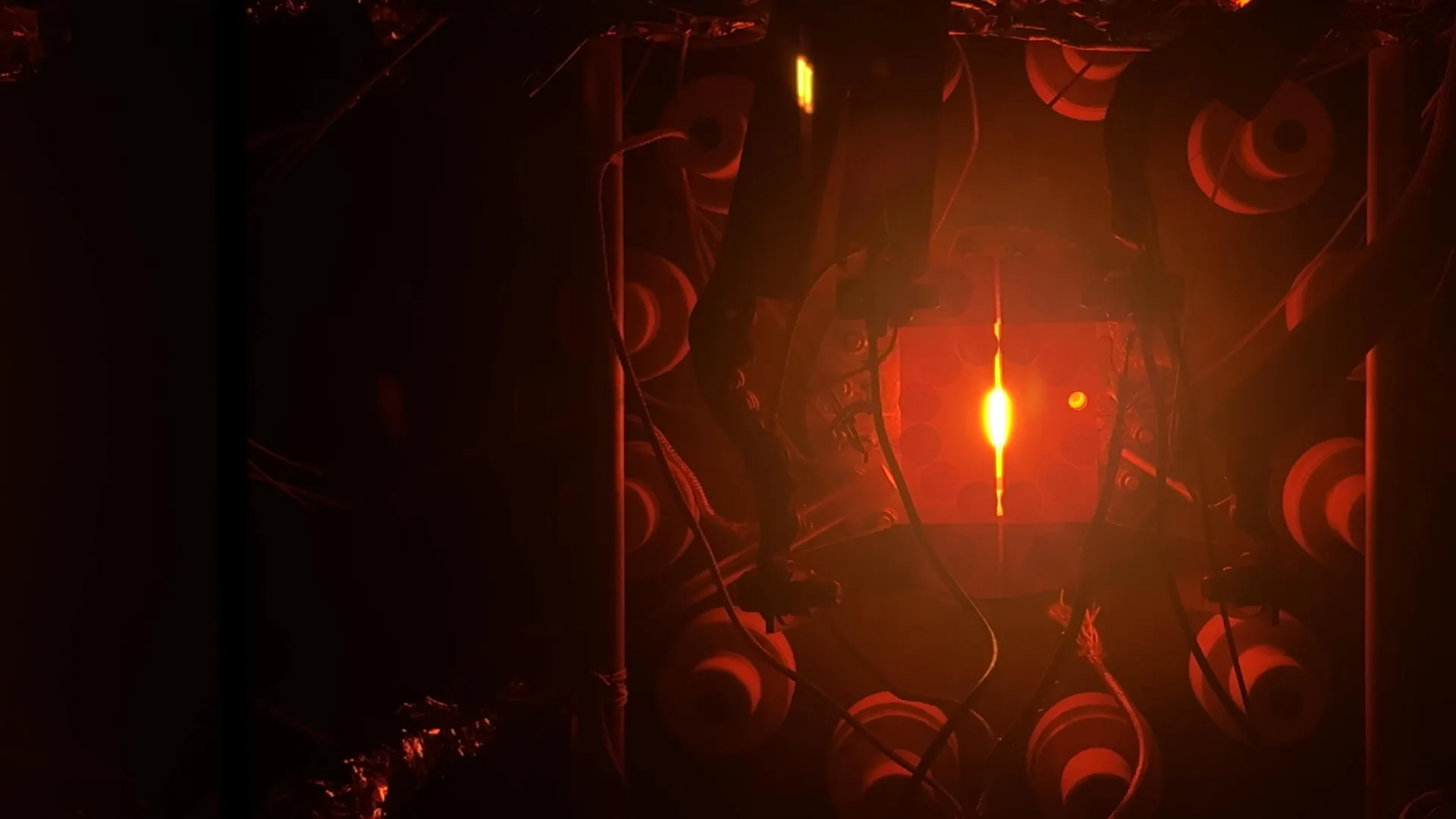
NASA has successfully tested a revolutionary electromagnetic thruster that could fundamentally change how humans travel to Mars and explore the solar system. The experimental engine, powered by lithium metal vapor and driven by intense magnetic forces, achieved record-breaking power levels of up to 120 kilowatts during testing at the Jet Propulsion Laboratory in Southern California. This represents more than 25 times the power output of electric thrusters currently used on NASA spacecraft, marking the highest-power electric propulsion system ever tested in the United States.
The February 24 test pushed the prototype engine through five ignition cycles, with the central tungsten electrode heating to extraordinary temperatures exceeding 5,000 degrees Fahrenheit and glowing bright white like molten lava. These extreme conditions were safely contained within JPL's specialized Electric Propulsion Lab, which houses a unique vacuum chamber specifically designed to evaluate engines using metal vapor propellants at such high power levels. The successful test demonstrates that the technology has moved beyond theoretical concepts to practical implementation.
"At NASA, we work on many things at once, and we haven't lost sight of Mars," said NASA Administrator Jared Isaacman. "The successful performance of our thruster in this test demonstrates real progress toward sending an American astronaut to set foot on the Red Planet. This marks the first time in the United States that an electric propulsion system has operated at power levels this high, reaching up to 120 kilowatts."
The new engine represents a significant advancement in electric propulsion technology, which offers dramatic efficiency improvements over traditional chemical rockets. Electric systems use up to 90% less propellant than conventional rockets, though they provide steady thrust over long periods rather than powerful bursts. NASA's current Psyche spacecraft demonstrates this approach, using solar-powered electric thrusters to gradually accelerate to speeds of 124,000 mph through continuous operation.
The tested system is classified as a lithium-fed magnetoplasmadynamic (MPD) thruster, a concept that has existed since the 1960s but never been used operationally. Unlike existing electric propulsion systems, this design harnesses strong electrical currents and magnetic fields to accelerate plasma created from lithium metal, enabling much greater thrust at higher power levels. If successfully developed for operational use, this technology could dramatically reduce travel times to Mars and enable more ambitious robotic missions throughout the solar system, representing a crucial step toward making interplanetary travel more feasible for human crews.