NASA Tests Powerful Electromagnetic Thruster That Could Send Humans to Mars
Lithium-powered engine reaches record 120 kilowatts in JPL test, glowing hotter than molten lava inside specialized vacuum chamber.
A revolutionary electromagnetic thruster has successfully completed high-energy testing at NASA's Jet Propulsion Laboratory, marking a significant milestone in the development of propulsion technology that could eventually carry astronauts to Mars. The experimental engine, which runs on lithium metal vapor and operates at unprecedented power levels, represents a dramatic leap forward in electric propulsion capabilities that could transform both human spaceflight and robotic missions throughout the solar system.
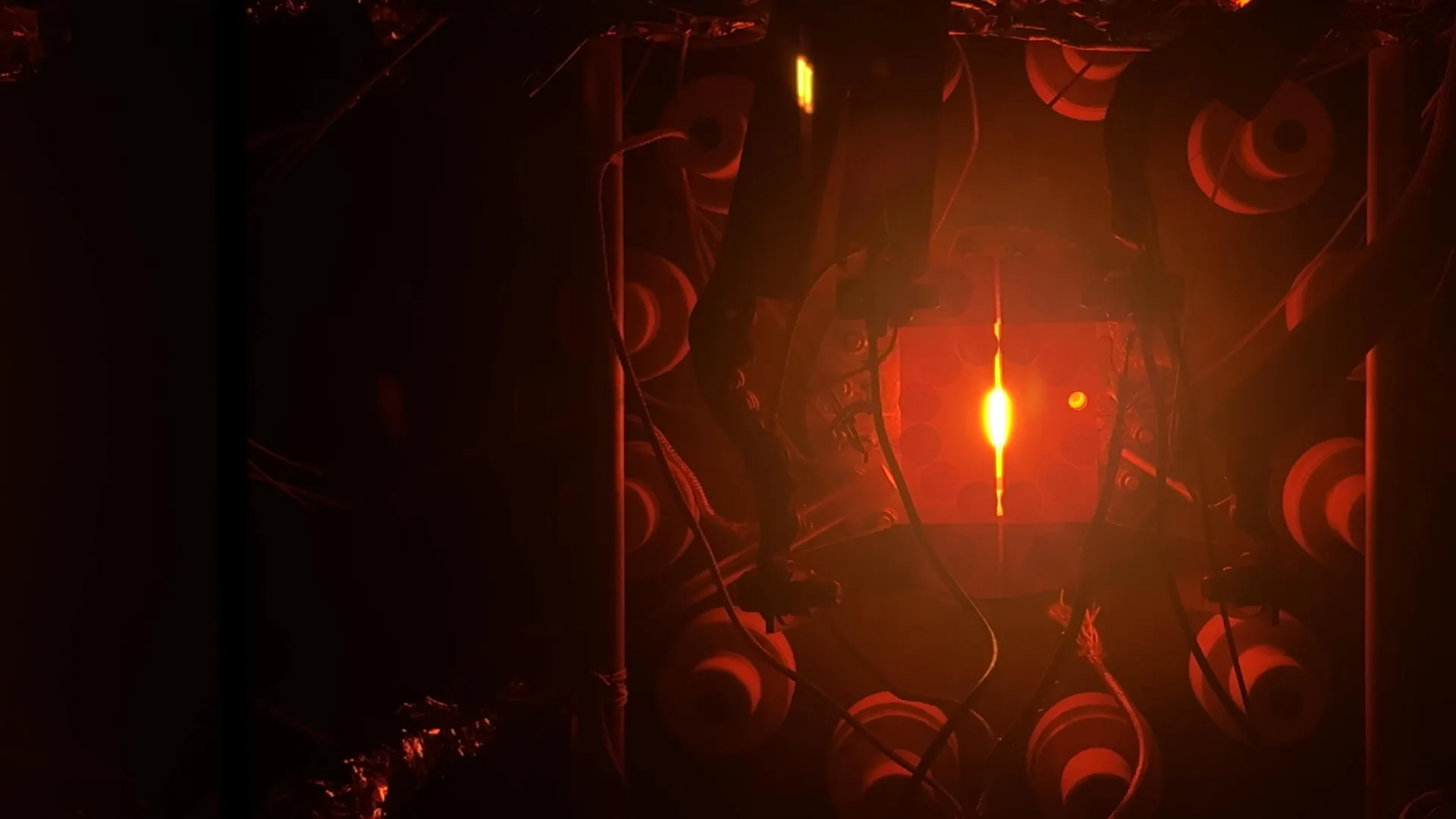
On February 24, engineers at JPL conducted the most powerful electric propulsion test ever performed in the United States, pushing the lithium-fed magnetoplasmadynamic (MPD) thruster to 120 kilowatts. During five ignition cycles, the thruster's central tungsten electrode heated to over 5,000 degrees Fahrenheit, glowing bright white as it operated inside JPL's specialized Electric Propulsion Lab vacuum chamber. This power level is more than 25 times greater than the engines currently flying on NASA's Psyche spacecraft, demonstrating the potential for dramatically improved performance.
The technology builds on principles that have existed since the 1960s but have never been successfully implemented for operational missions. Unlike traditional chemical rockets that provide powerful but brief bursts of thrust, electric propulsion systems generate steady acceleration over long periods, using up to 90 percent less propellant while eventually reaching much higher speeds. The new MPD design uses strong electrical currents and magnetic fields to accelerate plasma made from lithium, producing greater thrust at higher power levels than any existing electric propulsion system.
"At NASA, we work on many things at once, and we haven't lost sight of Mars," said NASA Administrator Jared Isaacman. "The successful performance of our thruster in this test demonstrates real progress toward sending an American astronaut to set foot on the Red Planet. This marks the first time in the United States that an electric propulsion system has operated at power levels this high, reaching up to 120 kilowatts. We will continue to make strategic investments that will propel that next giant leap."
The implications for future space exploration are substantial, as this level of propulsion efficiency could enable faster transit times to Mars and other destinations while carrying larger payloads. Current missions to Mars using conventional propulsion take between six to nine months, but advanced electric propulsion systems could potentially reduce travel time while providing more flexibility in mission planning. The successful test represents years of design and engineering work that has now moved from theoretical possibility to demonstrated reality, bringing human Mars missions closer to feasibility.