Mistletoe Berry Glue Sticks to Teflon and Can Be Reactivated With Heat
A Munich team built a fully bio-based adhesive from the sugary goo mistletoe seeds use to cling to trees. It rivals structural glues, survives -150°C and can be unstuck and restuck, which could make electronics easier to repair.
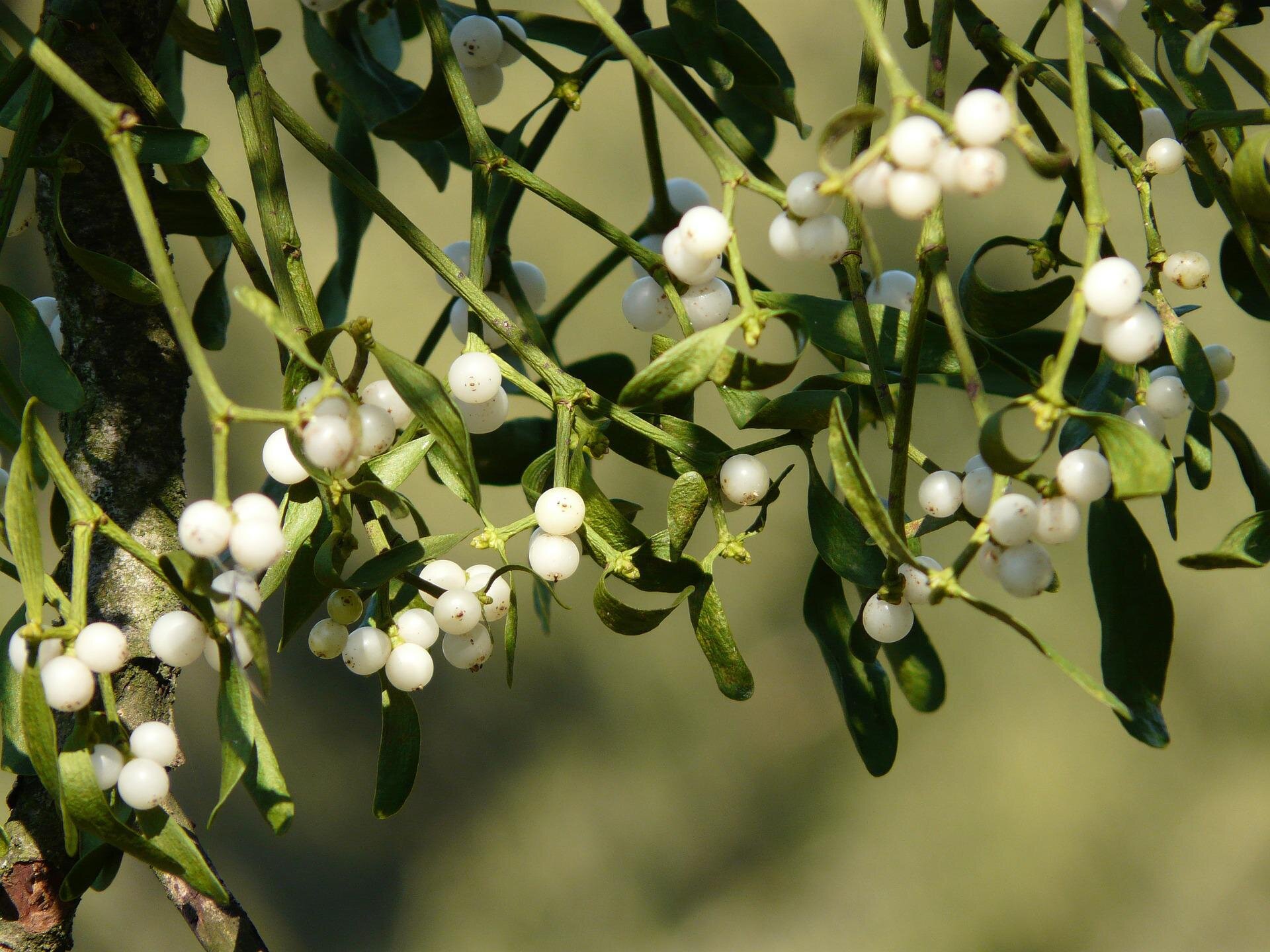
Mistletoe is a holiday symbol for people and a parasite for trees, drawing water and nutrients from the branches it grows on. Researchers at the Technical University of Munich now say it could also replace some of the petroleum-based glues used in industry.
A team led by Oliver Lieleg, a professor of biopolymer materials at TUM, has made an adhesive based mainly on a natural sugar mixture taken from mistletoe berries, supplemented with tannic acid and malic acid. The fully bio-based glue bonds wood, metal, glass and even Teflon, and it can be pulled apart and reactivated several times by heating. The work was published in the journal Advanced Materials.
The idea came from the plant itself. Mistletoe seeds are coated in a sticky substance that lets them attach to branches after birds spread them, allowing the parasite to colonize new host trees. "Many bio-based adhesives are either not strong enough or require elaborate chemical processing," said Ufuk Gürer, the study's first author. "Our approach uses a natural raw material with exceptional adhesive properties and works with comparatively simple ingredients." The team avoided petrochemical ingredients and synthetic pretreatment of the raw material.
In tests the glue held strongly on birch wood, stainless steel, aluminum and glass. It also formed load-bearing joints on Teflon, whose nonstick surface defeats most adhesives. In some tests it reached shear strengths above 10 megapascals, putting it in the range of technical structural adhesives used in manufacturing.
The glue kept its grip at -150°C (-238°F), and it can be released and reset by heating to about 90°C (194°F). That combination could matter for electronics: screens, housings and other glued parts could be swapped out without damaging them, and devices could be taken apart more easily for recycling. The cold performance could also suit cryogenic uses, including space hardware, where engineers today often back up glued joints with mechanical fasteners because existing adhesives can form incomplete bonds that fail.
The catch is supply. The key ingredient still comes from processing mistletoe berries, which rules out large-scale production for now. "The mistletoe berry makes use of molecular building blocks and mechanisms which, in combination with the additives selected by us, are responsible for very strong adhesion," Lieleg said. "In the long term, we want to transfer these principles to industrial manufacturing processes by exploring ways to produce the key adhesive components independently of the plant and make the process scalable."
Most industrial adhesives today are made from fossil fuels and are designed to be permanent, which makes products harder to fix and recycle. A strong glue that comes from plants and can be switched off with heat attacks both problems at once, if the Munich team can find a way to make its key ingredients without harvesting berries.


