Cracks Don't Start as Cracks. They Start as Tiny 2D Patches That Creep for Most of the Break, Then Take Off at the Speed of Sound
Hebrew University physicists filmed fracture from its first appearance to explosive rupture and found the slow stage can take up 75% of the process. The same geometry may explain how earthquakes begin.

A phone screen cracks, a plastic part snaps, a pane of glass shatters. To the eye, it happens all at once. A new study in Physical Review Letters argues that the most important part of the break happens long before the snap, in a slow, nearly invisible stage that classical fracture theory never described.
The work was done by Yuval Paz and Jay Fineberg of the Racah Institute of Physics at the Hebrew University of Jerusalem, with Meng Wang of the Beijing Institute of Technology and Mokhtar Adda-Bedia of CNRS, ENS de Lyon and Université de Lyon. Using a purpose-built experimental system and high-speed imaging, they tracked fractures in three-dimensional materials from the moment they appeared to the moment they tore through.
What they saw was not the textbook picture. For decades, engineers have relied on linear elastic fracture mechanics, or LEFM, which says a crack shorter than a critical size called the Griffith length stays stable, and once it passes that length it accelerates rapidly toward the material's speed of sound. The theory works well for a crack that is already racing. It says almost nothing about how the crack gets started.
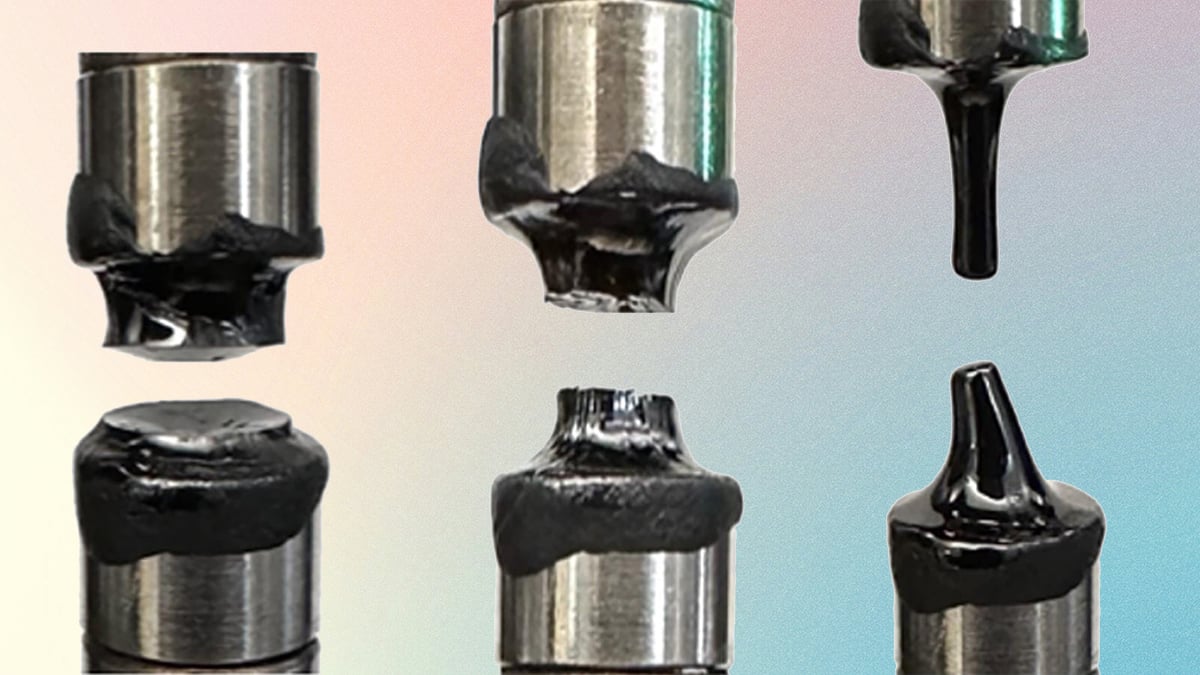
In the experiments, fracture began when the material reached a critical stress. A tiny broken region then nucleated, not as a line-shaped crack, but as a two-dimensional patch. That patch expanded extremely slowly, at speeds from microns to millimeters per second, in a process the researchers call creep. Only when the patch grew large enough to span the full thickness of the plate did it undergo what the team describes as a geometrical, or topological, transition: from a 2D patch into the 1D through-going crack that classical theory describes. At that instant, explosive acceleration began, and the final rupture swept through the material on microsecond-to-millisecond timescales.
The slow stage was anything but a footnote. In the experiments, creep occupied at least 75% of the total fracture process. And the patches nucleated at scales of roughly 0.1 millimeter, about 10 times smaller than the classical Griffith length of about 1 millimeter in the same material. That supports the idea of a geometry-dependent critical stress for initiation, rather than a fixed minimum crack length.
The team frames the result as an extension of LEFM, not a replacement. Once the patch becomes a through-crack, the classical predictions take over. What the new framework adds is a single mechanical description linking three stages that previously had none: initiation, extremely slow creep and explosive fracture.
The practical implication is that failure might be detectable earlier than anyone has looked. Instead of hunting only for cracks that have already grown dangerously long, engineers may need to watch for the small, slowly expanding patches that precede them. The researchers also connect the work to frictional ruptures, where two surfaces begin sliding past each other, and show that tensile fracture and frictional rupture can share the same geometrical mechanism. If so, the physics of a patch creeping through a lab sample may offer clues to how ruptures start and grow along faults, including the ones that produce earthquakes.