Iran's Nuclear Chief Was Supposed to Speak at the IAEA's Opening Session Monday. Austria Refused Him a Visa After Washington Blocked His Sanctions Waiver.
The U.N. sanctions committee denied Austria's request to exempt Mohammad Eslami from the travel ban that snapped back last year. Tehran called it 'a serious breach' of its rights and summoned Austria's envoy; Russia said Vienna 'grossly violated' its duties as host.
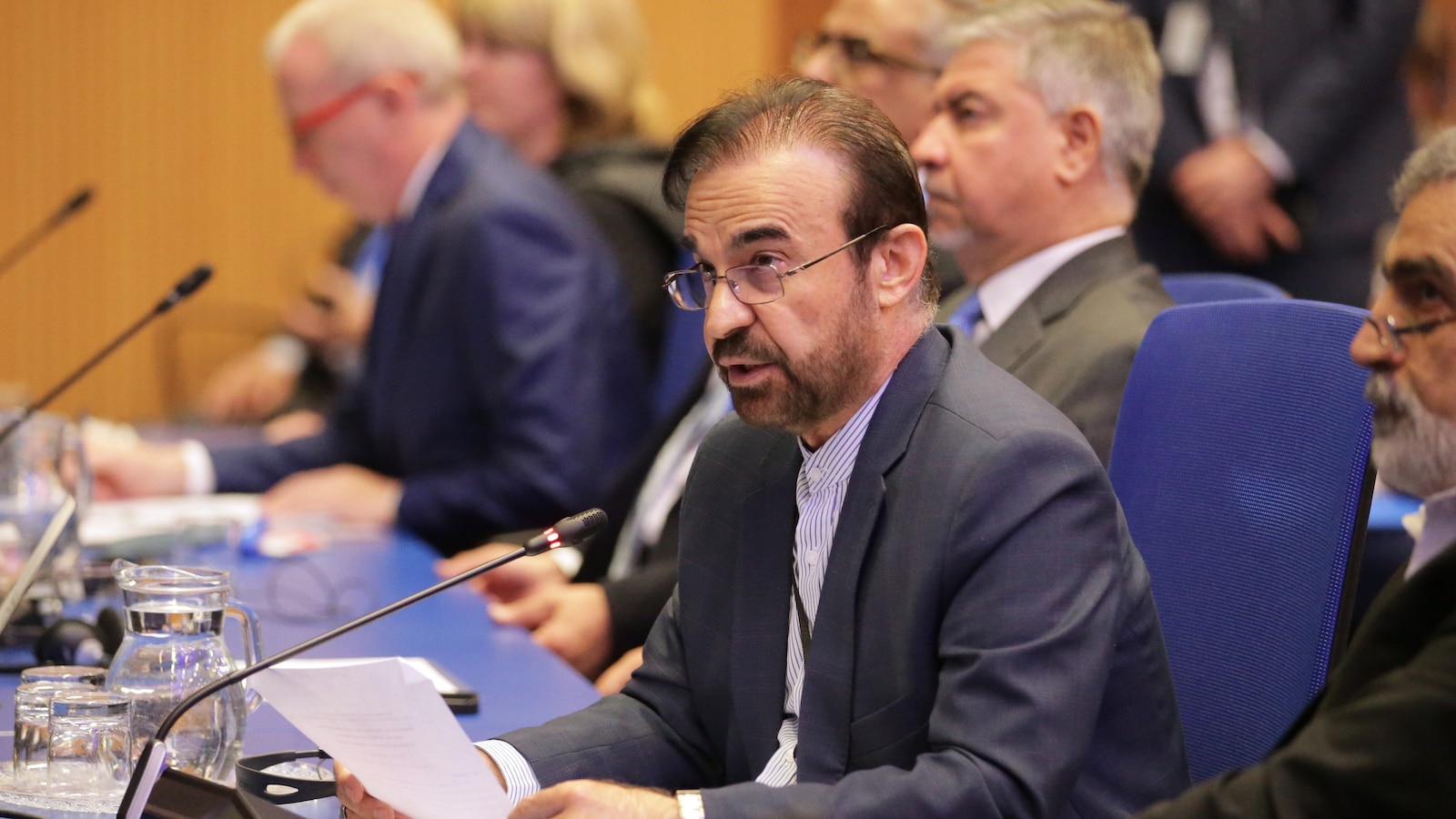
The 70th General Conference of the International Atomic Energy Agency opened Monday in Vienna with delegations from 181 member states and nearly 4,000 officials in the hall. One seat was conspicuously empty. Mohammad Eslami, the head of the Atomic Energy Organization of Iran and a vice president in Tehran's government, had been expected to address the opening of the five-day gathering. Austria refused to issue him a visa.
The Austrian decision rested on a ruling by the U.N. Security Council's sanctions committee, which oversees the penalties that were automatically reimposed on Iran last year after France, Britain and Germany triggered the so-called snapback mechanism over Tehran's nuclear program. Eslami is on the U.N. travel-ban list. Austria, as host of the IAEA, asked the committee for a waiver so he could attend. The committee said no, and the Associated Press reported that Washington had urged it to.
Preston Wells Griffith, the U.S. ambassador to the U.N. agencies in Vienna, did not dispute that. The United States objected to the exemption, he said, because officials "could not allow a U.N. designated official to travel ... without any meaningful cooperation on nuclear safeguards." Iran has sharply restricted IAEA inspector access since the strikes on its nuclear sites during the 12-day war with Israel and the United States in June 2025, and the agency's Director General Rafael Grossi has repeatedly said his inspectors cannot verify the status of Iran's enriched uranium stockpile.
Iran's reaction was immediate. Reza Najafi, its ambassador to the IAEA, said that excluding Eslami constituted "a serious breach" of Iran's rights as a member state. "By obstructing our full and effective participation, the denial of access contravenes both the letter and the spirit of the legal framework" governing the agency, he said. In Tehran, Foreign Ministry spokesman Esmail Baghaei condemned Austria's refusal, said the host nation had an obligation to issue visas to delegates, and confirmed that Austria's chargé d'affaires had been summoned in protest.
Russia backed Iran's complaint. Mikhail Ulyanov, Moscow's ambassador to the international organizations in Vienna, said Austria had "grossly violated" its obligations under the headquarters agreement that governs the IAEA's presence in the country.
The episode lands in the middle of a conference already dominated by Iran. Grossi opened the session warning that "a world with more nuclear weapons and more countries armed with nuclear weapons is not a safer world," and the agency's inability to account for Iran's highly enriched uranium since the 2025 strikes remains its most pressing safeguards problem. Last year Iran used the conference to lobby for a resolution condemning attacks on nuclear facilities, an effort Washington opposed.
What the visa denial signals is that the sanctions regime restored last year is being enforced at the level of individual officials, and that the United States is prepared to use it to keep Iran's nuclear leadership out of the very forum meant to negotiate with them. Whether that pressure yields more inspector access or less is the question hanging over the rest of the week in Vienna.
Originally reported by ABC News / AP.