ECB President Christine Lagarde Resigns, Will Step Down February 7, 2027
Her term ran to October 2027, but months of speculation preceded the exit, which comes as the ECB hikes rates against an oil-price shock tied to the Iran war.
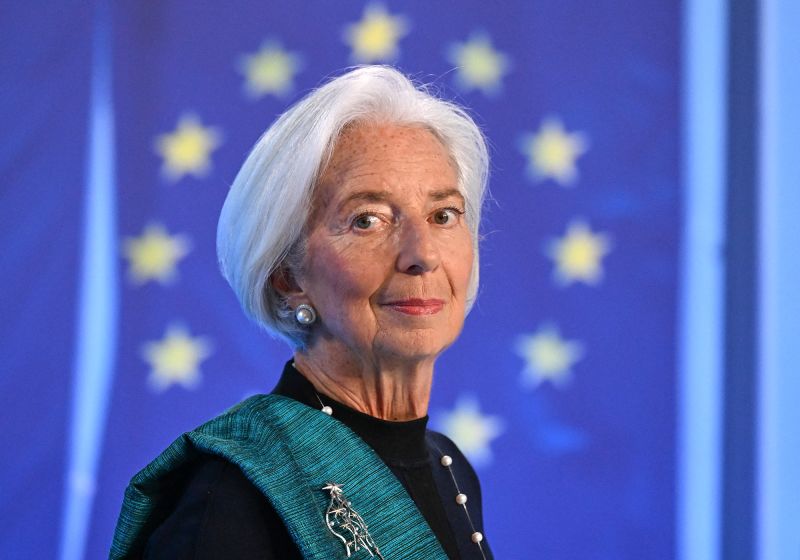
European Central Bank President Christine Lagarde announced her resignation on Thursday, ending months of speculation about her future at a complex juncture for Europe and the central bank.
"European Central Bank President Christine Lagarde today informed the Governing Council and the President of the European Council António Costa that she will step down from her position on 7 February 2027," the ECB said in a press release.
Her term was scheduled to run until the end of October 2027. The early date gives European Union leaders time to choose a successor well before a French presidential election in which polls show far-right candidate Marine Le Pen as the favorite. Former central bank governors Klaas Knot of the Netherlands and Pablo Hernández de Cos of Spain are seen as the frontrunners to replace her. Speculation about an early departure had been building for months, with the World Economic Forum viewed as a likely destination.
The timing is awkward for the bank. The ECB is in the middle of a rate-hiking cycle, trying to keep an oil-price shock linked to the Iran war from spilling into other prices and wages. At the same time, government bond yields have surged, especially in debt-laden France, pushing up borrowing costs for households and businesses. Lagarde has said that will curb growth and inflation.
That leaves the bank caught between persistent inflation fueled by a renewed surge in energy costs and deteriorating financing conditions. The ECB was widely expected to keep its deposit rate at 2.5% at Thursday's meeting while signaling that another increase, potentially as soon as December, remains likely. The rate decision was due at 1315 GMT, followed by Lagarde's regular press conference at 1345 GMT.
Lagarde, a French lawyer who previously ran the International Monetary Fund, has led the ECB since 2019. Her exit opens a new fight over who should run the world's second most powerful central bank. The choice will be made by EU leaders, and it will be read by markets as a signal of how hawkish or cautious the bank intends to be on inflation as the energy shock continues.
The French election adds another layer. With bond investors already demanding more to hold French debt, the next ECB president will take over while a possible Le Pen victory looms over the euro zone's second-largest economy. By setting a February date, Lagarde has given governments about three months to agree on her replacement before the political calendar gets harder.
The announcement is likely to move attention from Thursday's rate decision to the succession, a contest that Knot and Hernández de Cos are now widely expected to lead.