The Danube Is So Low That Hungary Is Shutting Down Its Only Nuclear Plant for the First Time in 44 Years
Paks supplies nearly half of Hungary's electricity. Prime Minister Péter Magyar says the river no longer carries enough water to cool the reactors, and the plant may stay off for weeks.
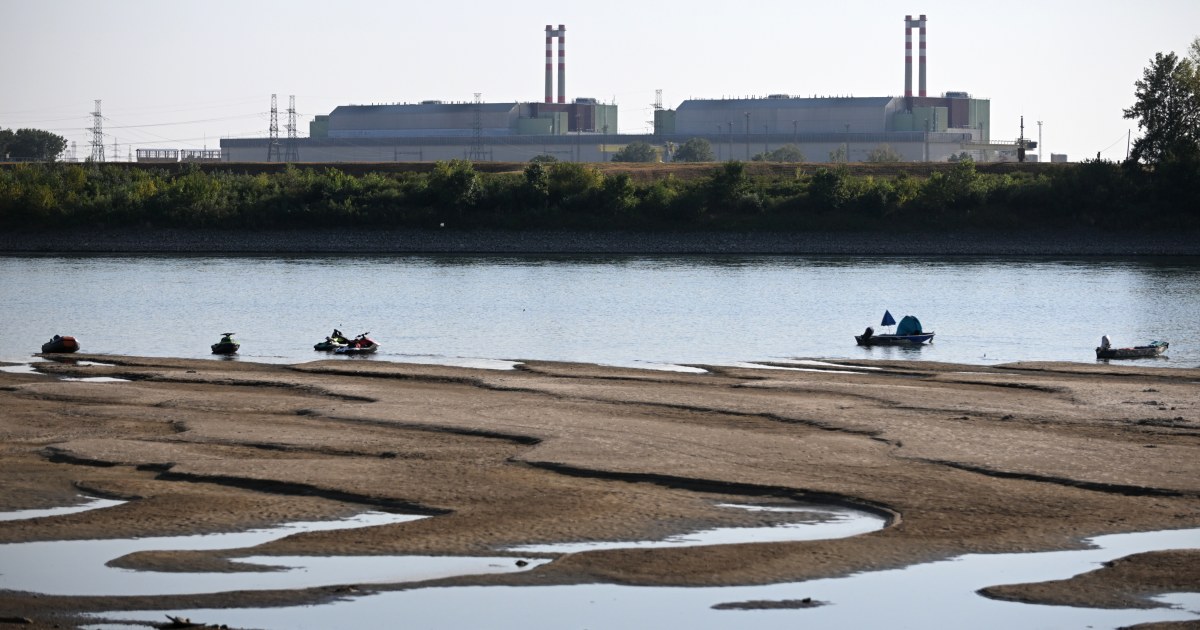
BUDAPEST, Hungary — Hungary will shut down its only nuclear power plant for the first time in its history because the Danube River no longer carries enough water to cool the reactors, Prime Minister Péter Magyar said, warning the plant may stay offline for weeks.
The Paks nuclear plant sits about 50 miles south of Budapest and draws river water to cool its four Soviet-built reactors. Record-low water on the Danube has pushed the intake pumps past the point where they can pull in enough volume. Speaking at a news conference at the plant on Friday, Magyar said output was already down to 965 megawatts against a normal 2,000, that further cuts were coming within hours, and that the entire plant would likely be powered down by Tuesday or Wednesday. On Saturday a second of the four blocs was taken offline, dropping output to less than a quarter of capacity.
Magyar stressed that the shutdown can be carried out safely and poses no risk to the public or the environment. This is a cooling-water problem, not a reactor problem — but the consequences for the grid are real, because Paks accounts for nearly half of Hungary's electricity production.
The numbers behind the decision are stark. Magyar said the water level at Paks could fall to negative 144 centimeters, far below the previous record of negative 98 centimeters set in 2018. A negative reading means the river has dropped below the gauge's zero reference point, not that the channel is dry. A level of negative 134 centimeters triggers a full shutdown under the plant's operating rules. And there is no relief in the forecast: Magyar noted that in the past 20 years the Danube's level has risen during August only three times, and no significant rain is expected.
To hold the grid together, Hungary's government has asked large industrial consumers to voluntarily cut usage, particularly during the 5 p.m. to 10 p.m. peak. Magyar said the energy conglomerate MOL had agreed to reduce its draw by 65 megawatt-hours, about 40 percent of its normal consumption. He also announced that his party had recommended suspending parliamentary sessions planned for Monday and Tuesday to conserve energy, and ordered all state institutions to switch off decorative lighting by Monday.
Hungary and much of Central Europe have been in a prolonged drought that has already disrupted tourism, agriculture and river freight. The Danube is the backbone of the region's inland shipping, and low water has repeatedly forced barges to run partly loaded or stop altogether in recent summers.
Nuclear plants elsewhere have faced the same squeeze. French reactors on the Rhône and Garonne have cut output during heat waves when river temperatures climbed too high to accept discharged cooling water, and plants in Germany and Switzerland have throttled back for the same reason. What is different at Paks is the mechanism: not water that is too warm to use, but a river that has dropped too far for the pumps to reach.
Originally reported by NBC News / The Associated Press.