Hope Fades in Kumamoto as Japan's Quake Toll Reaches 25 and Six Are Confirmed Dead at a Rebuilt Mall
Rescuers drilled through collapsed concrete for a third day after Tuesday's magnitude 7.1 earthquake, while nearly 19,000 homes sat without power and a heatstroke alert went out over the shelters.
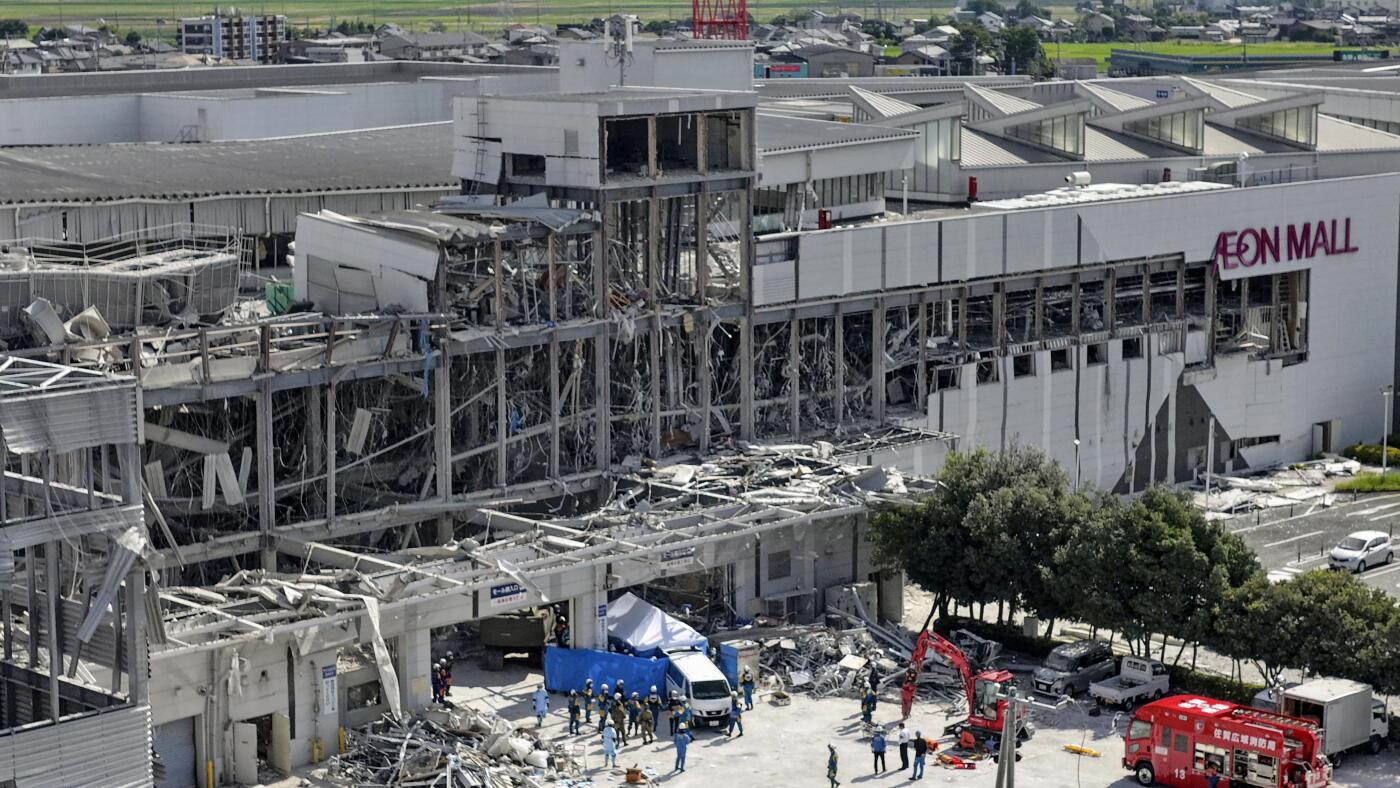
Rescue crews in southwestern Japan worked through Thursday with dwindling hope of finding anyone alive, two days after a magnitude 7.1 earthquake set off an explosion at a shopping mall, toppled a factory chimney and flattened homes across Kumamoto Prefecture on the island of Kyushu.
The Kumamoto prefectural government said 25 deaths have been confirmed as related to the disaster, with nine more under investigation as likely connected. At least 86 people were injured, five of them seriously. The number of missing remained unclear. The quake struck at about 4:30 p.m. Tuesday, with an epicenter near the coastal city of Uto, roughly 30 miles southwest of Kumamoto City; the U.S. Geological Survey later revised its own estimate of the magnitude down to 6.8. A tsunami advisory was issued immediately and lifted a short time later.
The worst of it happened at the Aeon Mall in the town of Kashima, which was crowded with thousands of shoppers on a Tuesday afternoon. The company said roughly 3,000 customers were led out to a parking lot before an explosion tore through another part of the complex about an hour after the shaking stopped, blowing out walls and exposing steel framing. The second floor collapsed, trapping people inside. As of early Thursday, six of the 11 people pulled from that wreckage were confirmed dead. The mall had reopened only on June 13 after being rebuilt following the devastating 2016 Kumamoto earthquake. In the Yatsushiro area, where a chimney came down at a Nippon Paper Industries factory, 10 workers were rescued, eight died and one remained missing.
Life outside the rubble has become its own emergency. Nearly 19,000 homes were still without electricity Thursday and more than 9,000 people were staying in about 400 shelters, where crews were adding power sources to run air conditioning. The Environment Ministry issued a heatstroke alert for the Kumamoto area with temperatures forecast to reach 91 degrees Fahrenheit. In the hard-hit town of Hikawa, residents without water or power queued at the town hall, where officials handed out bottled water and packaged instant rice and Ground Self-Defense Force troops arrived with a trolley of fresh water.
Yoshiaki Nakashima, 66, came for water with two bottles and his dog. He is sleeping in his car rather than in one of the town's three evacuation centers, and says aftershocks have made him unwilling to sleep at home. "It's difficult to turn over while sleeping in a car," he said, though he added that a shelter would be harder still. Akiko Inazaki, a resident in her 30s, has been living in a tent in her own yard since the quake cut her water and power. "Fresh water is so valuable," she said, adding she had rationed her drinking so tightly she nearly gave herself heatstroke.
Yutaka Kobayashi, a doctor dispatched from Aichi Prefecture in central Japan, spent Thursday touring evacuation centers to check on elderly and injured evacuees. "We have to make sure elderly people are not developing heatstrokes or dehydration," he said in Hikawa. A town official, Yuzuru Tamura, said Hikawa is starting to run out of emergency food such as canned bread and instant rice.
Prime Minister Sanae Takaichi said the central government will take the lead in coordinating the rescue and in restoring electricity, gas and water. "The needs on the ground are constantly changing," she told reporters. "To put to rest the people's feelings of uncertainty, we will do all that needs to be done." The Japan Meteorological Agency has warned that strong aftershocks remain possible for a week and that landslide risk is elevated in the hardest-hit areas. Toyota halted three plants in southern Japan through Friday and Honda extended a shutdown at its Kumamoto motorcycle factory while damage is repaired.
Originally reported by NPR.