Powerful 6.9 Earthquake Jolts Northern Japan, Injuring Six and Halting Bullet Trains
The quake off Iwate Prefecture rattled buildings as far as Tokyo and registered violent shaking in Aomori, but officials issued no tsunami warning.
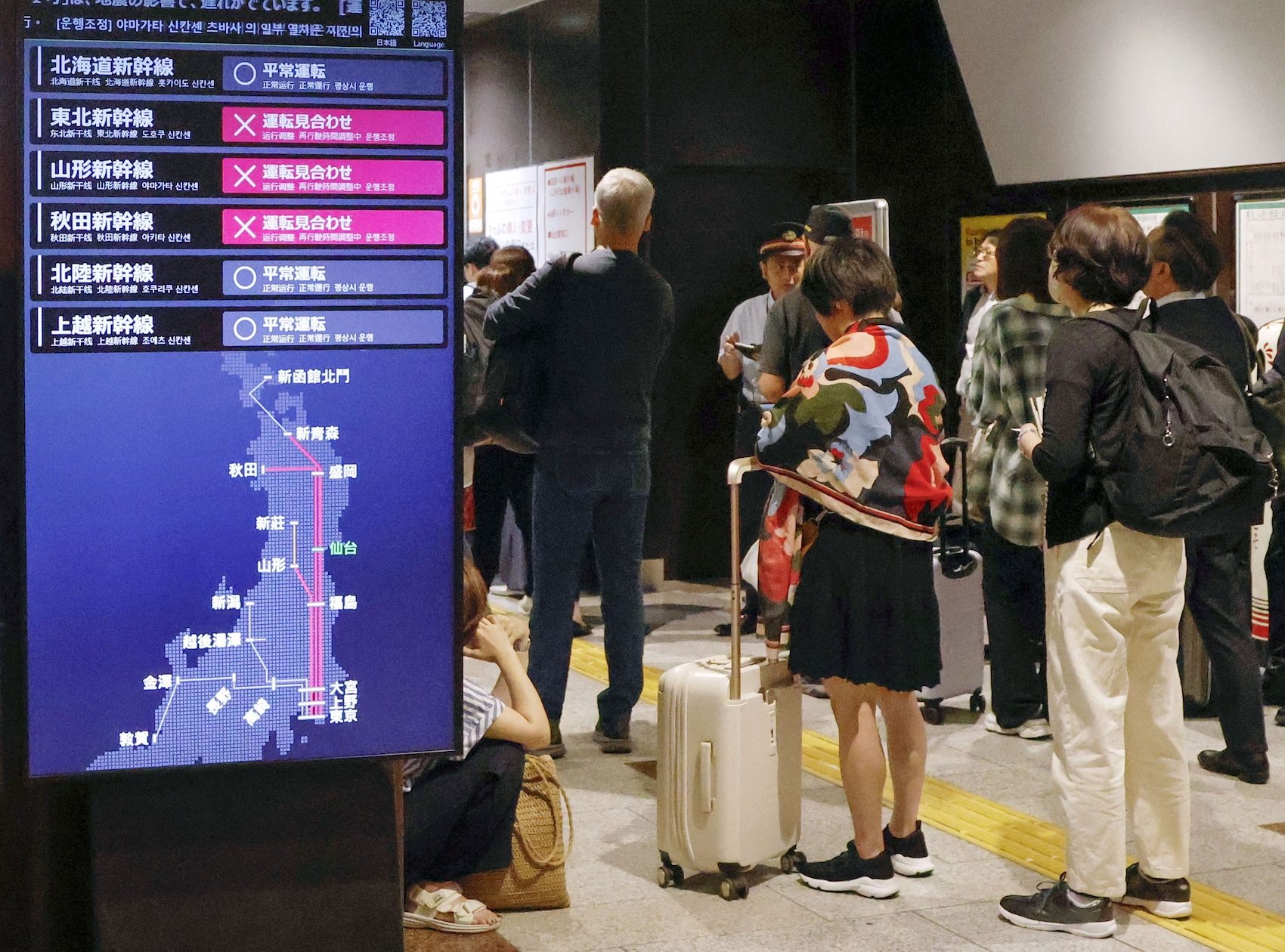
A magnitude 6.9 earthquake struck northern Japan on Thursday morning, injuring at least six people, halting high-speed rail service and shaking buildings hundreds of miles away in Tokyo, in one of the strongest tremors to hit the country's northeast in years.
The quake was centered off the coast of Iwate Prefecture at a depth of about 50 kilometers, according to the Japan Meteorological Agency, which initially measured the jolt at magnitude 7.2 before revising it. The town of Hashikami in neighboring Aomori Prefecture registered an upper 6 on Japan's seven-point seismic intensity scale — a level of shaking severe enough to make it difficult to stand and capable of toppling unsecured furniture and damaging buildings.
Despite the violence of the shaking, authorities said there was no tsunami threat, sparing the coastline the kind of catastrophe that devastated the Tohoku region in 2011. Still, officials urged residents to remain on alert for strong aftershocks in the days ahead, a standard precaution after a quake of this magnitude.
The disruption to daily life was immediate. The Tohoku Shinkansen, the high-speed line linking Tokyo with the northern reaches of the main island of Honshu, was temporarily suspended as crews inspected tracks and overhead lines, though most services had resumed by early afternoon. Power flickered in parts of the affected prefectures, and emergency crews fanned out to check for structural damage.
Prime Minister Sanae Takaichi convened a task force at the Prime Minister's Office to coordinate the government's response, telling reporters there was "no tsunami concern" but pledging a full assessment of damage and injuries. The northeastern coast of Japan sits atop one of the world's most seismically active zones, where major quakes of magnitude 7 or greater typically occur every 10 to 20 years. Thursday's event served as a sharp reminder of that ever-present risk in a nation that has invested heavily in earthquake-resistant construction and early-warning systems precisely because it knows the next big one is never far off.
Japan's nationwide early-warning network, which pushes alerts to mobile phones and television broadcasts seconds before strong shaking arrives, activated as the tremor propagated, giving residents in some areas a brief but potentially life-saving heads-up. Local broadcaster NHK switched to wall-to-wall coverage, showing footage of swaying light fixtures and rattled store shelves, while officials urged people near the coast to stay away from the water as a precaution despite the absence of a formal tsunami advisory. Schools and businesses in the hardest-hit prefectures conducted safety checks, and utility crews worked to confirm the integrity of gas and water lines. The country's painful experience with the magnitude 9.0 disaster of March 2011, which killed nearly 20,000 people and triggered the Fukushima nuclear crisis, has made even moderate quakes a moment of collective vigilance.