Fuego Has Been Erupting for Four Days
Guatemala Has 1,700 People in Shelters and 29,000 Living Under Falling Ash.
Lava fountains reached 1,000 feet above the crater and pyroclastic flows poured into six ravines. Officials raised red alerts in three departments and closed the highway that runs past the volcano.
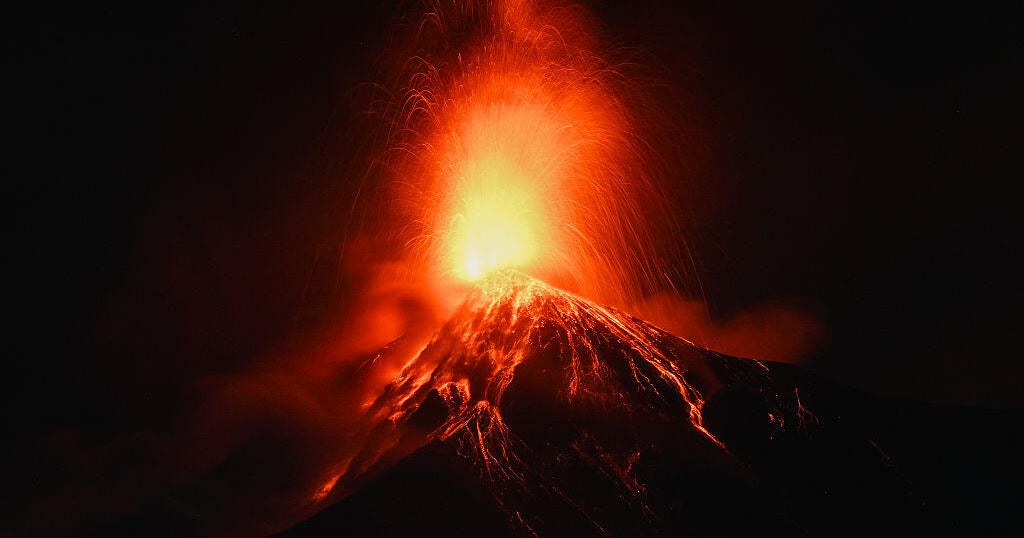
Guatemala's Volcán de Fuego has been erupting since Monday morning, and the government now has roughly 1,700 people sheltered away from its slopes while about 29,000 more live under falling ash across three departments.
The eruption escalated sharply on its first night. By late Monday the volcano had entered what volcanologists call a paroxysmal phase, throwing lava fountains 200 to 300 meters — 650 to 1,000 feet — above the crater rim. Ash and gas columns rose nearly four miles into the air. In the early hours of Tuesday, pyroclastic flows spilled over the crater and ran down as many as six ravines on the western and southern flanks, the sides where the villages sit.
Those flows are what kill people here. CONRED, Guatemala's national disaster coordination agency, describes them as "mixtures of volcanic gases, ash, rocks, and high temperatures that move rapidly down the volcano's slopes" — dense, superheated avalanches that can travel faster than a car and give almost no warning. Evacuations began Monday with roughly 500 residents from two villages, including about 250 people from El Porvenir and the hamlet of Las Lajitas, and grew through the week as flows widened.
Authorities raised the alert to red — the highest level — in Sacatepéquez, Escuintla and Chimaltenango, and kept a nationwide orange alert in place. Schools closed across the ashfall zone. National Route 14, a major highway that runs close to the mountain, was shut down. Officials warned on Tuesday that the following 72 hours were the critical window, in part because incoming rain raises the risk of lahars — volcanic mudflows that pick up loose ash and debris and channel down the drainages. Mudflows up to seven kilometers long have already descended, though none has reached a village and no structures have been reported damaged.
Fuego stands 12,346 feet and sits about 22 miles from Guatemala City, one of the most active volcanoes in Central America and a near-constant presence in the sky over Antigua. It erupts in some form almost every week. What makes officials move fast is the memory of June 2018, when a paroxysm sent pyroclastic flows through the town of San Miguel Los Lotes with virtually no evacuation warning and killed 215 people, with hundreds more never found.
The evacuation playbook that followed that disaster has been used repeatedly since — roughly 1,200 people were moved in 2023, and more than 500 in 2025. CONRED has said the current evacuations will stay in place until the volcano's behavior settles, and Guatemala sits on the Pacific Ring of Fire, where the country's chain of active cones guarantees this will not be the last time.