Scientists Develop a Fluoride-Free Gel That Regrows Tooth Enamel
A protein-based gel inspired by how enamel forms in infancy pulls minerals from saliva to rebuild the body's hardest tissue — something teeth cannot naturally repair once it is lost.
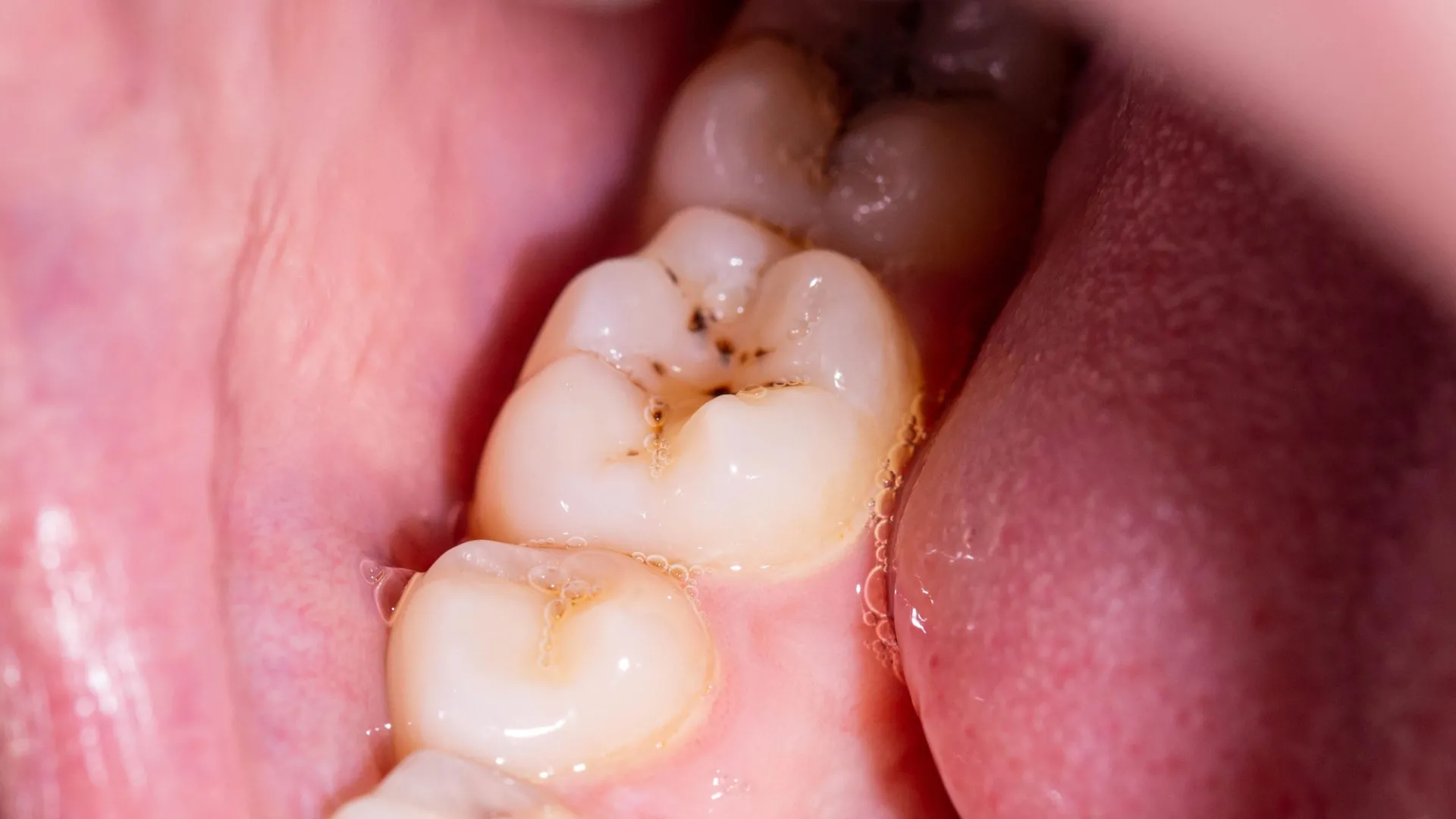
Researchers have developed a fluoride-free gel that can rebuild damaged tooth enamel, offering a potential answer to one of dentistry's oldest problems: the human body cannot regenerate enamel once it is worn away.
The patented, protein-based gel was created by a team at the University of Nottingham in the United Kingdom and described in a study published in the journal Nature Communications. Enamel is the hardest substance the body produces, but it contains no living cells, so once acid, decay or wear strip it away, it is gone for good. That biological dead end is why cavities require fillings and why erosion tends only to worsen over time.
The new material is designed to sidestep that limitation by mimicking the natural process that builds enamel in the first place. The gel is made from proteins engineered to reproduce key functions of the natural proteins that guide enamel formation in infancy. Applied to a tooth, it seeps into microscopic cracks and defects and then draws calcium and phosphate — minerals already present in saliva — to grow a fresh, organized mineral layer that closely matches the structure of healthy enamel, rather than the weaker, patchwork repair that current products manage.
"It is safe, can be easily and rapidly applied, and it is scalable," said Professor Alvaro Mata, who led the research. Independent reporting on the work has noted that in laboratory testing the treatment restored lost enamel within about two weeks, a timeline that could make it practical for routine dental use rather than a one-off laboratory curiosity.
The approach differs fundamentally from fluoride, the workhorse of modern oral care. Fluoride helps harden existing enamel and slow decay, but it does not regrow the tissue. A gel that actually regenerates enamel could shift dentistry from managing damage toward genuinely reversing it, with implications for cavities, sensitivity and the enamel erosion caused by acidic diets and aging.
The technology has already been spun out into a startup company, Mintech-Bio, which hopes to launch its first product in 2026. Considerable testing lies ahead before such a treatment reaches dental offices at scale, and researchers cautioned that results in the lab must still be proven durable in the messy, ever-changing environment of the human mouth. But if it holds up, a simple brush-on gel that coaxes teeth to heal themselves could become one of the most consequential advances in everyday dental care in decades.