Federal Appeals Court Hears Trump's Claim That White House Papers Belong to Him, Not the Public
Administration lawyers argue the Presidential Records Act is unconstitutional, a case that critics say could end the public's access to presidential records.
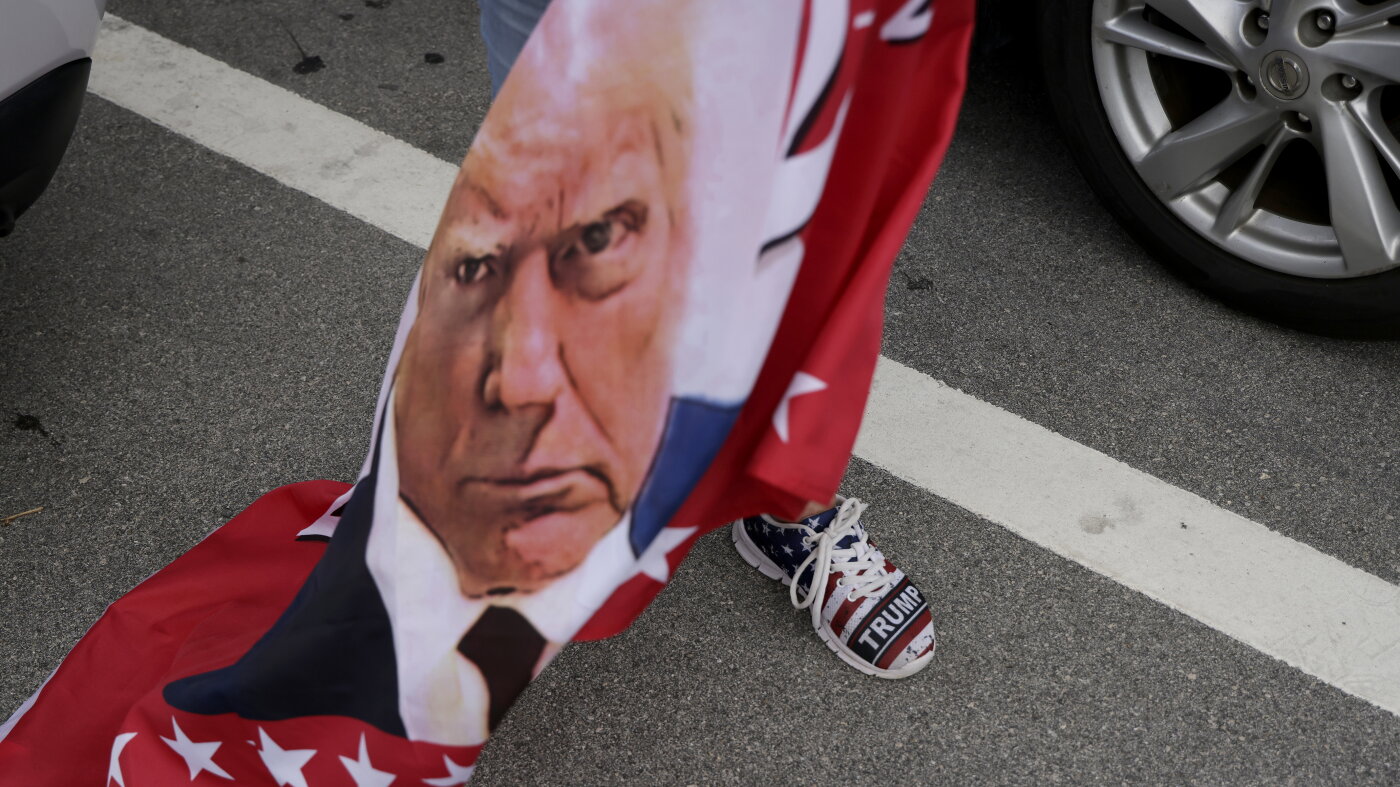
Administration lawyers argued before a federal appeals court in Washington on Friday that papers created in the White House belong to Donald Trump, not to the American people, in a case that tests one of the post-Watergate limits on presidential power.
Six months ago, the Justice Department moved to invalidate the Presidential Records Act, a federal law in place since 1978. "The Presidential Records Act is unconstitutional and a clear violation of the separation of powers," White House spokeswoman Lauren Bis said. A three-judge panel of the U.S. Court of Appeals for the D.C. Circuit is hearing the dispute, which NPR reports could end up at the conservative-leaning Supreme Court.
For roughly 200 years, presidents could decide for themselves what to do with the papers they created in office. That changed after disputes with Richard Nixon prompted Congress to act. Every president since then has complied with the records law, until this year.
The administration's position comes after Trump was indicted on obstruction charges for allegedly stockpiling classified documents in a bathroom, a ballroom and an office at his Mar-a-Lago resort. A federal judge threw out that case for technical reasons related to the appointment of the prosecutor, and the Justice Department dropped it after Trump won reelection.
Nikhel Sus, chief counsel for the watchdog group Citizens for Responsibility and Ethics in Washington, which sued over the move, said a win for the administration "would mean the people really have no right of access to the president's papers and that would be a major loss for archivists, historians and to the American people writ large." Senior U.S. District Judge John Bates, an appointee of President George W. Bush, ruled against the White House this year. His decision opened with a line from George Orwell's "1984": "Who controls the past controls the future; who controls the present controls the past."
In court papers, the administration said retaining all those records imposes a burden on the White House and could chill advisers from speaking candidly with the president.
Former officials say the papers matter for governing. John Bellinger, who served as legal adviser to the National Security Council under Bush, said access to past presidents' national security records is "really vital for the continuity of our government." He said his staff sometimes requested President Bill Clinton's papers to understand conversations Clinton had with foreign leaders and members of Congress. "Often the only record of what a president has said to a foreign leader — or perhaps even more important, what a foreign leader, friend or foe, has said to the president of the United States — is in a written document," Bellinger said. Losing that access would leave future presidents at a "terrible disadvantage," he said.
Conservative lawyer Michael Edney, who worked in Bush's National Security Council and Justice Department, framed the move as part of a long effort to pare back post-Watergate statutes. He told a Federalist Society webinar the law is an "overbroad statutory incursion into the prerogatives of the executive branch," and said Congress could probably pass a "thoughtful" records preservation law. He also questioned whether the watchdog groups have legal standing, but said the administration appears to have moved past that concern because it wants a Supreme Court ruling on its own terms. "They want this to go to the Supreme Court," Edney said, at a time and with arguments "of their choosing."
The appeals court did not immediately rule.