A Federal Appeals Court Told Trump He Is a 'Temporary Tenant' of the White House and Halted His $400 Million Ballroom
The D.C. Circuit ruled 2-1 on Friday that the president cannot demolish and rebuild parts of the White House without Congress. Trump said he will go straight to the Supreme Court.
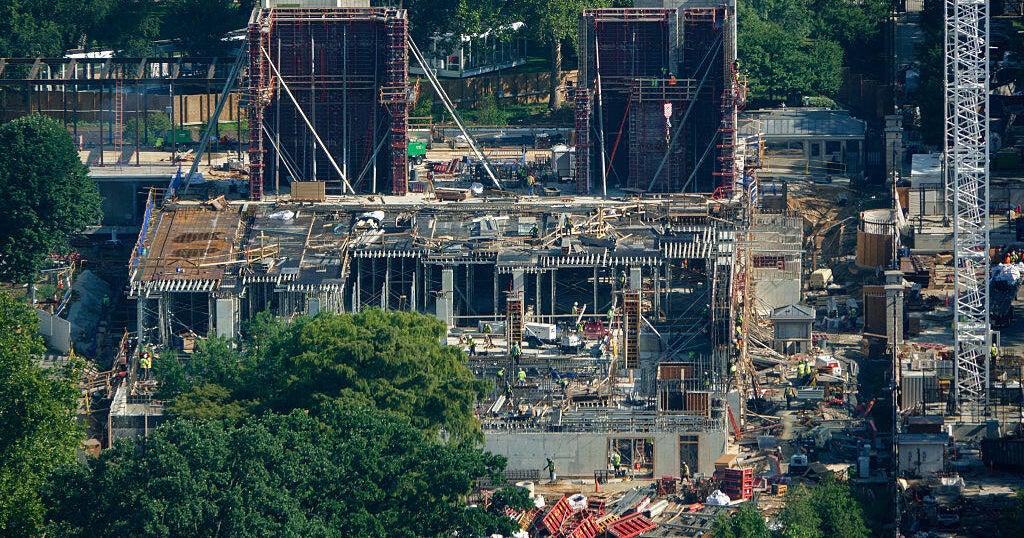
The U.S. Court of Appeals for the District of Columbia Circuit ruled 2-1 on Friday that President Trump has no authority to tear down and rebuild portions of the White House on his own, halting above-ground construction on the $400 million, 90,000-square-foot ballroom rising where the East Wing stood until last year.
The majority opinion, joined by Judges Patricia Millett, an Obama appointee, and Bradley Garcia, a Biden appointee, framed the dispute as a question about who owns the building. "Each President is a temporary tenant, not the owner, of the White House," the judges wrote. They added that they were "aware of no instance in American history in which a President unilaterally demolished substantial portions of the White House." Judge Neomi Rao, appointed by Trump in his first term, dissented.
The case was brought by the National Trust for Historic Preservation, which argued the administration skipped the federal review process that governs alterations to historic federal property before crews began knocking down the East Wing. The administration has maintained throughout that the ballroom is being paid for largely with private donations rather than appropriated funds, and that private financing places the project outside Congress's control. The panel majority did not accept that the source of the money settles the question of who may authorize demolition of the executive mansion.
The court stayed its own ruling for 14 days, giving the government a window to seek emergency relief. Trump said he would appeal directly to the Supreme Court. Underground work, including construction on the bunker portion of the site, may continue under the terms of the order; it is the above-ground ballroom structure that stops. The project had been scheduled for completion in mid-2028.
The ruling lands on a White House that has already been physically altered beyond easy reversal. The East Wing — which housed the first lady's offices, the White House social secretary and the visitors' entrance — was demolished before any court weighed in, which means a ruling that construction cannot proceed does not restore what was there. That gap between the legal question and the physical facts has been a recurring feature of the litigation, and it was raised repeatedly by preservation groups who warned that demolition would outrun the courts.
Friday's decision is the second time in a week that a federal court has told the administration it lacks unilateral authority over a signature initiative, and it sets up a separation-of-powers fight at the Supreme Court over how far a president's control of the building he lives in actually extends. The immediate practical question is narrower: whether the justices will lift the halt within the 14-day window, or let the freeze stand while the appeal is briefed.